

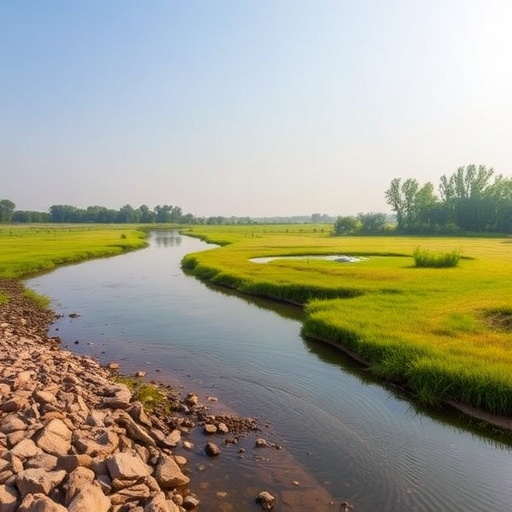
The Gomati River, heralded as the largest river in the northeastern Indian state of Tripura, plays a significant ecological and cultural role in the region. New research led by Gupta, Das, and Patra presents an innovative approach to evaluating the water quality of this vital resource, using a combination of hesitant fuzzy logic and traditional ecological methods. This dual methodology promises not just to enhance the accuracy of water quality assessments but also to provide actionable insights for sustainable river management strategies.
The urgent need for effective water quality assessment tools stems from the growing concerns surrounding water pollution and environmental degradation. Rivers, often described as the veins of ecosystems, have been under constant threat from urbanization, industrial discharges, and agricultural runoff. The Gomati River is no exception, facing challenges that exacerbate its ecological balance and threaten its biodiversity.
In their study, the researchers employed hesitant fuzzy logic, a sophisticated mathematical approach that allows for the representation of uncertainty in assessments. This method is particularly well-suited for water quality evaluation, where multiple parameters—such as pH levels, dissolved oxygen, turbidity, and heavy metal concentrations—contribute to a complex web of data. By utilizing hesitant fuzzy logic, the researchers were able to navigate and interpret this complexity, translating it into a more manageable format for decision-makers and stakeholders.
One of the standout features of the study is the integration of traditional ecological knowledge with cutting-edge scientific methods. Recognizing the invaluable insights that local communities possess about their environment, the researchers collaborated with residents along the Gomati River. This partnership highlights the importance of placing indigenous perspectives at the forefront of environmental research, fostering a sense of ownership and engagement among local populations regarding the conservation of their water resources.
The findings of the research revealed troubling trends in the water quality of the Gomati River, with certain sections of the river showing alarming levels of pollution. These findings reflect a broader pattern seen across many rivers in India, where industrialization and urban sprawl have outpaced environmental protections. As the research delves deeper, it becomes apparent that the health of the Gomati River is inextricably linked to the wellbeing of the surrounding communities, which rely on its waters for drinking, agriculture, and fishing.
Implementing the assessment tools developed in this study could usher in a new era of sustainable water management for the Gomati River basin. The researchers emphasize the need to adopt a holistic approach that considers ecological, social, and economic factors. By employing a framework that addresses these interconnected elements, stakeholders can develop strategies that are not only effective in improving water quality but also equitable for the communities affected by water policy decisions.
Moreover, the research underscores the role of government and local authorities in implementing these strategies. Policymakers must be equipped with accurate data and a clear understanding of the river’s ecological status to formulate effective regulations. The study advocates for continuous monitoring and engagement with both scientific experts and local communities to adapt to changing conditions and challenges.
As the new methodologies are disseminated, it is imperative that capacity-building initiatives are put in place to train local personnel in data collection, analysis, and interpretation. Empowering local communities with knowledge and tools enhances their ability to monitor the river’s health and take proactive steps in advocating for its preservation. This grassroots involvement can create a ripple effect, inspiring wider movements for environmental stewardship throughout the region.
In a time when climate change poses unprecedented risks to freshwater resources, the Gomati River stands as a critical case study in resilience and sustainability. The findings from Gupta, Das, and Patra’s research serve as a clarion call for action, urging immediate intervention to protect this essential waterway. By embracing innovative approaches while respecting traditional ecological wisdom, there is potential not only to restore the river’s health but also to secure the livelihoods of those who depend on its waters.
This research also prompts reflection on a global scale. As rivers across the world grapple with similar challenges, the methodologies developed for the Gomati River can inspire international collaborations. The blending of traditional and modern scientific approaches offers a template that can be adapted to various contexts, ensuring that water quality management is culturally relevant and scientifically sound.
In conclusion, the innovative research approach brought forward by Gupta, Das, and Patra not only enriches our understanding of the Gomati River but sets a precedent for water quality assessments around the world. It highlights the urgent need for collaborative efforts focused on sustainability, reflecting a unified goal: the preservation of our precious water resources for future generations. As the ripples of this study reach far and wide, it remains a testament to the power of combining knowledge across disciplines and cultures in the fight against environmental degradation.
Subject of Research: Water quality assessment and sustainable management of the Gomati River
Article Title: An innovative hesitant fuzzy and traditional-ecological approach to water quality assessment and sustainable management of the Gomati River (the largest river in Tripura, India).
Article References:
Gupta, N., Das, A.K., Patra, S. et al. An innovative hesitant fuzzy and traditional-ecological approach to water quality assessment and sustainable management of the Gomati River (the largest river in Tripura, India).
Environ Sci Pollut Res (2026). https://doi.org/10.1007/s11356-026-37464-x
Image Credits: AI Generated
DOI: https://doi.org/10.1007/s11356-026-37464-x
Keywords: Water quality, Gomati River, sustainable management, hesitant fuzzy logic, traditional ecological knowledge


