

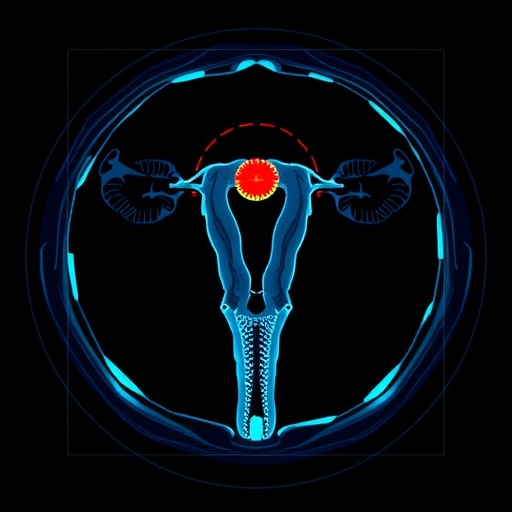
In recent years, the intersection of advanced imaging techniques and artificial intelligence has sparked a revolution in biomedical research, particularly in reproductive health. A groundbreaking study conducted by Knuus, Nguyen, Hannula, and their team introduces an innovative approach using micro-computed tomography (micro-CT) coupled with machine learning to assess the follicle reserve in cryopreserved ovarian tissue. This study not only challenges the conventional methods but also paves the way for a more efficient and high-throughput alternative to histology, a traditional method that has limitations in scope and scalability.
In the realm of reproductive medicine, assessing ovarian follicle reserve is crucial for evaluating fertility potential, yet traditional histological techniques often rely on time-consuming and labor-intensive protocols. The research highlights the need for a shift towards methodologies that can offer faster and more comprehensive results. Micro-CT technology stands out as a promising tool due to its non-destructive imaging capabilities, allowing researchers to visualize the complex architecture of ovarian tissue without damaging it.
Micro-CT offers high-resolution images that enable detailed visualization of follicular structures. The researchers applied this technique to cryopreserved ovarian tissues, aiming to discern the viability and quantity of ovarian follicles with a level of precision that surpasses conventional histology. One of the key advantages of micro-CT is its ability to provide three-dimensional reconstructions of tissues, offering insights into follicular anatomy and positioning, which are critical for understanding ovarian reserve and functionality.
Integrating machine learning algorithms into this process makes the research even more compelling. By training algorithms on the intricate data obtained from micro-CT imaging, the researchers can develop models that predict follicle viability and health more accurately than traditional methods. This synergy between advanced imaging and AI represents a profound leap forward in reproductive health research, providing researchers and clinicians with powerful tools to better assess ovarian tissue quality.
As the study unfolds, it becomes apparent that the implications extend beyond just improved diagnostics. The ability to assess ovarian follicle reserve quickly and reliably can significantly impact clinical practices concerning fertility preservation, particularly for women undergoing treatments such as chemotherapy that may jeopardize their ovarian reserve. By utilizing cryopreserved ovarian tissue, this approach also holds promise for enhancing the fertility preservation strategies for cancer patients and others at risk of infertility.
The high-throughput nature of the methodology proposed offers an added layer of efficiency. Through automation and the capacity to analyze multiple samples simultaneously, researchers can expedite research timelines and significantly cut down on the labor intensity that characterizes traditional histological practices. This efficiency could lead to accelerated advances in fertility preservation techniques and informed decision-making for those involved in reproductive health.
Moreover, the study invites further exploration into the nuances of ovarian biology through the application of machine learning. As researchers iteratively refine their models with larger datasets, insights into factors affecting follicle health, maturation, and response to various environmental and therapeutic interventions will emerge. This depth of understanding could facilitate the development of more nuanced and personalized fertility treatments, catering to the diverse needs of patients facing infertility challenges.
While the promise of micro-CT and machine learning in follicle reserve assessment is profound, it also raises essential questions about accessibility and implementation in clinical settings. For the broader medical community to adopt these advanced technologies, considerations for the costs, required training, and integration into existing workflows will be crucial. The study highlights these aspects as vital for realizing the full potential of adopting such innovations in reproductive medicine.
As we delve deeper into the implications of this research, potential limitations of the micro-CT approach must also be acknowledged. Factors such as tissue heterogeneity, variable cryopreservation techniques, and the physical properties of ovarian tissues could influence the accuracy and reliability of the data obtained. Future research will need to address these challenges, ensuring that the findings from this study can translate into practical applications across diverse scenarios.
In conclusion, the work by Knuus and colleagues marks a significant milestone in advancing the assessment of ovarian reserves through innovative imaging and AI-based methodologies. This heralds a future where fertility assessments can be made more quickly, accurately, and efficiently, ultimately leading to better patient outcomes. The research serves as a reminder that at the nexus of technology and medicine lies the potential to transform how we understand and approach fertility preservation and reproductive health.
As we move forward, it is clear that the convergence of micro-CT, machine learning, and soft tissue imaging will continue to evolve, opening new avenues for research and clinical applications. Embracing these advancements could facilitate groundbreaking changes in how we approach fertility and ovarian health, ensuring that individuals have access to the best possible resources for preserving their reproductive potential.
The implications of such findings resonate widely, not only advancing scientific knowledge but potentially transforming lives by providing more reliable and efficient pathways to fertility preservation. As the research develops, practitioners, researchers, and patients alike will benefit from these innovative approaches that could redefine fertility assessments for years to come.
Subject of Research: Advanced imaging techniques for ovarian follicle reserve assessment.
Article Title: Micro-CT and machine learning: a high-throughput alternative to histology for follicle reserve assessment in cryopreserved ovarian tissue.
Article References:
Knuus, K., Nguyen, M., Hannula, M. et al. Micro-CT and machine learning: a high-throughput alternative to histology for follicle reserve assessment in cryopreserved ovarian tissue. J Ovarian Res (2025). https://doi.org/10.1186/s13048-025-01897-8
Image Credits: AI Generated
DOI: 10.1186/s13048-025-01897-8
Keywords: Micro-CT, Machine Learning, Follicle Reserve, Cryopreserved Ovarian Tissue, Fertility Preservation, Reproductive Health.


