

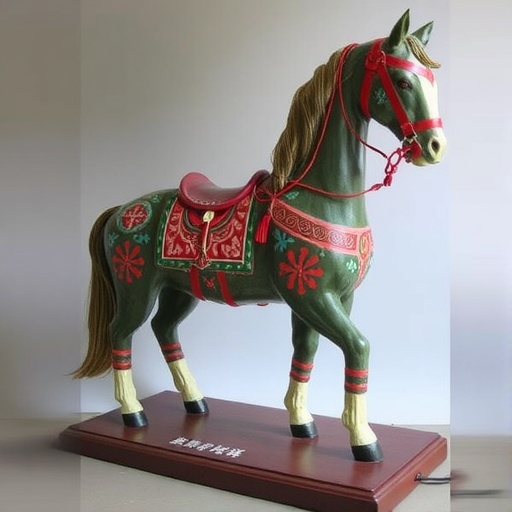
In a remarkable convergence of archaeological innovation and multidisciplinary expertise, a painted wooden horse unearthed from the tomb of Murong Zhi has become the subject of an extensive conservation and restoration project. This multifaceted approach not only endeavors to preserve the artifact’s physical integrity but also aims to unlock the historical and cultural narratives woven into its intricate design. The insights gained from this process offer a glimpse into ancient craftsmanship and the values of a bygone civilization.
The painted wooden horse, an extraordinary find within the confines of Murong Zhi’s tomb, stands as a testament to the artistic endeavor of its time, believed to date back to the era of the Northern Dynasties in China. Discovered alongside various other artifacts, this horse exemplifies the rich tapestry of life in ancient China, serving both as a functional piece and a symbol of status and prestige. As experts dove into the restoration project, the interplay of history, science, and artistry unfolded, eliciting an overwhelming sense of respect for the creators of this remarkable artifact.
One fascinating aspect of the restoration process lies in the careful examination of the horse’s original pigments. The vibrant colors used to adorn the horse reveal not only the aesthetic values of the period but also technological advancements in materials. Analytical techniques such as Raman spectroscopy and X-ray fluorescence spectroscopy were employed, allowing conservators to determine the chemical composition of the paint. This breakdown of materials not only informs current restoration efforts but sheds light on trade practices and cultural exchanges prevalent in ancient societies.
Equally important is the structural evaluation of the horse. Deterioration over time has led specialists to conduct meticulous assessments of the wood’s stability and integrity. By employing non-destructive testing methods, the restoration team sought to ascertain the extent of damage while conserving the original structure. Understanding the horse’s physical state was paramount, guiding decisions regarding reinforcement and conservation interventions that would honor its original form while ensuring long-term preservation.
In addition to the technical aspects of restoration, the team engaged in historical reconstruction, charting the horse’s journey from its origin to its current state. This exploration involved delving into historical texts and archaeological records, piecing together the significance of painted wooden horses in burial customs. By situating the artifact within its cultural context, experts hope to illustrate the symbolic importance of such items in rituals associated with the afterlife, thus enriching our understanding of the customs surrounding the elite in ancient Chinese society.
Modern conservation practices also emphasize ethical considerations. The project team faced difficult choices regarding the extent of restoration versus preservation, balancing the desires to restore the horse’s visual presence with the integrity of its historical authenticity. Discussions around interventions highlighted the importance of transparency in tattooing methods; these decisions often lead to debates within the conservation community about how far one should go to ‘restore’ an object without losing its essence.
Public engagement formed an integral aspect of this project, with outreach initiatives aimed at sharing updates and findings with the community. Workshops and public talks focused on the methodologies employed and the significance of the painted wooden horse within the annals of Chinese history. This effort not only fosters a greater appreciation for heritage conservation but also invites dialogue about the broader implications of cultural preservation in a rapidly changing world.
As multidisciplinary methods continue to redefine the landscape of conservation, the painted wooden horse serves as a beacon of inspiration for future projects. The intersection of art, archaeology, and science creates a framework that allows for a deeper exploration of past societies and their legacies. By utilizing cutting-edge methodologies and engaging with a wider audience, this restoration initiative transcends mere artifact restoration, becoming an educational platform that illuminates the rich interplay of culture and history.
The restoration of the painted wooden horse from Murong Zhi’s tomb illustrates the potential for continued advancements in conservation practices. By harnessing technology and interdisciplinary collaboration, conservators are not simply restoring an object; they are reviving a narrative that connects the present with a vibrant past. Each step of the restoration serves as a reminder of the fragility of cultural heritage and the responsibility we bear to safeguard these stories for future generations.
In this way, the painted wooden horse embodies the resilience of human expression across time, capturing our imagination and sparking deeper inquiries into the complexities of ancient civilizations. As this remarkable restoration project progresses, it promises to unveil not just the breathtaking artistry of the past but also the nuanced understanding we can cultivate about the individuals who contributed to this rich historical legacy.
As we reflect on the journey ahead for this painted wooden horse, it is evident that its restoration is an ongoing conversation—one that honors the artistry and cultural narratives of the past while shaping a future where such treasures are valued, understood, and preserved. This initiative serves as a testament to the collaborative spirit of experts across disciplines, united in a common goal: to protect, restore, and celebrate the tangible remnants of our human story.
With the culmination of techniques and interdisciplinary dialogue, the painted wooden horse stands poised not merely as an artifact of antiquity but as a modern symbol of conservation ethics and historical reverence. Its restoration embodies the belief that through dedicated effort, the past can inform the present, allowing us to learn from the artistry that has transcended millennia. In a world brimming with fleeting moments, this painted wooden horse reminds us of the enduring legacy of creativity and craftsmanship that continues to inspire and educate.
As we celebrate the strides made through this collaborative restoration effort, we anticipate the final chapter of this endeavor. The rich history encapsulated in this painted wooden horse beckons us to not only recognize the artistry of those long gone but also to appreciate our own role in preserving the stories that define our shared heritage.
In conclusion, the path from the excavation of Murong Zhi’s tomb to the ongoing restoration of the painted wooden horse illustrates a profound journey of respect, discovery, and commitment to cultural heritage. This project underscores that history is not merely retrospective—it informs our present and shapes our future. The painted wooden horse will soon re-emerge as both a historical artifact and a living emblem of the artistry that connects us to our collective past.
Subject of Research: Conservation and restoration of a painted wooden horse from the tomb of Murong Zhi.
Article Title: Conservation and restoration of the painted wooden horse unearthed from the tomb of Murong Zhi: a multidisciplinary approach.
Article References:
Zhong, L., Wang, X., Li, J. et al. Conservation and restoration of the painted wooden horse unearthed from the tomb of Murong Zhi: a multidisciplinary approach. asian archaeol 9, 163–174 (2025). https://doi.org/10.1007/s41826-025-00112-3
Image Credits: AI Generated
DOI: 10.1007/s41826-025-00112-3
Keywords: painted wooden horse, Murong Zhi, conservation, restoration, archaeology, Northern Dynasties, interdisciplinary approach, cultural heritage, historical narrative.


