

In the face of formidable challenges posed by extreme environments on Earth and potentially beyond, a groundbreaking interdisciplinary initiative spearheaded by researchers at Texas A&M University is paving the way for innovative solutions to reclaim and rehabilitate these inhospitable terrains. These environments, characterized by elevated contaminant levels in soil that severely restrict human habitation and agricultural productivity, demand novel approaches that transcend traditional remediation techniques. Backed by visionary funding from the WoodNext Foundation, this pioneering research integrates entomology, robotics, artificial intelligence, and advanced sensor technology to develop autonomous systems capable of transforming toxic landscapes into fertile grounds suitable for sustainable human use.
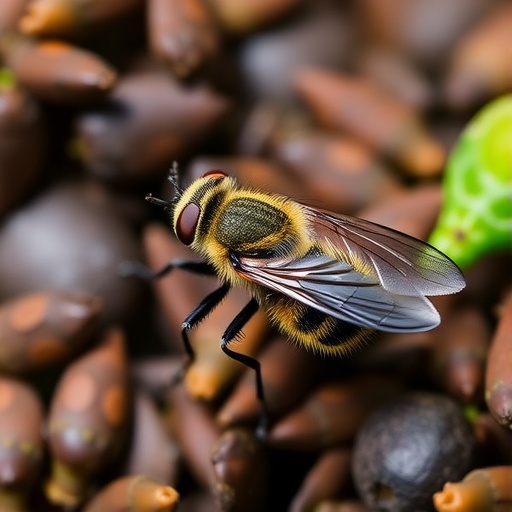
At the heart of this ambitious project lies the surprising yet promising role of black soldier flies (Hermetia illucens). Commonly misconceived as mere pests, these insects possess larvae that demonstrate remarkable capabilities in recycling organic waste stream and generating valuable products such as protein and organic fertilizer. More importantly, scientific investigations reveal that these larvae can effectively bioaccumulate and degrade toxic substances present in their feedstock, thereby reducing soil contaminant levels. This intrinsic biological function provides a potent tool for bioremediation efforts focused on rehabilitating extreme environments, opening new horizons for ecosystem revitalization efforts.
One of the fundamental hurdles addressed in this project is the impracticality of relying solely on manual labor to execute remediation tasks in hazardous and energy-intensive conditions. Poor soil quality laden with chemical contaminants poses serious health risks to workers and demands substantial energy inputs, making human intervention inefficient and dangerous at scale. Consequently, the Texas A&M team has embarked on creating an integrated autonomous framework that synergizes biological remediation with cutting-edge technologies. This closed-loop system aims to continuously monitor, analyze, and adapt processes in real-time, thereby optimizing the conditions necessary for sustainable soil restoration without exposing personnel to harm.
A key component of the project involves developing advanced soil sensor arrays capable of providing granular real-time data on soil composition, nutrient levels, and concentrations of contaminants. Led by mechanical engineering department head Dr. Guillermo Aguilar, this sensor technology leverages innovations in microelectromechanical systems (MEMS) and electrochemical detection methods to track changes in the soil environment with high precision. By harnessing this sensor data, the system can dynamically adjust interventions, ensuring the bio-remediation process remains effective across diverse and fluctuating site conditions—critical for success in unpredictable extreme environments.
Complementing these sensory insights is the deployment of sophisticated robotic platforms engineered by Dr. Minghui Zheng’s mechanical engineering team. These autonomous robots are designed to physically manage and manipulate the bio-remediation process, including distributing black soldier fly larvae and organic waste, sampling soil, and maintaining optimal environmental parameters. These robotic systems utilize adaptive control algorithms and sensor fusion to navigate and operate efficiently in complex field settings. By transferring labor-intensive and hazardous tasks from humans to resilient machines, the technology mitigates risks while enhancing the consistency and scalability of soil restoration activities.
Artificial intelligence, underpinning the system’s decision-making capabilities, is directed by Dr. Xiao Liang of the civil and environmental engineering program. The AI platform incorporates machine learning models trained on extensive environmental and biological datasets to predict soil response to various interventions, optimize larval feeding schedules, and calibrate environmental controls dynamically. Through continuous learning and feedback loops, the AI ensures that the integrated system operates at peak efficiency, economizing resource use while maximizing contaminant removal and soil rehabilitation outcomes.
Entomological expertise provided by Dr. Jeffery Tomberlin enriches the project with vital biological insights into black soldier fly behavior, physiology, and remediation potential. His contribution is crucial for understanding the larvae’s metabolic pathways involved in toxin degradation and nutrient cycling, which underpin the biological core of the remediation strategy. Tomberlin emphasizes that applying such bio-based approaches can reclaim terrestrial environments not only on Earth but also in extraterrestrial habitats, including lunar and Martian soils, heralding new frontiers for human colonization.
Together, these experts form a multidisciplinary coalition capable of tackling the multifaceted nature of environmental rehabilitation. Their concerted efforts transcend disciplinary boundaries, uniting engineering, biology, robotics, and computer science. This fusion facilitates a novel paradigm in ecosystem restoration that integrates living organisms with autonomous systems, embodying a sophisticated example of biomimicry applied to environmental engineering challenges.
The potential implications of this research extend far beyond remediating polluted land. Developing autonomous, intelligent remediation platforms capable of converting waste into valuable resources while detoxifying the environment aligns with broader sustainability goals across agriculture, urban land management, and planetary exploration. It offers scalable and adaptable solutions for degraded soils worldwide, empowering land managers and policymakers to reclaim landscapes once deemed uninhabitable and ecologically lost.
Moreover, the project signifies a transformational shift in how technological and biological systems collaborate to solve environmental issues. The fusion of real-time sensing, adaptive robotics, machine intelligence, and natural biological processes signifies an emerging integrated approach to environmental management. It harnesses the strengths of each domain to compensate for the limitations of the others, creating a robust and flexible system that can respond to diverse and evolving challenges posed by environmental contamination.
As this initiative progresses, the interdisciplinary methodology and technological innovations developed could inspire new research and application models in environmental science, engineering, and space exploration. The collaboration exemplifies how adaptive technologies and bio-based systems can function symbiotically toward a sustainable future, where humans can thrive even in previously hostile environments. If successful, this confluence of robotics, AI, and entomology could herald a new era in ecological restoration and human colonization beyond Earth.
Funding and support from the WoodNext Foundation—a philanthropic organization managed by Roku CEO Anthony Wood and his wife Susan Wood—have been instrumental in enabling this fusion of high-tech engineering and biological innovation. Their commitment underscores the increasing role of philanthropy in advancing science and technology with transformative potential for society and the environment.
In conclusion, this pioneering project at Texas A&M University represents a visionary leap forward in environmental rehabilitation science. By harnessing the extraordinary capabilities of black soldier fly larvae combined with autonomous sensing, robotics, and artificial intelligence, researchers are charting a path toward reclaiming extreme terrestrial and extraterrestrial environments. This integrative system heralds a future where sustainable ecosystems can be restored autonomously, efficiently, and safely, overcoming barriers that have long hindered human expansion and agricultural productivity in contaminated and extreme settings.
Subject of Research: Autonomous remediation of extreme environments using black soldier fly larvae integrated with robotics, sensors, and artificial intelligence.
Article Title: Autonomous Bioremediation of Extreme Environments through Synergistic Integration of Black Soldier Fly Larvae, Robotics, and AI
News Publication Date: Not specified
Web References:
- Texas A&M Mechanical Engineering Department profiles (Dr. Guillermo Aguilar, Dr. Minghui Zheng)
- Texas A&M Entomology Department (Dr. Jeffery Tomberlin)
- Texas A&M Civil and Environmental Engineering (Dr. Xiao Liang)
- WoodNext Foundation philanthropy related to Anthony Wood and Susan Wood
Image Credits: Kaitlyn Johnson/Texas A&M Engineering
Keywords
Black soldier fly larvae, bioremediation, robotics, artificial intelligence, sensor technology, soil contamination, autonomous systems, environmental restoration, extreme environments, sustainable agriculture, toxic waste removal, interdisciplinary research


