

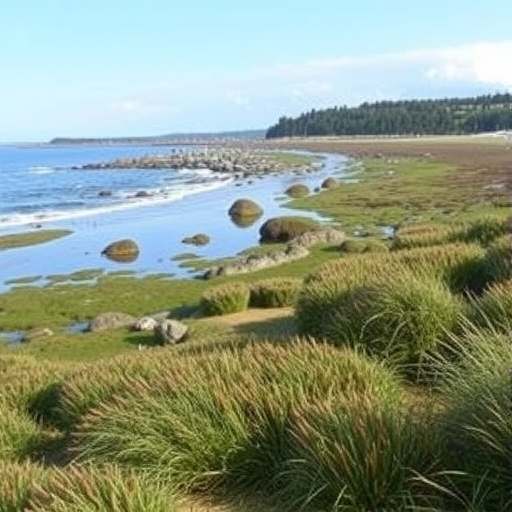
After nearly five years of rigorous interdisciplinary collaboration, the European Horizon 2020 REST-COAST project has reached a critical milestone with its final consortium meeting held at the Catalonia University of Technology (Barcelonatech) in Barcelona in February 2026. This grand assembly convened experts, stakeholders, and partners from across Europe to meticulously dissect the groundbreaking results achieved during the project’s lifetime. Central to REST-COAST’s mission has been the advancement of nature-based solutions (NbS) for coastal risk reduction, ecosystem restoration, and biodiversity enhancement, all geared towards fostering climate resilience and improving societal well-being along Europe’s vulnerable coastlines.
The meeting unfolded over four days, during which a wide array of scientific innovations, decision-support tools, governance frameworks, and business models were unveiled and critically evaluated. The series of events coincided with World Wetlands Day, a symbolic reminder of the urgent imperative to protect and restore critical wetland and coastal habitats increasingly imperiled by climate change and anthropogenic pressures. Through these discussions, the consortium underscored the intricate links between natural ecosystem functions and sustainable coastal defense, advocating for a paradigm shift from traditional grey infrastructure toward adaptive, ecosystem-based approaches.
A cornerstone of the scientific discourse focused on refining evaluation methodologies for NbS implementation, emphasizing robust performance metrics and nuanced cost–benefit assessments. Researchers from leading institutions, including Universitat Politècnica de Catalunya, Deltares, and Lincoln University, presented innovative pathways for scaling localized pilot projects into transferable frameworks operable across diverse European coastal settings. Their work linked high-resolution hydro-morpho-ecological and ecological process modeling tools at site-specific scales with integrated GIS-based platforms, thereby enabling decision-makers to visualize and quantify risk reduction benefits on regional and transnational levels.
Amongst the technological breakthroughs showcased was a suite of process-driven hydro-morpho-ecological models tailored to simulate the dynamic interactions of coastal landforms, sediment transport, and biological communities under various scenarios. These models can predict how embryonic dunes, constructed wetlands, and seagrass meadows respond to stressors such as sea level rise and extreme weather events—offering a mechanistic understanding crucial for designing durable NbS interventions. Complementing this, a Geographic Information System (GIS)-powered dashboard was introduced, permitting stakeholders to monitor and compare multiple NbS indicators across all pilot locations in an interactive visual format, enhancing transparency and adaptive management.
Adding to this innovation portfolio, the REST-COAST project unveiled its Quick Scan Strategy Tool, a novel decision-support instrument that synthesizes a variety of NbS components into cohesive, scalable adaptation pathways. The tool integrates ecological, engineering, governance, and financial variables, providing policymakers with objective scenarios to prioritize interventions based on site-specific characteristics, risk profiles, and socio-economic contexts. The capacity to evaluate trade-offs, co-benefits, and long-term sustainability renders this tool a transformative asset for coastal planners seeking to optimize NbS deployment at large scales.
However, the project partners stressed that technical advances alone cannot drive widespread NbS uptake. Complementary breakthroughs in governance arrangements and financing instruments are vital to overcoming institutional bottlenecks and mobilizing investment at scale. Insightful presentations from the Global Climate Forum, Pernice Collaborative, and Deltares detailed innovative financial mechanisms including blended funding models, impact investment frameworks, and incentive structures designed to catalyze private and public sector collaboration. These approaches offer pragmatic pathways to reconcile ecological restoration objectives with economic viability, thereby enticing broader stakeholder participation and ensuring project longevity.
Aligned with this, representatives from the IUCN Mediterranean programme shed light on governance strategies optimized for NbS upscaling. Their work delved into overcoming legislative and administrative barriers, harmonizing multi-level policies, and fostering participatory governance to embed NbS within national and regional adaptation agendas. By addressing systemic challenges and enabling policy coherence, their pioneering governance frameworks aim to facilitate transformative, systemic change—transforming pilot initiatives into policy-supported mainstream solutions.
The consortium also underscored the critical role of community engagement and social acceptance in NbS success. Innovative outreach tools were demonstrated, such as the MyREST-COAST mobile application, an interactive educational platform that immerses users in real-world coastal restoration scenarios, enhancing environmental literacy and stakeholder empowerment. Additionally, the “Coastal Challenge” serious video game was introduced as a novel medium to boost awareness, stimulate engagement, and facilitate experiential learning about complex coastal systems and restoration dynamics among diverse audiences.
Hands-on experiences were integral to the final meeting’s agenda. Participants visited the Ebro Delta restoration sites to witness firsthand the tangible results of NbS interventions. Field excursions included explorations of dune restoration efforts at La Marquesa and Fangar Bay, showcasing engineered natural structures designed to buffer storm surges and foster habitat complexity. At Bombita, now publicly accessible coastal land, demonstrations illustrated how pilot-scale innovations could be adapted for broader application. The Eurecat team’s experimental climate monitoring via open top chambers provided valuable data on microclimatic effects of natural infrastructure, emphasizing the importance of rigorous monitoring in adaptive NbS management.
Strengthening the project’s outreach impact, a dedicated session with local journalists was conducted to raise awareness of REST-COAST’s scientific and societal contributions. Journalists joined field visits and engaged with project leaders to glean insights that will translate into compelling media narratives, ensuring the dissemination of REST-COAST’s achievements to wider audiences beyond academia and policy circles. This coordinated media engagement strategy aims to foster public support and catalyze broader policy momentum for NbS adoption.
Reflecting on the cumulative progress, Professor Agustin Sanchez Arcilla, REST-COAST Coordinator, emphasized that the project showcases how coastal protection can harness embryonic dunes, vegetated wetlands, and seagrass meadows to deliver decarbonized and sustainable defense solutions. These NbS not only mitigate physical risks but generate multifaceted benefits for societal wellbeing and biodiversity conservation. The project’s integrative approach aligns adaptation strategies with the goals of climate neutrality and ecosystem restoration, charting a path toward resilient, climate-adaptive European coastlines.
As REST-COAST approaches its formal conclusion in May 2026, efforts are underway to consolidate its legacy in a comprehensive project volume detailing scientific breakthroughs, governance innovations, and financial mechanisms. Moreover, the consortium remains committed to fostering ongoing scientific exchange and influencing policy frameworks through participation in European Coastal Restoration Platforms and international research forums. This sustained engagement ensures that the transformative potential of nature-based solutions, as validated by REST-COAST, transcends project boundaries and catalyzes long-term coastal resilience at continental scales.
The REST-COAST final meeting, therefore, marks not just the culmination of an extensive research endeavor but signals a pivotal advance in how Europe’s vulnerable coastlines can harness ecological processes for adaptive, sustainable protection. Through its multidisciplinary synthesis of technical innovations, governance reforms, and stakeholder engagement practices, the project lays a robust foundation for a future where nature-based solutions are the cornerstone of coastal resilience policy and practice—a future where ecosystems and societies thrive in harmony amidst escalating climatic challenges.
Subject of Research:
Nature-based solutions for coastal risk reduction, ecosystem restoration, and biodiversity enhancement in Europe.
Article Title:
REST-COAST Final Consortium Meeting Highlights Breakthroughs in Nature-Based Coastal Resilience
News Publication Date:
February 2026
Web References:
- REST-COAST Project: https://rest-coast.eu/
- Quick Scan Strategy Tool: https://app.powerbi.com/view?r=eyJrIjoiNjA0NzI5ODQtYzFlZC00MDc5LWJiNGEtOGZkNDg0ODM4OThhIiwidCI6IjE1ZjNmZTBlLWQ3MTItNDk4MS1iYzdjLWZlOTQ5YWYyMTViYiIsImMiOjh9&pageName=fecc2c35462ca06efd77
- MyREST-COAST Mobile App: https://linktr.ee/restcoast
- Coastal Challenge Video Game: https://game.rest-coast.eu/
Image Credits:
Pensoft Publishers
Keywords:
Ocean engineering, Science education, Ecological processes, Climate change, Climate systems, Ecosystem services, Environmental impact assessments, Natural resources management


