

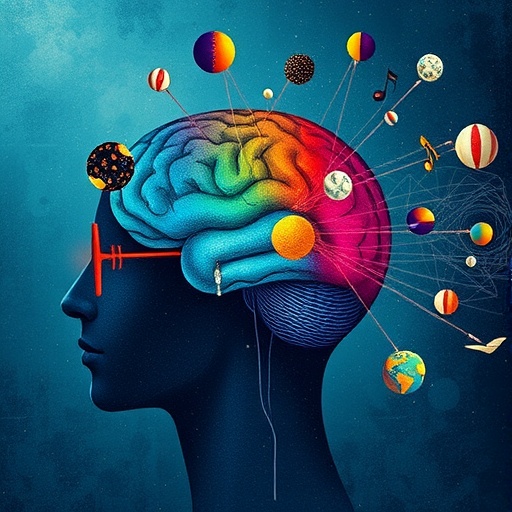
New Haven, Connecticut — In recent years, the interdisciplinary collaboration between neuroscience and music has unveiled remarkable insights into the profound ways in which music shapes human social dynamics at the neural level. A groundbreaking study led by neuroscientist and musician AZA Allsop alongside Yale University’s Joy Hirsch offers compelling evidence that listening to harmonically consonant chord progressions during direct interpersonal interaction can significantly enhance neural activation in brain regions responsible for social cognition and emotional connection.
AZA Allsop, an assistant professor of psychiatry at Yale School of Medicine and accomplished jazz artist, sought collaboration with Joy Hirsch, a veteran neuroscientist with an extensive background in competitive ballroom dance and an intricate understanding of neurobiological mechanisms underlying social behavior. This partnership, fueled by their shared musical expertise and scientific curiosity, culminated five years later in a series of innovative experiments that merged music theory with cutting-edge neural imaging techniques.
Their recent publication in The Journal of Neuroscience details how specific musical patterns, specifically consonant chord progressions—a sequence characterized by harmonious and pleasant auditory intervals commonly present in Western music genres such as jazz and pop—act as catalysts for enhancing social neural network activity. Unlike dissonant or scrambled musical sequences, consonant chords appear to upregulate brain regions involved in processing social cues, emotional resonance, and interpersonal understanding.
Methodologically, the researchers utilized functional near-infrared spectroscopy (fNIRS), an advanced neuroimaging tool that measures hemodynamic responses through the detection of oxygenated and deoxygenated hemoglobin at the cortical surface. Notably, fNIRS permits naturalistic social interaction monitoring, a key advantage over traditional imaging modalities like functional magnetic resonance imaging (fMRI), which constrain participants’ movement and social engagement. This technology enabled the team to capture real-time brain activity while participants engaged directly face-to-face, maintaining eye contact—a fundamental human social behavior.
During experimental sessions, dyads of participants underwent structured interactions under varying auditory conditions: exposure to consonant chord progressions, disordered (scrambled) chord sequences, and silence. Analysis indicated that exposure to consonant music correlated with heightened neural synchronization and elevated activation in brain areas including the superior temporal sulcus, medial prefrontal cortex, and orbitofrontal cortex. These regions play pivotal roles in social perception, emotional processing, and the integration of social information for adaptive interpersonal responses.
Participants also self-reported a pronounced subjective increase in feelings of social connectedness when exposed to consonant chord stimuli. This alignment of neurophysiological data with experiential reports strengthens the hypothesis that musical harmony serves not merely an aesthetic function but actively modulates socio-cognitive networks to reinforce social bonds. Such findings propose a biological substrate for the ubiquitous role of music in human social rituals, ceremonies, and collective experiences spanning diverse cultures and historical epochs.
Intriguingly, the study underscores a feedback loop wherein culturally prevalent chord progressions may have gained prominence because of their inherent ability to optimize social neurophysiology. Allsop posits that this reciprocal relationship between musical structure and human brain function has shaped the evolution of musical language to promote physiological states conducive to social cohesion.
Beyond theoretical implications, these discoveries have tangible translational potential in clinical contexts. The capacity of music—with carefully selected harmonic structures—to enhance neural mechanisms underpinning social cognition opens novel avenues for therapeutic interventions targeting individuals with social impairments, such as those diagnosed with autism spectrum disorder or social anxiety disorder. Music-based therapies could thus be tailored to engage and strengthen the neural circuitry that facilitates social engagement and emotional reciprocity.
Joy Hirsch emphasizes that this work provides an empirical foundation elucidating how music exerts its social influence biologically, moving beyond psychological or cultural explanations. By revealing concrete neural correlates that respond robustly to musical harmony during meaningful social interaction, their research fosters a deeper understanding of the human social brain’s responsiveness to complex auditory stimuli.
This interdisciplinary endeavor, blending musical expertise with rigorous neuroscientific methodology, showcases the compelling synergy between art and science. As Allsop, also a keyboardist and vocalist, reflects, the study bridges the aesthetic appreciation of music with its biological impact, enriching the dialogue between neurobiology and cultural expression.
The study’s co-first authors include Dash Watts, a research assistant in Yale’s psychiatry department, with supporting contributions from associate research scientists Adam Noah and Xian Zhang, as well as former postgraduate associate Simone Compton. Together, their collective expertise facilitated a nuanced exploration into how subtle musical variations influence the dynamic interplay of social cognition networks during real-time human interactions.
In conclusion, Allsop and Hirsch’s pioneering research underscores the powerful role of harmonically consonant music in modulating the neural substrates of sociality. It illuminates not only the fundamental biological mechanisms by which music fosters social bonds but also hints at transformative applications in mental health interventions. This intersection of neuroscience and music holds promise for unraveling the evolutionary origins of human connectedness and enhancing social well-being through evidence-based musical experiences.
Subject of Research: Neural mechanisms of social behavior influenced by music, specifically the impact of harmonically consonant chord progressions on brain activity during face-to-face interactions.
Article Title: Not provided.
News Publication Date: Not provided; study published early 2026 according to journal reference.
Web References: https://www.jneurosci.org/content/early/2026/03/03/JNEUROSCI.1116-25.2026
References: Not provided beyond journal citation.
Image Credits: Not provided.
Keywords: Social cognition, neuroscience, music, harmonically consonant chords, functional near-infrared spectroscopy, social connectedness, brain imaging, neuropsychiatry, autism, social anxiety, neurobiology, music therapy


