

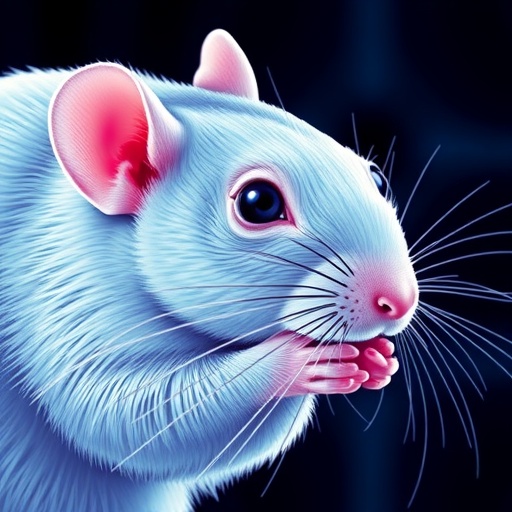
Researchers at the University of Michigan have uncovered a novel neural pathway that sheds light on the seemingly instinctual gnawing behavior seen in rodents. This discovery challenges the longstanding belief that such behavior is purely reflexive or mechanically driven by the need to manage continuously growing incisors. Instead, the study reveals that gnawing activates a dopamine-mediated reward system within the brain, positioning it as a motivated behavior reinforced by neurochemical incentives.
Until now, the prevailing scientific consensus framed rodent gnawing primarily as a response to mechanical necessity—teeth grow continuously, requiring consistent wear to prevent malocclusion and maintain jaw alignment crucial for survival. However, the recent findings illustrate that gnawing triggers the release of dopamine, a neurotransmitter linked to motivation and reward, through a distinct neural circuit connecting sensory input from the teeth to midbrain dopamine neurons. The activation of this circuit ensures the persistence of gnawing beyond mere reflexes, highlighting the complexity of oral maintenance as an actively motivated behavior.
The research team, led by Bo Duan, associate professor of molecular, cellular, and developmental biology, and Joshua Emrick, assistant professor at the U-M School of Dentistry, used mouse models to explore the neural mechanisms underpinning this behavior. Their work converges at an interdisciplinary crossroads, combining neuroscience with dental science, revealing insights into how sensory stimuli within the mouth influence motivational brain systems. This fundamental understanding of the neural basis of gnawing deepens our comprehension of oral health behaviors across mammalian species.
Critically, their investigation mapped a bifurcating pathway originating from touch-sensitive neurons embedded in the tissues surrounding teeth. One branch projects to motor neurons responsible for jaw movement, addressing the mechanical execution of gnawing. The other extends to dopamine-producing regions within the midbrain, instigating a motivational drive for the behavior. This dual circuitry explains how gnawing accomplishes two essential functions simultaneously: mechanical maintenance and neurochemical reward reinforcement.
Notably, experimental disruption of the dopamine pathway reduced the efficiency of gnawing without entirely abolishing the mechanical component governed by sensory-motor neurons. This finding emphasizes the importance of the motivational aspect, which enhances the animal’s commitment to persistently maintain dental alignment. The discovery positions dopamine not just as a participant in complex reward-seeking behaviors but also as a critical factor sustaining routine, self-maintenance activities vital for survival.
The implications of this research transcend rodent behavior, raising the possibility that similar neural circuits operate in other mammals, including humans. While human teeth do not exhibit continuous growth like those of rodents, the neural pathways influencing repetitive oral behaviors may remain conserved. This insight opens avenues for understanding human conditions characterized by compulsive oral behaviors, such as nail-biting, bruxism (involuntary teeth grinding), and malocclusion, particularly in neurodevelopmental and neuropsychiatric disorders.
Dopamine dysregulation has been implicated in various disorders affecting motivation and behavior. For instance, individuals with autism spectrum disorder and depression often experience higher rates of malocclusion and other oral health challenges. Furthermore, patients with Parkinson’s disease undergoing long-term dopamine replacement therapies sometimes develop bruxism as a side effect. The elucidation of this sensory-reward circuit provides a clearer biological basis for these correlations and highlights potential targets for therapeutic intervention.
By revealing a concrete neural framework linking oral sensory input with the brain’s reward centers, the study paves the way for specialized treatments addressing the motivational roots of detrimental oral behaviors. Current strategies largely focus on mechanical or symptomatic management without targeting the underlying neurobiological drivers. A deeper grasp of this circuit could lead to innovative clinical approaches that mitigate maladaptive behaviors at their neurological origin.
The research draws from diverse expertise within the University of Michigan, incorporating knowledge from the Life Sciences Institute, Departments of Mechanical Engineering, Cell and Developmental Biology, and Molecular and Integrative Physiology. Such a multidisciplinary approach underscores the complexity of oral behaviors and the necessity of integrating multiple scientific domains to unravel fundamental biological questions.
Duan and Emrick’s collaborative efforts highlight the intricate balance between mechanical necessity and motivational drive in animal behavior. The persistent gnawing of rodents is not merely a product of evolutionary dental design but an actively motivated behavior maintained through dopamine signaling. This perspective invites reconsideration of how routine physiological behaviors are governed by complex neural mechanisms.
Looking ahead, the team is exploring whether similar neural circuits govern other motivated behaviors beyond gnawing. The hypothesis that this sensory-reward system represents a broader principle could transform our understanding of how the brain integrates sensory feedback with motivational states to regulate behavior. Such findings hold promise for developing targeted interventions across a spectrum of neurobehavioral conditions.
This discovery also prompts reflection on evolutionary biology. The necessity of maintaining oral tone and muscle function appears to be a conserved feature across mammals, essential for efficient food acquisition and processing. Understanding how neural circuits facilitate these processes provides a window into fundamental survival strategies shaped by millions of years of evolution.
Ultimately, this research bridges basic neuroscience with dental health, linking oral somatosensation, dopamine signaling, and motivated behaviors in a cohesive framework. As science continues to unravel the neural substrates of behavior, this study exemplifies how fundamental discoveries can lead to meaningful translational advances, potentially improving health outcomes for individuals experiencing maladaptive oral behaviors related to neurological conditions.
Subject of Research:
Neural pathways underlying motivated gnawing behavior in rodents and implications for oral health.
Article Title:
A Touch-Guided Neural Circuit Regulates Motivated Gnawing to Maintain Dental Alignment
News Publication Date:
10-Mar-2026
Web References:
http://dx.doi.org/10.1016/j.neuron.2026.01.021
References:
Published in the journal Neuron (2026).
Image Credits:
Hans Anderson/University of Michigan News
Keywords:
Rodent gnawing, dopamine, neural circuit, oral somatosensation, dental alignment, motivated behavior, bruxism, malocclusion, oral health, neurobiology, sensory-motor integration, neuropsychiatric disorders


