

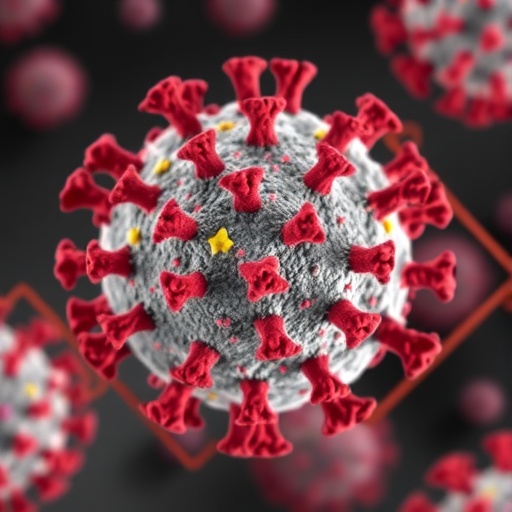
In the wake of the COVID-19 pandemic, the scientific community has been mobilizing its efforts to identify effective treatments that can curb the severity of the disease while also being feasible for widespread use. One divergent pathway that researchers have explored is the repurposing of existing drugs for new therapeutic indications. In this pressing context, a significant study led by Kang, Kim, and Cho focuses on the drug pyronaridine, traditionally used for treating malaria, and its potential application for mild to moderate cases of COVID-19. This critical investigation seeks to predict the drug’s pharmacokinetics and therapeutic efficacy in affected populations, providing hope in a time where the need for effective treatments is more urgent than ever.
The researchers employed a model-informed approach, which is a rapidly growing paradigm in drug development that emphasizes the use of mathematical models to inform drug dosing and efficacy predictions. This approach is especially crucial for repurposed drugs since it can save valuable time and resources by leveraging existing safety and pharmacological data. Pyronaridine’s comprehensive history of use provides a unique advantage in this respect, offering insights that may predict how the drug interacts with the human body, particularly concerning its distribution in target organs during COVID-19 infection.
One of the key elements in their study was the development of a robust pharmacokinetic model. These models simulate how drugs are absorbed, distributed, metabolized, and excreted by the body. The researchers meticulously calculated parameters such as volume of distribution, clearance rates, and bioavailability. Such detailed understanding can inform clinicians on the optimal dosing strategies required to achieve therapeutic concentrations of pyronaridine in patients suffering from mild to moderate symptoms of COVID-19.
Moreover, a significant aspect of this research revolves around the potential for pyronaridine to reduce the viral load in patients, thereby mitigating the progression of the disease. The study suggests that beyond merely alleviating symptoms, potent antiviral properties may exist in pyronaridine that could directly inhibit viral replication or perhaps enhance the host’s immune response. These findings align closely with the urgent need for treatments that can specifically target the underlying viral activities within the body.
As COVID-19 is known to impact various organs, understanding the distribution of pyronaridine specifically in these target organs is paramount. The researchers employed advanced imaging techniques in conjunction with their models to visualize drug deposition in key areas such as the lungs and heart. This insight is particularly groundbreaking as it provides a clearer picture of how the drug can exert its effects in the real-world conditions of COVID-19, which is associated with respiratory distress and cardiovascular complications.
Furthermore, pyronaridine’s favorable safety profile, derived from its long history in malaria treatment, strengthens the rationale for its repurposing. The collective knowledge regarding side effects, contraindications, and optimal therapeutic windows becomes crucial when considering reallocating resources during a public health crisis. Studies examining the casualties of untreated COVID-19 fatalities indicate that finding quickly deployable and well-tolerated treatments remains essential to save lives.
The researchers also utilized simulations to forecast the therapeutic potential of pyronaridine. By integrating clinical data and pathogens’ pharmacodynamics with their pharmacokinetic models, they anticipated clinical outcomes under various dosing regimens. These foresight capabilities can inform healthcare practitioners when making crucial decisions about treatment plans for their patients, especially in resource-limited settings where more complex interventions might not be feasible.
Public health implications can also be drawn from this study. As vaccination campaigns continue and new variants of COVID-19 emerge, there remains a significant population vulnerable to the disease due to vaccine hesitance or medical contraindications. Pyronaridine may offer a medication alternative that is not only effective but also easily incorporated into existing treatment protocols. This highlights the importance of continuous research focused on drug repurposing to expand the armamentarium against infectious diseases.
In addition, a model-informed drug repurposing strategy helps to streamline clinical trials. With clear datasets providing insights into pyronaridine doses that achieve desired blood levels in patients, the transition to clinical study phases becomes markedly efficient. This can lead to faster approvals and reduce the time before effective treatments become available on the market. Researchers expect that their findings could indeed catalyze future clinical trials dedicated to studying pyronaridine’s role in combating COVID-19.
The desire to repurpose pyronaridine also invites discussions about healthcare equity and accessibility in drug treatments. As the pharmaceutical industry grapples with high costs and intellectual property challenges associated with developing new drugs, repurposing offers a pathway to expedite treatment availability. By leveraging existing drugs, researchers and practitioners alike can advocate for more equitable healthcare solutions during public health emergencies.
Another consideration the researchers highlighted is the need for interdisciplinary collaboration. The synergy of pharmacology, computational biology, and clinical research represented in this study showcases how integrative teamwork can lead to innovative therapeutic strategies that could otherwise remain unexplored. This collaborative mentality is vital moving forward if the medical community is to navigate future pandemics as effectively as possible.
In anticipation of the next stages of their research, the team emphasized a commitment to transparency and data sharing with the broader scientific community. As interest in repurposed medications rises, pooling resources and knowledge becomes invaluable for optimizing therapeutic strategies globally. Their ultimately goal resonates with a collective mission to understand not only the fundamentals of COVID-19 treatment but also its implications for future infectious disease outbreaks.
In sum, the study conducted by Kang, Kim, and Cho marks an essential milestone in the ongoing battle against COVID-19. By analyzing the potential of pyronaridine as a repurposed therapeutic agent, they have introduced a fresh perspective that bridges established knowledge with new possibilities for treatment. Their meticulous approach not only enhances the data surrounding pyronaridine but also serves as a blueprint for future repurposing efforts aimed at loss prevention during pandemics.
This insightful work contributes significantly to the broader narrative concerning pandemic preparedness and the critical role of drug repurposing, fundamentally shaping our collective response to emerging viral threats. As COVID-19 continues to evolve, so too must our methodologies for combatting it—opening doors to solutions that are both innovative and proven through lifecycle pharmacology.
Subject of Research: Repurposing of pyronaridine for COVID-19 treatment.
Article Title: Model-informed repurposing of pyronaridine for mild to moderate COVID−19: predicting target organ exposure and therapeutic potential.
Article References: Kang, D.W., Kim, J.H. & Cho, HY. Model-informed repurposing of pyronaridine for mild to moderate COVID−19: predicting target organ exposure and therapeutic potential. J. Pharm. Investig. (2025). https://doi.org/10.1007/s40005-025-00789-9
Image Credits: AI Generated
DOI: https://doi.org/10.1007/s40005-025-00789-9
Keywords: pyronaridine, COVID-19, drug repurposing, pharmacokinetics, antiviral therapy.


