

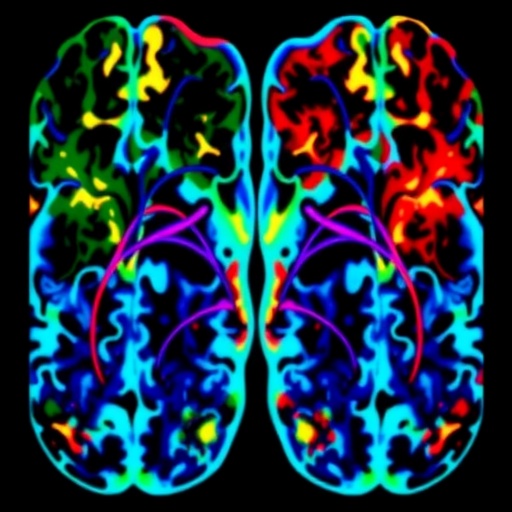
In a groundbreaking study set to reshape our understanding of brain network anomalies in psychotic disorders, researchers have unveiled compelling findings through a method called Functional Network Comparative Area and Topography Analysis (FUNCATA). This innovative analytical approach, applied in a replication study focusing on non-affective psychosis, lends unprecedented insights into the structural and functional alterations within critical brain networks. The study, led by Mamah, Chen, Harms, and colleagues and slated for publication in Schizophrenia (2026), pushes the boundaries of neuropsychiatric research by confirming previously observed neural patterns while extending the knowledge landscape surrounding the neurobiological substrates of psychosis.
Non-affective psychosis, encompassing conditions such as schizophrenia, represents a complex constellation of symptoms that includes hallucinations, delusions, and cognitive dysfunction, impacting millions globally. Traditional neuroimaging methods have long provided a window into the brain’s architecture in these disorders, yet a precise characterization of aberrant functional networks has remained elusive. FUNCATA emerges as a powerful tool by offering a detailed comparative mapping of network areas and their topographical characteristics, thereby enabling researchers to detect subtle but critical anomalies that might underlie the disorder’s manifestation.
The study’s approach hinges on comparative analyses of functional brain areas — essentially, regions with coordinated activity patterns — and their spatial configurations relative to normative data. Employing advanced neuroimaging datasets and sophisticated statistical frameworks, the team meticulously quantified variations in the size, shape, and positioning of these functional areas across large cohorts of patients and controls. This methodological precision marks a departure from earlier studies, which primarily relied on global connectivity indices or less refined regional analyses prone to averaging out meaningful heterogeneity.
One of the pivotal revelations from this replication effort was the consistent demonstration of altered topography within the default mode network (DMN) and salience network — two networks heavily implicated in self-referential thought, cognitive control, and the processing of salient stimuli. The DMN, commonly associated with introspective mental activity, showed reductions not only in overall functional area but also exhibited atypical spatial displacement when compared to neurotypical counterparts. Concurrently, the salience network, which mediates attention and the detection of behaviorally relevant stimuli, displayed comparable disruptions, suggesting a systemic reconfiguration of neural circuits critical for cognitive and emotional regulation in psychosis.
Beyond these core networks, the study provided evidence of widespread network disruption, encompassing the frontoparietal control system and subcortical hubs. The frontoparietal network, fundamental for executive functioning and decision-making, revealed diminished functional territory coupled with altered regional interplay, potentially underpinning the cognitive deficits observed in non-affective psychosis. Meanwhile, aberrations in subcortical structures hint at complex pathophysiological mechanisms that might drive dopaminergic dysregulation and affective disturbances characteristic of these illnesses.
Methodologically, FUNCATA leverages multivariate pattern analysis and machine learning classifiers to dissect the nuanced spatial properties of functional networks at an individual level. This approach fosters greater sensitivity to intersubject variability, a crucial advancement given the heterogeneity of psychotic disorders. Moreover, by replicating findings across independent cohorts, the research fortifies the reproducibility and robustness of its conclusions, addressing a persistent challenge in psychiatric neuroscience where inconsistency often clouds interpretative confidence.
The implications of these findings extend well beyond academic curiosity. By mapping precise alterations in functional network topography, researchers pave the way for novel biomarkers that could enhance diagnostic accuracy and individualize treatment strategies. Functional network area metrics derived from FUNCATA might serve as neurobiological signatures to track disease progression or treatment response, enabling clinicians to tailor interventions more effectively and perhaps even intervene preemptively to halt or slow the trajectory of the disorder.
Furthermore, this refined understanding of neural circuitry disruptions offers fertile ground for exploring new therapeutic targets. Interventions aiming to normalize or compensate for topographical aberrations in key networks, possibly via neurostimulation techniques such as transcranial magnetic stimulation or targeted pharmacotherapy, may emerge as promising avenues. The nuanced characterization of network alterations also contributes crucial insights into the etiology of psychosis, clarifying how genetic, developmental, and environmental factors converge on specific brain systems to produce clinical phenotypes.
The replication study also underscores the importance of methodological rigor and data sharing within the neuroscience community. By deploying standardized analytic pipelines and openly sharing datasets, the authors promote transparency and facilitate collaborative efforts to unravel the complexity of brain disorders. This culture of openness accelerates scientific progress and maximizes the translational potential of neuroscience research, linking bench discoveries more seamlessly to bedside applications.
It is worth noting that the study deploys state-of-the-art neuroimaging modalities, predominantly resting-state functional magnetic resonance imaging (fMRI), which captures spontaneous brain activity patterns with exquisite temporal and spatial resolution. Coupled with robust preprocessing techniques to minimize noise and artifact influence, the dataset ensures high-fidelity data upon which the FUNCATA framework operates. These technical refinements are critical given that subtle topographical changes necessitate granular data precision to avoid confounding interpretations.
In a wider context, the successful replication highlights a paradigm shift in psychiatric neuroscience from a predominantly reductionist approach, focusing on isolated brain regions or circuits, to a comprehensive, systems-level perspective. This shift acknowledges the brain’s complexity and dynamic network interactions as central to understanding mental illness, thereby aligning psychiatric research more closely with contemporary neuroscience disciplines that emphasize connectomics and multiscale analyses.
The study’s findings also resonate with emerging theories that psychosis involves aberrant neural integration rather than mere localized dysfunction. By demonstrating spatial and area-based topographical shifts in functional networks, the data lends credence to models proposing disrupted communication flow within and between brain systems. Such models conceptualize psychosis as a network disorder, wherein dysregulated connectivity leads to the fragmentation of coherent cognitive and perceptual experiences.
Importantly, this research sets the stage for longitudinal investigations applying FUNCATA to track illness evolution, treatment effects, and potentially, remission or relapse patterns. Understanding whether and how functional network topography normalizes or further deteriorates under pharmacological or psychosocial interventions could substantially enhance personalized medicine approaches. It may also illuminate critical windows during which interventions are most efficacious.
In summary, the replication study spearheaded by Mamah and colleagues represents a milestone in functional neuroimaging of non-affective psychosis. By validating and expanding upon prior findings, and harnessing the analytic power of FUNCATA, this work delivers a sophisticated framework for dissecting the complex neural substrates of psychotic disorders. Its implications for diagnosis, treatment, and our fundamental understanding of brain network pathology are profound, promising a future where mental illnesses are no longer enigmatic but tangible and tractable brain-based disorders.
As science marches forward amid an era of technological revolution, such methodological advancements not only deepen our comprehension of psychosis but also exemplify the transformative potential of interdisciplinary collaboration. Neuroscience, psychiatry, computer science, and bioinformatics converge in this study, demonstrating how integrated approaches can unlock the intricate mysteries of the human brain and lay the groundwork for breakthroughs that may ultimately alleviate the profound burden of mental illness worldwide.
Subject of Research: Functional Brain Network Alterations in Non-Affective Psychosis
Article Title: Functional network comparative area and topography analysis (FUNCATA) in non-affective psychosis: a replication study
Article References:
Mamah, D., Chen, S., Harms, M.P. et al. Functional network comparative area and topography analysis (FUNCATA) in non-affective psychosis: a replication study. Schizophr (2026). https://doi.org/10.1038/s41537-026-00736-z
Image Credits: AI Generated


