

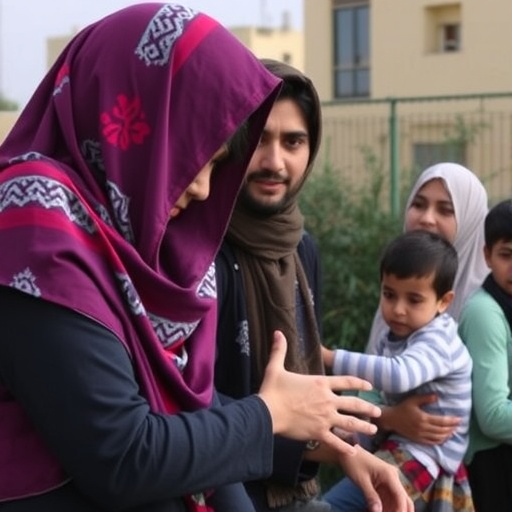
In the shadowed corridors of global displacement, the phenomenon of reverse migration has emerged as a pressing humanitarian and public health quandary. A recent comprehensive study sheds light on the perilous health emergencies afflicting Afghan returnees, urging an urgent and coordinated regional response to mitigate an impending crisis.
Reverse migration, the movement of people returning to their homeland after periods of displacement, has intensified across Afghanistan’s borders amidst shifting political and social landscapes. Unlike initial waves of refugees seeking sanctuary abroad, these returnees often face a landscape fraught with weakened health infrastructure, disrupted services, and endemic socio-economic challenges. This dynamic sets the stage for complex health emergencies that transcend national boundaries and demand transnational collaboration.
Delving into the health profile of Afghan returnees unveils a tapestry woven with infectious diseases, malnutrition, mental health disorders, and chronic illness exacerbations. These conditions are often aggravated by precarious living conditions during transit and upon arrival, where access to adequate sanitation, clean water, and medical care is critically deficient. Moreover, the cumulative effects of prolonged displacement, trauma, and insecurity amplify vulnerability, rendering returnees highly susceptible to morbidity and mortality.
The study underscores that health emergencies among returnees are not isolated phenomena but intersect with broader regional epidemiological patterns. The porous borders of Afghanistan and neighboring countries facilitate the cross-border transmission of diseases such as tuberculosis, measles, and gastrointestinal infections, complicating public health surveillance and response. This interconnectedness highlights the necessity for harmonized health strategies and data sharing to preempt and control outbreaks.
A striking revelation of the analysis is the insufficiency of current health infrastructure in host and home communities to absorb the influx of returnees requiring urgent care. Many health facilities operate under resource constraints, lacking essential medicines, trained personnel, and diagnostic capacities. Such deficiencies exacerbate delays in treatment, undermine disease prevention efforts, and elevate the risk of severe health outcomes, particularly among vulnerable groups like women, children, and the elderly.
Mental health emerges as a critical yet often overlooked dimension of the health crisis. The psychological toll of forced displacement, compounded by the stresses of reintegration into volatile environments, precipitates a surge in anxiety, depression, post-traumatic stress disorder, and suicidal ideation. Health systems ill-prepared to address these needs face significant challenges in delivering culturally sensitive and effective mental health services, underscoring a pivotal gap in care provision.
The paper advocates for the establishment of a robust regional framework to coordinate health interventions targeting Afghan returnees. Such a framework would facilitate the alignment of policies, pooling of resources, and deployment of mobile health units capable of reaching remote and underserved areas. Integrating community health workers and leveraging digital health technologies stand out as innovative approaches to enhancing outreach, surveillance, and patient adherence.
Cross-sector collaboration emerges as a linchpin for successful interventions. Beyond healthcare, addressing determinants such as nutrition, housing, education, and employment is vital to foster sustainable reintegration and health improvements. Multilateral agencies, governments, non-governmental organizations, and local communities must galvanize efforts to build resilience and break cycles of vulnerability.
The research also emphasizes the role of data-driven decision-making in managing health emergencies linked to reverse migration. Real-time epidemiological data, geographic information systems, and predictive modeling can provide actionable insights for targeting interventions and optimizing resource allocation. Investing in health information systems tailored to the mobility patterns of returnees is imperative to enhance responsiveness.
In light of the COVID-19 pandemic’s legacy, infection prevention and control measures gain renewed importance. Returnees may encounter vaccine hesitancy, limited access to immunization campaigns, and potential exposure to emerging variants. Strengthening vaccination coverage and integrating pandemic preparedness within broader health security frameworks is a critical priority.
Furthermore, gender-sensitive programming is essential to address unique health needs and barriers faced by women and girls among returnees. Access to reproductive health services, protection against gender-based violence, and empowerment initiatives must be integral components of regional health responses.
The international community’s response hinges on political will, sustained funding, and a principled commitment to upholding the rights and dignity of displaced populations. Humanitarian diplomacy aimed at reducing bureaucratic hurdles and fostering safe passage can alleviate arduous journeys and improve health outcomes.
This urgent call for regional action resonates beyond Afghanistan, offering a blueprint for managing health crises arising from reverse migration globally. It compels a paradigm shift towards anticipatory, inclusive, and rights-based health systems capable of adapting to rapidly evolving migration landscapes.
The convergence of public health challenges in reverse migration among Afghan returnees represents a complex nexus demanding multifaceted solutions. Without decisive, coordinated, and compassionate responses, the window to avert escalating health catastrophes narrows sharply. This pivotal moment invites stakeholders to transcend borders and silos, forging a united front to safeguard health and human security in a region at the crossroads of upheaval.
Subject of Research: Reverse migration and health emergencies among Afghan returnees.
Article Title: Reverse migration and the health emergency among Afghan returnees: a call for regional action.
Article References: Nejadghaderi, S., Emadi, S., Mohammadyan, G.R. et al. Reverse migration and the health emergency among Afghan returnees: a call for regional action. Int J Equity Health 24, 339 (2025). https://doi.org/10.1186/s12939-025-02723-9
Image Credits: AI Generated
DOI: https://doi.org/10.1186/s12939-025-02723-9


