

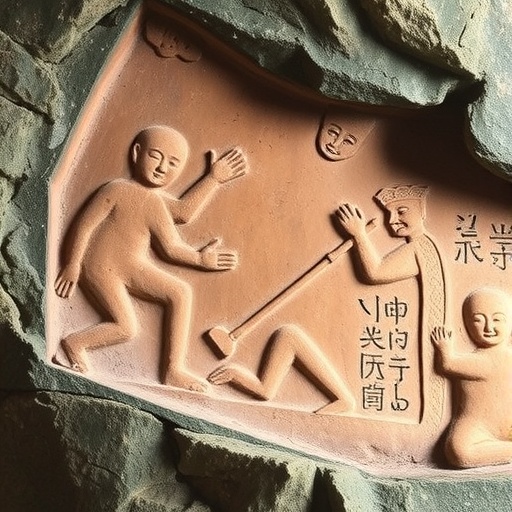
Recent archaeological investigations have brought to light remarkable findings related to game board rock carvings found in Hong Kong and Macao. These ancient illustrations, which appear to depict various gaming motifs, warrant a thorough exploration not just of their physical characteristics, but also their historical and cultural significance. Archaeologist C. Guarde-Paz has delved deep into this subject, offering fresh insights and lively discussions that challenge previous interpretations of these fascinating relics. His research underscores the need to view these engravings through a broader lens, considering their social and recreational implications in historical contexts.
Game boards, often associated with leisure activities, are pivotal to understanding the social dynamics of past civilizations. The art of gaming, in many ancient cultures, mirrored societal structures, hierarchies, and even spiritual beliefs. The rock carvings in question are particularly interesting as they reveal not just the games played, but also hint at the philosophies and cultural narratives surrounding them. Guarde-Paz’s analysis goes beyond mere aesthetics, urging a reevaluation of what these carvings can tell us about ancient life in the region.
The significance of these game board rock carvings is twofold: they serve as critical evidence of leisure activities among early populations, while simultaneously illuminating the cultural exchanges that occurred in the region. Hong Kong and Macao have long been melting pots of different customs and practices, influenced by Chinese and Portuguese elements among others. The game boards signify more than personal amusement; they point to a shared human experience that traverses time and space, providing modern archaeologists with a narrative thread through history.
In his detailed study, Guarde-Paz discusses various techniques utilized in the dating and analysis of these engravings. He emphasizes the interdisciplinary approach necessary for such a task, noting that methods from geology, art history, and anthropology converge to create a holistic understanding of the sites. Notably, luminescence dating has emerged as a critical technique, enabling researchers to ascertain the last time the minerals within the rock were exposed to sunlight. This allows for an approximate date of the carvings, challenging previous assumptions about their origins and usage.
The stylistic elements observed in the carvings also provide valuable context for interpretation. The designs, intricate and varied, suggest influences from both indigenous practices and external cultures. Guarde-Paz’s research highlights specific motifs and shapes that bear similarity to gaming practices documented in contemporary East Asian societies. This cross-cultural examination reveals the dynamic interactions between cultures that shaped the region’s historical narrative.
Additionally, Guarde-Paz confronts the misconceptions regarding the symbolic value of the carvings. Historically, many archaeologists peripherally ascribed utilitarian purposes to these artifacts, viewing them as mere tools of gaming. However, newer interpretations propose that these engravings might also carry ritualistic or spiritual significance. By engaging with ethnographic studies, Guarde-Paz comments on how games in some cultures can serve as metaphors for life experiences, embodying cultural beliefs and social values.
While the primary focus of the study is on the carvings themselves, Guarde-Paz does not neglect the surrounding environment of the sites where these rock engravings are found. The geological context and archaeological stratigraphy enrich the narrative and provide clues about the communities that once inhabited these areas. Understanding the geography not only allows researchers to gauge the accessibility of these gaming sites but also reveals how natural resources influenced social interactions and migration patterns of ancient peoples.
Furthermore, Guarde-Paz contemplates the impact of colonial histories on the interpretation of these game boards. The layers of colonial narratives can obscure genuine cultural meanings behind such artifacts. By examining the historical records and the colonial context of Hong Kong and Macao, he suggests a need to disentangle these influences to appreciate the local traditions that existed prior to external impositions.
In the broader scope of Asian archaeology, Guarde-Paz’s findings ignite conversations about the importance of preserving cultural heritage. The modern world poses significant threats to archaeological sites through urban development and tourism. As more individuals become fascinated by these ancient artifacts, there is an urgent call for balanced engagement with heritage tourism that respects and protects the sites while celebrating their historical importance.
By disseminating this research, Guarde-Paz aims to spark a renewed interest in the field of Asian archaeology. The game board rock carvings serve not only as relics of the past but also as a source of identity for modern descendants. As interest in cultural history expands globally, the call to recognize and appreciate such site-based histories becomes increasingly relevant.
In conclusion, C. Guarde-Paz’s investigation into the game board rock carvings in Hong Kong and Macao offers critical new perspectives that have the potential to reshape the understanding of ancient leisure practices and their cultural implications. These rock carvings, once seen solely as gaming boards, can now be recognized as gateways to understanding the complexities of human interaction across time. The promise of continued archaeological endeavors in these areas holds the key to unlocking new chapters of history, ensuring that the stories behind these markings are not forgotten.
Subject of Research: Game board rock carvings in Hong Kong and Macao
Article Title: Game board rock carvings in Hong Kong and Macao: reexamining their significance and dating
Article References:
Guarde-Paz, C. Game board rock carvings in Hong Kong and Macao: reexamining their significance and dating.
asian archaeol 8, 59–82 (2024). https://doi.org/10.1007/s41826-024-00084-w
Image Credits: AI Generated
DOI: 10.1007/s41826-024-00084-w
Keywords: game board rock carvings, Hong Kong, Macao, archaeology, cultural significance, ancient gaming, historical interpretation, heritage preservation.


