

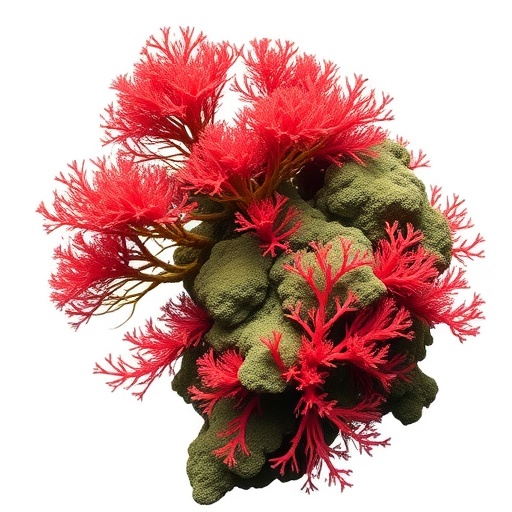
Recent research highlights the profound influence of red gorgonian forests, specifically those comprised of the species Paramuricea clavata, on the structure of coralligenous communities. This study, featured in a forthcoming issue of Coral Reefs, analyzes how varying factors, such as regional differences, seasonal changes, thermal conditions, and nutrient levels in water, impact these delicate ecosystems. The findings suggest that red gorgonians not only play a crucial role in fostering biodiversity but also in maintaining the overall health and resilience of coralligenous formations.
Coralligenous communities, rich in biodiversity, are primarily composed of calcifying organisms, including corals, mollusks, and various invertebrates. These habitats are particularly sensitive to environmental changes, making them vulnerable to stressors such as climate change and human activity. The red gorgonian, a key structuring species within these habitats, could serve as an indicator for assessing the health of marine ecosystems. As studies like this one deepen our understanding, they also highlight the imperative need for effective conservation strategies to protect these intricate environments.
One of the main factors that this research addresses is the thermal environment of the waters in which these gorgonian forests exist. With rising sea temperatures due to climate change, the stress placed on marine organisms becomes increasingly pronounced. The study reveals that these gorgonian forests exhibit varying levels of resilience to temperature fluctuations, depending on their geographical location. This aspect emphasizes the importance of regional studies in understanding how ecosystems respond to global climatic trends.
Additionally, the nutritional status of the water, classified within a “trophic state,” impacts the productivity and biodiversity of coralligenous communities. In nutrient-rich waters, the interactions between the gorgonians and other marine species can lead to a more robust ecosystem, whereas oligotrophic conditions can hinder growth and reduce overall biodiversity. This duality underscores the complex interplay between nutrient levels and the health of marine habitats, particularly in the context of managing marine resources sustainably.
Seasonal variations also presented a fascinating dimension to the research findings. The study observed distinct shifts in community structuring as seasons transitioned. During warmer months, certain species thrived, while others displayed greater resilience in cooler conditions. This seasonal dynamic illustrates the adaptive strategies employed by marine organisms within these communities and supports the notion that gorgonian forests can act as refuges for species through different environmental stress contexts.
The findings of this research provide valuable insight into the ecological roles played by the red gorgonian. While previous studies have acknowledged its importance, this research goes a step further by establishing the depth of influence these forests exert across varying environmental conditions. This multifaceted approach is crucial, as it enables scientists to assess not just the immediate impacts of changes in the marine environment but also the long-term implications for biodiversity and habitat integrity.
Moreover, the research methodology incorporated advanced ecological modeling techniques, which facilitated the analysis of interactions among species within the gorgonian forests and their surrounding ecosystems. This approach allowed for a more comprehensive understanding of how red gorgonians interact not only with other marine organisms but also with their physical environment. By employing these models, the study contributes to a growing repository of knowledge that underpins marine conservation efforts.
The implications of this research extend beyond academic interest; they also tie directly into the realms of environmental policy and marine resource management. With biodiversity loss accelerating globally, understanding the specific roles of keystone species, like the red gorgonian, becomes paramount. Policymakers must leverage this information to create effective management plans that consider the ecological significance of these habitats, ensuring they are protected within marine protected areas.
Additionally, public awareness regarding the ecological issues explored in this research must be amplified. Engaging communities with the findings and their implications can foster stewardship and promote participatory conservation efforts. By highlighting the charismatic nature of species such as the red gorgonian, scientists can create narratives that resonate with diverse audiences, galvanizing support for marine conservation initiatives.
As the research community continues to uncover the intricate connections within marine ecosystems, what becomes increasingly clear is that every species plays a role, no matter how seemingly small. The red gorgonian serves as a testament to the complexities of aquatic life and the delicate balance that sustains our oceans. Its forests offer a habitat for numerous marine organisms and provide essential ecosystem services, supporting fishing industries and coastal communities.
The study ultimately culminates in a call to action for researchers, conservationists, and policymakers alike. The preservation of coralligenous habitats, particularly those associated with red gorgonian forests, requires an integrated approach that transcends disciplinary boundaries. Collaboration across sectors, along with a commitment to ongoing research and monitoring, will be critical in ensuring the resilience of these vital marine ecosystems for future generations.
In conclusion, the groundbreaking findings from this research serve not only to enhance our understanding of marine biodiversity but also to inform the global discourse on climate action and marine conservation. By focusing on the interdependencies within ecosystems influenced by red gorgonian forests, we position ourselves to tackle the challenges ahead and safeguard the oceans from impending threats. Recognizing the significance of these habitats can inspire coordinated efforts that foster a sustainable future for the marine environments we rely on.
Subject of Research: Influence of red gorgonian forests on coralligenous community structure
Article Title: Influence of red gorgonian (Paramuricea clavata) forests on coralligenous community structure across different regions, seasons, thermal environment, and water trophic state.
Article References:
Gabriella, L.M., Francesco, B., del Mar, BB.M. et al. Influence of red gorgonian (Paramuricea clavata) forests on coralligenous community structure across different regions, seasons, thermal environment, and water trophic state.
Coral Reefs (2026). https://doi.org/10.1007/s00338-025-02808-5
Image Credits: AI Generated
DOI: https://doi.org/10.1007/s00338-025-02808-5
Keywords: Red gorgonian, coralligenous communities, biodiversity, climate change, marine conservation.


