

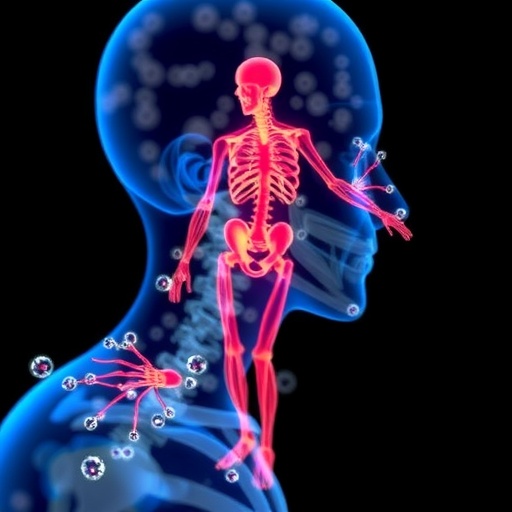
Microplastics (MPs), tiny fragments of plastic materials measuring from less than five millimeters down to nanometer scales, have surfaced as one of the most pressing environmental and public health hazards of our time. Ubiquitous across our ecosystems—from ocean depths to mountain airs—these particles infiltrate everyday life through water, soil, air, and common consumer products such as detergents and cosmetics. Despite rising public awareness and media coverage around the proliferation of microplastics, critical questions remain about their behavior inside living organisms and the potential risks they pose to human health. Addressing these gaps requires innovative techniques that can track MPs’ journey within biological systems in real time, moving beyond models relying on simplistic, spherical microbeads towards more lifelike, irregularly shaped particles.
A breakthrough in this domain has emerged from the laboratories of Tokyo University of Science, where Associate Professor Masakazu Umezawa and his team have pioneered the creation of fluorescent microplastics tailored for real-time, in vivo imaging using the second near-infrared (NIR-II) biological window. This approach capitalizes on NIR-II light’s ability to penetrate deeply into living tissues while minimizing autofluorescence and scattering, facilitating non-invasive visualization of microplastic particles within complex biological environments. Their research marks a considerable advancement by enabling the tracking of MPs inside mammalian models, granting unprecedented insights into their biodistribution and transit mechanisms.
A significant challenge surmounted by the researchers concerns the chemical diversity and physical morphology of microplastics found in the environment. Traditional studies predominantly utilize uniform, spherical MPs that fail to replicate the natural irregular shapes and polymer diversity resulting from environmental weathering and mechanical degradation processes. Recognizing that shape and chemical composition critically influence particle behavior and interaction with biological tissues, Umezawa’s group developed synthesis protocols for irregularly shaped, nano-sized MPs fashioned from prevalent polymers including polypropylene (PP), polyethylene (PE), polystyrene (PS), and previously poly(ethylene terephthalate) (PET).
The fabrication method engineering this innovation involved solvent-assisted fragmentation of plastic granules into nanoscale fragments, subsequently infused with a fluorescent dye called IR-1061. For PET particles, dye incorporation was facilitated by the swelling effect of the solvent on the polymer matrix. However, PP, PE, and PS required mild heating at 55°C to induce polymer chain expansion, permitting deeper dye penetration. An additive, bovine serum albumin, was introduced to prevent nanoparticle agglomeration, maintaining particle dispersion in an aqueous medium and ensuring predominantly irregular morphologies closely resembling environmental microplastics. These particles ranged from 30 to 300 nanometers in size, with fluorescence stability exceeding 80% retention over a month, suitable for prolonged biological tracking studies.
In vivo experiments entailed orally administering these fluorescent MPs to murine models, followed by NIR-II imaging under 980 nm irradiation at multiple time points extending from 30 minutes to 48 hours. Observations revealed that the particles resided within the stomach for several hours before migrating into the intestines and eventual excretion via feces. Notably, there was no detectable fluorescence beyond the gastrointestinal tract, indicative of minimal to no intestinal absorption of these nano-sized MPs under the conditions tested. Intriguingly, particle size significantly influenced gastrointestinal retention; smaller particles exhibited prolonged presence within the intestines, hinting at size-dependent transit dynamics.
Exploiting the versatility of their platform, the researchers also incorporated another fluorescent agent, Nile red, into MPs of PP, PE, and PET for cell culture studies. In vitro assays using mouse fibroblast cells demonstrated internalization of these irregularly shaped microplastics at remarkably low concentrations, as little as 2.0 micrograms per milliliter. These findings contrast sharply with existing literature on spherical MPs, which generally report higher threshold concentrations for cellular uptake. This enhanced understanding of cellular interaction with environmentally relevant microplastic morphologies opens new avenues for toxicological assessments and risk evaluation.
The implications of this research resonate heavily amidst projections estimating global plastic waste quantities nearly doubling by 2040, escalating the urgency to elucidate the biological fates of MPs. By mimicking the physicochemical traits of real-world plastics in a controlled laboratory setting, the fluorescently labeled microplastics engineered by Umezawa’s team stand to revolutionize studies of chronic microplastic exposure pathways, including ingestion, inhalation, and dermal contact. Moreover, this approach facilitates longitudinal monitoring of MPs within biological tissues, shedding light on potential accumulation, clearance, and physiological impacts over time.
“The global concern surrounding microplastics is monumental, yet critical gaps persist regarding how these particles travel within living organisms and their biological interactions,” commented Associate Professor Umezawa. “Our strategy introduces a powerful toolset that bridges environmental science and bioimaging, enabling dynamic visualization of microplastics in vivo with unprecedented fidelity.”
Supporting this statement, the method’s capacity to accommodate plastics with varying chemical backbones and morphologies bodes well for developing comprehensive risk assessments. As microplastics traverse environmental compartments into human food chains, regulators and policymakers require robust, evidence-based data to formulate exposure limits and mitigation strategies. The fluorescence-based tracking models developed here promise to deliver that clarity, potentially informing regulatory frameworks and public health policies aimed at microplastic contamination.
Given the absence of fluorescence signals in peripheral tissues following oral administration in mice, initial findings suggest limited systemic absorption, a reassurance tempered by the prolonged gastrointestinal retention of smaller particles. Future investigations are warranted to explore whether chronic exposure, different routes of entry such as inhalation, or interactions with compromised intestinal barriers might alter biodistribution patterns. Further refinement and customization of microplastic probes, including multimodal imaging capabilities and tailored dye chemistries, will amplify these studies.
Complementing their in vivo work, the team’s demonstration of cellular uptake variability reinforces the complexity of microplastic toxicology. The contrast between uptake levels of irregular versus spherical microplastics underscores the necessity to incorporate environmentally authentic particle models in toxicological assays to better approximate human exposure scenarios.
Tokyo University of Science, renowned for multidisciplinary advancements and commitment to scientific innovation, continues to lead the frontier in environmental health research through this project. Supported by the Japan Society for the Promotion of Science and Grants-in-Aid for Scientific Research, this study embodies the synergy between materials science, bioengineering, and environmental physiology.
These pioneering efforts open pathways not just for scientific understanding but also for public awareness and policy intervention concerning microplastics’ pervasive presence. By harnessing the second near-infrared window for real-time tracking, researchers worldwide can better investigate the elusive journey of microplastics in living systems, ultimately contributing to healthier ecosystems and communities.
Subject of Research: Cells
Article Title: Preparation of irregularly shaped, nano-sized, fluorescent microplastic particles for tracing cellular uptake
News Publication Date: 18-Feb-2026
References: DOI: 10.1039/D6VA00031B
Image Credits: Dr. Masakazu Umezawa from Tokyo University of Science, Japan
Keywords: Materials science, Biomedical engineering, Human health, Food safety, Toxicology, Environmental toxicology, Microplastics, NIR-II fluorescence imaging, Cellular uptake, Plastic pollution, Nanoparticles, Bioimaging


