

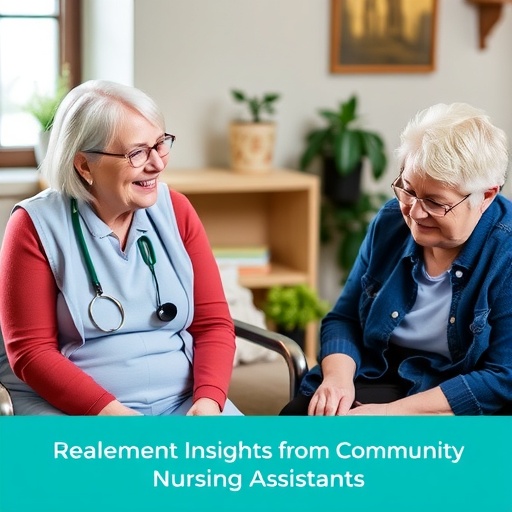
In an era marked by rapidly aging populations worldwide, the emphasis on sustainable and effective elderly care has never been more critical. Recent research sheds light on an innovative approach to supporting older adults who live independently—known as reablement. This strategy, primarily delivered by community-based nursing assistants, offers new hope for enhancing the quality of life among senior citizens while simultaneously reducing healthcare costs and system burdens. A breakthrough interview study conducted by Nielsen, Forster, Thomsen, and colleagues, published in BMC Geriatrics, provides a compelling exploration into the real-world experiences of those delivering this emerging form of care.
Reablement is a rehabilitative, person-centered approach designed to help older individuals regain or maintain their skills to live independently in their homes. Unlike traditional caregiving models that often revolve around doing tasks for the elderly, reablement focuses on enabling and empowering them to do tasks themselves. This subtle but profound shift places nursing assistants at the forefront of a transformative healthcare dynamic. The study in question dives deep into the subjective perspectives of these nursing assistants, unpacking the challenges, strategies, and emotional impacts tied to delivering reablement services within community settings.
The interviews captured a nuanced picture of how community-based nursing assistants perceive their roles and responsibilities. Participants articulated a strong sense of purpose, noting that facilitating independence rather than providing dependency was both rewarding and professionally fulfilling. However, they also disclosed practical hurdles, such as time constraints, training gaps, and limited resources, which sometimes impede their ability to fully implement reablement principles. These candid insights offer crucial feedback for policymakers and care organizations aiming to refine elderly care protocols.
One particularly salient theme unearthed was the delicate balance between supporting autonomy and ensuring safety. Nursing assistants expressed the tension between encouraging older adults to perform activities independently and the need to prevent potential falls or health deteriorations that could result from overexertion. This ethical and practical conundrum underscores the necessity for refined training programs that equip care providers with both clinical judgment and interpersonal skills to navigate these sensitivities effectively.
Technology integration emerged subtly within the conversations as well. While reablement relies heavily on human interaction and personalized care strategies, nursing assistants highlighted the growing role of assistive technologies and monitoring systems in augmenting their efforts. These tools, including wearable devices and telehealth platforms, hold promise for extending the reach and precision of reablement but also introduce new dimensions for training and protocol development.
Moreover, emotional labor is an often understated component of reablement delivery. The study revealed that nursing assistants frequently developed empathetic relationships with their clients, fostering trust and motivation essential for successful reablement. However, these close connections occasionally led to emotional strain, as caretakers grappled with the slow progress or resistance they encountered. Recognizing and supporting this emotional facet is paramount to sustaining a motivated and resilient workforce.
From a systemic viewpoint, the study highlights that reablement aligns well with the broader goals of health systems seeking cost-effectiveness coupled with improved patient outcomes. By enabling older adults to remain autonomous, reablement can delay or prevent the need for institutionalized care, which is significantly more expensive and, many argue, less desirable from a quality-of-life perspective. This economic and ethical advantage incentivizes governments and health organizations to invest in training community-based nursing assistants and developing infrastructure conducive to reablement models.
Training and professional development emerge as critical components to the successful scaling of reablement. Nursing assistants in the study emphasized that initial training often lacked depth in reablement concepts, leaving many feeling underprepared. Ongoing education, practical workshops, and interdisciplinary collaboration were identified as key mechanisms to enhance skill sets and foster a culture oriented toward independence and empowerment rather than dependency.
The cultural context also plays a decisive role in shaping reablement outcomes. The study participants noted that individual client backgrounds, beliefs about aging and independence, and familial involvement varied widely, all influencing the willingness and effectiveness of reablement interventions. Tailoring reablement practices to these cultural nuances is vital for maximizing their impact and respectfulness.
Furthermore, interprofessional cooperation was frequently mentioned as a factor that could strengthen reablement services. Nursing assistants working alongside occupational therapists, physicians, and social workers found more integrated care pathways and better client outcomes. This multidisciplinary synergy is a promising avenue for future healthcare models targeting older populations.
The study’s qualitative design enabled a rich, detailed exploration of the lived experiences of nursing assistants, highlighting not just operational elements but also the personal narratives behind reablement work. These stories provide invaluable context that quantitative data alone cannot capture, offering healthcare stakeholders a roadmap to address gaps and build on strengths.
Ethical considerations were woven throughout the interviews, particularly the respect for older adults’ dignity and preferences. The nursing assistants consistently underscored the importance of collaborative goal setting with clients, ensuring that care plans reflected personal values and aspirations rather than paternalistic assumptions. This ethical grounding is essential for truly person-centered care.
The ripple effects of reablement extend beyond the immediate clinical sphere. By empowering older persons, reablement can also positively influence their social interactions, mental health, and self-esteem. Nursing assistants observed clients showing increased confidence and participation in community life, which are critical markers of healthy aging.
Policy implications arising from this study are significant. To expand reablement successfully, systemic changes are needed, including standardized training curricula, revised care protocols, investment in assistive technologies, and mechanisms for monitoring and evaluating outcomes. Policymakers must also address workforce wellbeing and support to avoid burnout and turnover within this pivotal care segment.
Importantly, reablement represents not just a technique but a paradigm shift toward valuing independence, dignity, and proactive health management in geriatrics. The voices of nursing assistants conveyed in this study resonate with broader societal aspirations to create sustainable, compassionate, and effective eldercare systems.
In sum, this comprehensive examination of community-based nursing assistants’ experiences delivering reablement offers a blueprint for future innovations in home care. It underscores the promise of reablement to improve lives, reduce costs, and refresh the ethos of elderly care through empowerment and respect. As aging demographics continue to grow, embracing and refining reablement could well become a cornerstone of modern healthcare.
Subject of Research: Experiences of community-based nursing assistants delivering reablement services to home-dwelling older adults.
Article Title: Experiences of delivering reablement to home-dwelling older persons: an interview study of community-based nursing assistants.
Article References:
Nielsen, A., Forster, A., Thomsen, J.L. et al. Experiences of delivering reablement to home-dwelling older persons: an interview study of community-based nursing assistants. BMC Geriatr (2026). https://doi.org/10.1186/s12877-026-07326-9
Image Credits: AI Generated


