

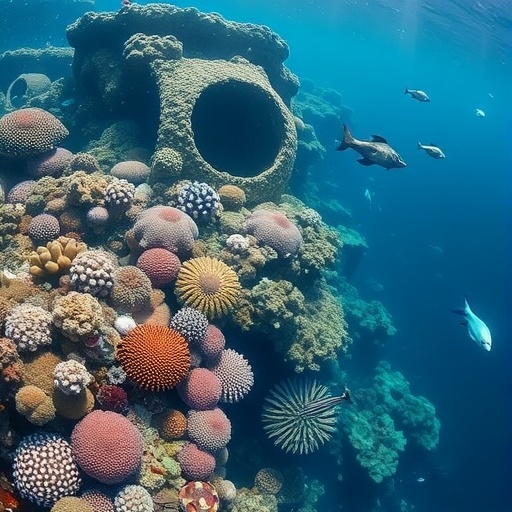
The ongoing rollback of conservation policies by the United States government poses a significant threat to the fragile coral reefs surrounding its Pacific island territory of Guam. Central to this issue is the longstanding framework of the Endangered Species Act (ESA), which currently emphasizes the protection of narrowly defined species categories. This specificity inadvertently excludes many vital marine organisms, including a broad array of reef-building corals, thus leaving them vulnerable to further human activities. Leading scientists from the University of Tokyo, University of Guam, University of Technology Sydney, and Cornell University have raised urgent concerns and proposed critical policy reform aimed at broadening conservation definitions to better encompass the diversity of coral ecosystems.
Coral reefs are among the most biologically diverse and ecologically valuable ecosystems on the planet. Their complex three-dimensional structures, particularly in genera such as Acropora, provide essential habitat for myriad marine species, supporting intricate food webs and contributing to biodiversity on a global scale. Beyond their ecological functions, coral reefs also serve as natural barriers that safeguard coastlines from erosive forces and devastating storm surges. Furthermore, they generate significant economic benefits through tourism and fishing industries when sustainably managed. Despite their resilience in some aspects, however, coral reefs are extraordinarily sensitive to a variety of anthropogenic pressures including climate change, pollution, overfishing, and military activities.
The researchers highlight a growing paradox where the ESA, a fundamental legal instrument for protecting endangered species in the United States, is hampered by its rigid taxonomy and narrow species listings. This restrictiveness effectively excludes numerous reef-building coral species that do not neatly fit within the current species-level classifications. Such exclusions open the door for military and business interests to pursue projects that bypass critical environmental regulations, thus exacerbating the rapid degradation of coral reef habitats. This precise conservation gap stems from the difficulty of defining coral species based on conventional taxonomic criteria, given their morphological plasticity and complex reproductive behaviors.
One of the major challenges identified is that many coral species, particularly within the Acropora genus, exhibit extreme morphological variability. Their physical characteristics can significantly change in response to environmental conditions such as water temperature, light availability, and nutrient levels. This phenotypic plasticity complicates species identification, making it difficult for conservation policies to anchor protections on a stable taxonomic basis. Moreover, coral reproductive mechanisms are poorly understood and notoriously difficult to replicate reliably in laboratory settings, limiting the ability to evaluate species boundaries based on reproductive isolation or compatibility, which is the traditional approach used for terrestrial fauna.
To address these issues, the team advocates a paradigm shift in conservation policy from narrowly defined species-specific protections towards broader categorizations at the genus level or higher taxonomic ranks. This approach seeks to encapsulate the extensive genetic and phenotypic diversity inherent within coral populations that is currently overlooked. By protecting entire genera, policymakers can provide more comprehensive safeguards for coral reef ecosystems as a whole, which are essential for maintaining their ecological integrity and resilience amid escalating environmental pressures. This reframing would also acknowledge the limitations of existing taxonomic frameworks and the urgent need to adapt conservation measures to the realities of marine biodiversity.
In their recent commentary published in Science, the authors warn that the continued erosion of ESA protections may accelerate the disappearance of reef-building corals faster than scientific assessment can keep pace. This lag in documentation and recognition fundamentally challenges conservation efforts and raises the risk of “silent extinctions” where species vanish unnoticed. The letter calls on policymakers to close regulatory loopholes that permit ongoing military and industrial expansions which threaten critical habitat zones in and around Guam and likely other vulnerable regions. This advocacy underscores the interconnectedness of environmental law, biodiversity research, and geopolitical interests in shaping the future of oceanic ecosystems.
The implications of this work extend beyond coral reefs and could serve as a precedent for revising conservation strategies across diverse ecosystems facing taxonomic complexity. Complex and understudied environments—from tropical rainforests to microbial communities—may similarly benefit from broader protective frameworks that capture genetic lineages rather than narrowly delimited species units. This inclusive method could mitigate the risk of biased conservation priorities that favor well-studied or charismatic taxa while neglecting cryptic biodiversity that performs vital ecological roles. The scientific community increasingly recognizes the urgency of developing adaptive policies that can respond dynamically to rapid ecological changes and evolving biodiversity knowledge.
Colin Anthony, the lead doctoral fellow from the University of Tokyo’s Department of Integrated Biosciences, emphasized that the traditional species concept struggles to keep pace with the realities of coral biology. Given the vast geographic distributions and environmental heterogeneity these animals inhabit—ranging across the entire Pacific Ocean—traditional taxonomic methods reliant on phenotype or limited reproductive trials fall short. Genetic approaches offer powerful tools but are insufficient alone without comprehensive phenotypic markers and distributional data to inform meaningful classifications. This complexity requires novel interdisciplinary approaches blending genomics, ecology, and policy to effectively conserve these systems.
The fragile nature of coral reefs is further compounded by climate-induced stressors such as ocean warming and acidification, which weaken coral calcification and increase susceptibility to bleaching events. Coupled with localized anthropogenic impacts like sedimentation and chemical runoff, reefs face a multidimensional crisis that threatens their very existence. The researchers’ call for expanded taxonomic protections under the ESA is therefore timely and necessary, as current practices fail to provide a robust legal shield against these accelerating threats. Effective conservation requires not only scientific understanding but also the political will to implement progressive regulatory frameworks.
Beyond regulatory reform, the authors suggest that increased funding and international collaboration are key components to strengthen coral reef conservation. Enhanced scientific monitoring, including in situ genetic sampling and long-term ecological assessments, can improve species delineation and population health evaluations. Moreover, global coordination can ensure harmonized policy responses that transcend national boundaries, recognizing the transoceanic nature of coral reef ecosystems and their vulnerability to global change. The intersection of science and policy highlighted in this research exemplifies the complexities and necessities of modern conservation biology.
In summary, coral reefs stand at a critical crossroads where existing conservation laws, despite their good intentions, are insufficient to protect these indispensable ecosystems from rapid deterioration. Broadening legal definitions within statutes such as the Endangered Species Act to accommodate genus-level protections is a strategically sound and scientifically justified step forward. This approach aligns legislative actions with the ecological realities of coral biology and biodiversity, thereby improving chances for reef survival in an increasingly hostile environment. If adopted, such reforms can serve as a global model for protecting other complex and threatened ecosystems worldwide.
Subject of Research: Not applicable
Article Title: Endangered Species Act changes threaten reefs
News Publication Date: 12-Feb-2026
Web References:
https://www.science.org/doi/10.1126/science.aee4748
References:
Colin J Anthony, Colin Lock, Steven Mana’oakamai Johnson, Shinichiro Maruyama, Laurie J Raymundo, “Endangered Species Act changes threaten reefs”, Science, DOI:10.1126/science.aee4748
Image Credits:
©2026 Colin Anthony CC-BY-ND
Keywords: coral reef conservation, Endangered Species Act, Acropora, marine biodiversity, taxonomic challenges, environmental policy, Pacific Ocean reefs, climate change impact, habitat protection, ecological resilience, reef degradation, marine ecosystem management


