

In a groundbreaking advance poised to redefine ocular drug delivery, researchers have successfully engineered a novel nanotechnology-based approach using quercetin-conjugated superparamagnetic iron oxide nanoparticles (SPIONs) to traverse the eye’s formidable physiological barriers. The study, led by Hajiaghajanian and colleagues and published in BMC Pharmacology and Toxicology (2026), delves deep into the molecular interplay modulated by these nanocarriers, focusing particularly on the fine balance between pro-apoptotic and anti-apoptotic proteins within the retinal environment. This innovative research promises to open new vistas for treating a host of ocular diseases that have long resisted effective intervention due to delivery challenges.
One of the most striking challenges in ocular pharmacology is the eye’s natural defense system. The corneal epithelium, blood-aqueous barrier, and blood-retinal barrier serve as highly selective gates that tightly regulate molecular traffic, a necessary protection mechanism that also severely limits therapeutic access. Overcoming these barriers non-invasively while minimizing toxicity has remained a significant hurdle. The study’s authors ingeniously harnessed the magnetic and surface properties of SPIONs, conjugating them with quercetin—a bioactive flavonoid known for its potent antioxidant and anti-inflammatory effects—to achieve targeted, efficient delivery into the intraocular tissues.
Quercetin’s pharmacological profile is well-established, with prior research highlighting its potential to modulate apoptotic signaling pathways. However, systemic administration suffers from poor bioavailability and rapid metabolism. Attaching quercetin onto SPIONs not only enhances its stability but upgrades its capability to penetrate ocular structures. The nanoparticles’ superparamagnetism allows for external magnetic guidance, which could greatly improve localization and retention within the eye, minimizing off-target exposure and systemic side effects—a critical advance for eye-specific therapeutics.
At the cellular level, the study illuminates how quercetin-SPIONs influence the equilibrium between Bax and Bcl-2 proteins, two pivotal regulators of apoptosis. Bax promotes programmed cell death, while Bcl-2 acts as a guardian against apoptosis, particularly important in the retinal tissue where cellular turnover must be finely managed. Disruption in this balance is implicated in various ocular pathologies, including glaucoma, diabetic retinopathy, and age-related macular degeneration. Through meticulous in vivo experimentation in normal rat eyes, the researchers demonstrated that their nanocomposite modulates this crucial balance, tipping it towards cell survival without promoting aberrant proliferation.
This modulation is believed to arise from quercetin’s ability to scavenge reactive oxygen species (ROS), reduce oxidative stress, and subsequently downregulate pro-apoptotic signaling cascades. The SPIONs act as a robust delivery vehicle, ensuring that sufficient concentrations of quercetin reach the retina where it can exert these cytoprotective effects. What’s particularly compelling is that, unlike many conventional treatments, this strategy directly targets the molecular pathways that underlie retinal degeneration, offering a tailored, mechanism-based intervention.
The researchers employed advanced characterization techniques such as transmission electron microscopy (TEM) to confirm the size and morphology of the quercetin-SPION nanocomplexes, dynamic light scattering (DLS) for particle size distribution and stability assessment, and Fourier-transform infrared spectroscopy (FTIR) to verify successful conjugation of quercetin onto the nanoparticle surface. These thorough physicochemical evaluations laid the groundwork for reliable biological assessments, underscoring the robustness of the nanocarrier system.
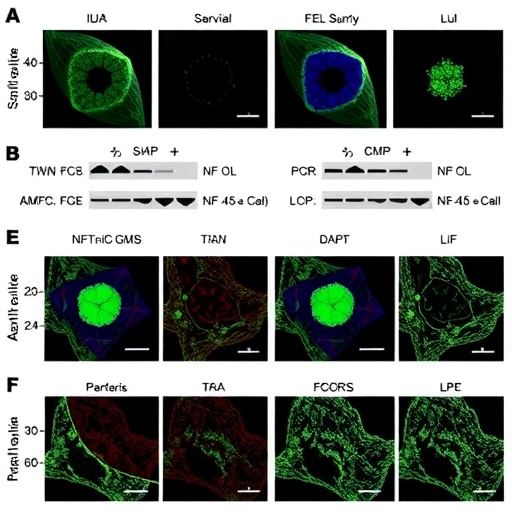
In vivo testing involved administering these nanocarriers into the vitreous of rat eyes followed by histological examinations and immunoblot analyses targeting Bax and Bcl-2 expression. Results indicated a significant downregulation in Bax alongside an upregulation in Bcl-2, implying a net anti-apoptotic protective shift attributable to quercetin-SPION treatment. Importantly, no signs of acute inflammation or cellular toxicity were observed, reinforcing the biocompatibility of this approach and its translational potential.
The implications of this research extend far beyond safety and efficacy. By furnishing a versatile platform that combines targeted delivery with molecular pathway modulation, quercetin-SPIONs could address a spectrum of retinal disorders that currently lack effective treatments. Conditions characterized by oxidative stress-induced apoptosis, such as diabetic macular edema or retinitis pigmentosa, may particularly benefit from this dual-action therapeutic paradigm.
Moreover, the magnetic properties of SPIONs invite exciting possibilities for noninvasive control. External magnetic fields could be applied to guide and concentrate these nanoparticles precisely at diseased sites within the eye, potentially reducing dosing frequency and improving therapeutic outcomes. This magnetically assisted delivery also offers an avenue for combining diagnostics with therapeutics—enabling “theranostic” applications where the same particles facilitate real-time imaging and treatment.
The nano-bio interface remains a critical frontier in medical research, and this study exemplifies how interdisciplinary convergence—melding material science, pharmacology, and molecular biology—can drive innovation. The authors’ approach leverages the physicochemical advantages of nanomaterials while carefully respecting the delicate ocular environment, which historically has been difficult to target without causing collateral damage.
Notably, the work also underscores the importance of maintaining the physiological homeostasis of apoptotic regulators. Excessive inhibition of apoptosis risks unwelcome cellular overgrowth, whereas unchecked apoptosis leads to tissue degeneration. The ability to fine-tune this balance with biocompatible nanoparticles loaded with natural bioactives like quercetin marks a milestone in precision ocular medicine.
Future directions envisioned by the research team include scaling up nanoparticle synthesis under good manufacturing practice (GMP) conditions, conducting long-term safety and efficacy trials, and exploring the utility of this platform in pathological models. Testing in disease-specific animal models will be vital to discern the therapeutic breadth and optimize dosing regimens. Furthermore, the possibility of co-loading other synergistic molecules alongside quercetin could enhance efficacy against multifactorial retinal diseases.
The study’s open-access publication has generated considerable buzz across the ophthalmological and nanomedicine communities, hinting at a paradigm shift in eye disease management. It taps into the growing enthusiasm for leveraging flavonoid-based compounds within nanoscale frameworks, combining nature’s pharmacophores with engineered precision. If translated successfully into clinical practice, such technologies could substantially improve vision preservation and quality of life for millions worldwide.
In summary, Hajiaghajanian et al. provide compelling evidence that quercetin-SPION nanocarriers effectively penetrate ocular barriers and beneficially modulate apoptosis regulators in the retina. Their research stands at the confluence of nanotechnology and molecular therapy, offering a novel, promising solution to a long-standing obstacle in ocular drug delivery. This elegant synthesis of material science innovation and biological insight sets a precedent for future therapeutics designed to harmonize with intricate physiological systems rather than override them.
Subject of Research: Nanoparticle-mediated delivery of quercetin across ocular barriers to modulate apoptotic protein balance in the retina.
Article Title: Crossing ocular barriers with quercetin-SPIONs: modulation of Bax/Bcl-2 balance in normal rat eyes.
Article References:
Hajiaghajanian, M., Movahedi, N., Pouriaii, D. et al. Crossing ocular barriers with quercetin-SPIONs: modulation of Bax/Bcl-2 balance in normal rat eyes. BMC Pharmacol Toxicol (2026). https://doi.org/10.1186/s40360-026-01113-3
Image Credits: AI Generated


