

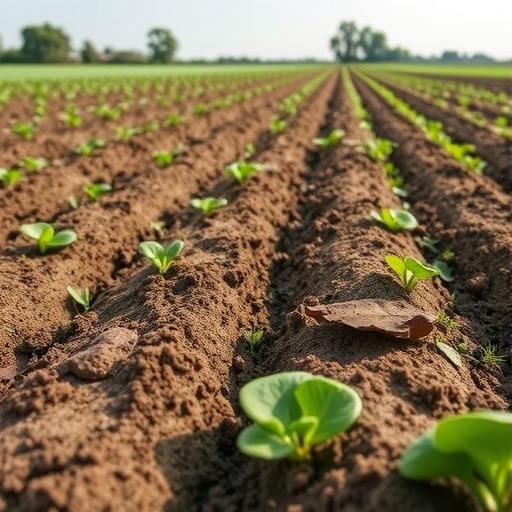
In a groundbreaking study, researchers Castillo-Avila and Castillo-Figueroa have embarked on an unprecedented journey into the tropical montane forests of the Andes, serving as a crucial examination of the biological quality of soils within diverse agroforestry systems and forest successions. Their findings, published in the journal Environmental Monitoring and Assessment, utilize the QBS-ar index, a novel tool in soil biology, providing an insightful perspective on the interplay between agricultural practices and natural ecological processes.
The tropical Andes represent a unique ecological hotspot, characterized by immense biodiversity, complex ecosystems, and significant cultural heritage. With the increasing pressures of climate change and deforestation, understanding the biological quality of soils in this region has become paramount. By applying the QBS-ar index for the first time in these mountainous terrains, the researchers have not only filled a critical gap in the scientific literature but also laid the groundwork for future explorations of ecological health across various landscapes.
Soil, often regarded as a mere substrate for plants, is an intricate and dynamic ecosystem itself, teeming with microorganisms, fungi, and organic matter that play essential roles in nutrient cycling and plant growth. This study highlights how agricultural practices, including agroforestry, influence soil biota, ultimately affecting ecosystem services and sustainability. The research emphasizes that maintaining high soil biological quality is crucial for the health of both agroecosystems and natural forests.
One of the highlights of the study is the demonstrated utility of the QBS-ar index. This innovative metric evaluates biological soil quality by assessing the presence and activity of various organisms, ranging from bacteria to larger soil fauna. By quantifying ecological functions and relationships, the researchers present a comprehensive understanding of the soil’s health, its capacity to sustain life, and its resilience against environmental shocks.
Furthermore, the study outlines stark contrasts in soil biological quality between different land-use systems. Notably, it reveals that agroforestry systems, characterized by the integration of trees and shrubs with crops, tend to foster higher soil microbial diversity and activity compared to monoculture fields. This finding is particularly significant in the context of sustainable agriculture since it suggests that diversifying agricultural practices could enhance soil health while simultaneously bolstering crop yields.
In addition, the researchers explore the implications of forest succession on soil biota. As natural forests undergo the process of succession, transitioning from early-stage to mature ecosystems, the biological quality of the soil also changes dramatically. The study outlines that older forests tend to support more robust soil communities, which are pivotal in promoting nutrient cycling and improving soil structure, ultimately creating a more fertile environment for plant growth.
In terms of methodology, the researchers meticulously collected soil samples across various agroforestry systems and different stages of forest succession. Using the QBS-ar index, they assessed these samples through laboratory analyses that measured biological indicators such as microbial biomass, enzyme activities, and the presence of specific soil organisms. This rigorous approach underpins the credibility of their findings and sets a high standard for future research in soil health assessment.
Moreover, the implications of this research extend far beyond the realm of academia. Policymakers, land managers, and farmers stand to benefit from these insights into soil biology. By understanding the critical role of biodiversity in soil health, strategies can be developed to promote sustainable land-use practices that balance ecological integrity with agricultural productivity. This existing research reinforces the need for continued investment in agroecological methods that support both food security and environmental conservation.
Additionally, the article emphasizes the urgency of adapting agricultural practices in response to the mounting threats posed by climate change. As weather patterns become increasingly unpredictable, and the frequency of extreme events rises, fostering resilient agricultural systems becomes vital. The findings of this study provide a framework for identifying practices that enhance soil resilience, thus mitigating the impacts of climate-induced stress on agricultural productivity.
In terms of global relevance, the study’s contextualization within the Andean region serves as a microcosm for similar ecosystems worldwide. The challenges faced in maintaining soil biological quality in the Andes echo those in other tropical and subtropical regions. Therefore, the lessons learned from this research can be scaled and adapted to facilitate improved agricultural practices and ecological management globally.
In conclusion, the groundbreaking work conducted by Castillo-Avila and Castillo-Figueroa marks a pivotal advancement in understanding soil health, particularly within the context of tropical montane agroforestry and forest succession. The application of the QBS-ar index provides valuable insights and serves as a critical tool for assessing the biological quality of soils, offering pathways for enhanced agricultural sustainability and ecological preservation. As the world grapples with increasing environmental challenges, such innovative research will be instrumental in guiding future strategies for land management and conservation efforts.
The detailed findings of this research not only contribute to the scholarly discussion surrounding soil biology but also serve as a call to action for prioritizing ecological considerations within agricultural frameworks. Ultimately, fostering healthy soils is synonymous with securing a sustainable future for both people and the planet, ensuring that the ecosystems we rely on remain resilient in the face of change.
Subject of Research: Soil biological quality in tropical montane Andes across agroforestry systems and forest succession.
Article Title: First application of the QBS-ar index in the tropical montane Andes reveals soil biological quality across agroforestry systems and forest succession.
Article References: Castillo-Avila, C., Castillo-Figueroa, D. First application of the QBS-ar index in the tropical montane Andes reveals soil biological quality across agroforestry systems and forest succession. Environ Monit Assess 198, 149 (2026). https://doi.org/10.1007/s10661-025-14926-2
Image Credits: AI Generated
DOI: https://doi.org/10.1007/s10661-025-14926-2
Keywords: Soil biology, agroforestry, montane forests, QBS-ar index, biodiversity, sustainable agriculture, forest succession, ecological health, resilience, climate change, nutrient cycling.


