

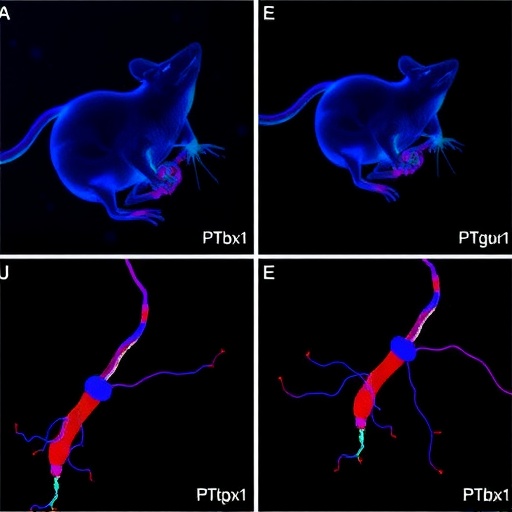
In a groundbreaking development poised to reshape the landscape of muscle disease therapy, researchers Fan, Liu, Pan, and their colleagues have unveiled a novel molecular strategy that holds tremendous promise for treating muscular dystrophy. Published in Nature Communications in 2026, their study reveals how targeted inhibition of the RNA-binding protein PTBP1 can reprogram muscle stem cell differentiation, correcting a crucial splicing defect and rescuing impaired muscle regeneration in a widely used muscular dystrophy mouse model. This discovery not only deepens our understanding of muscle biology but could usher in innovative treatments for progressive muscle wasting diseases that have long eluded effective intervention.
At the core of this transformative research lies the role of alternative RNA splicing, a fundamental cellular mechanism that diversifies protein production from a single gene. Specifically, the team focused on a splicing factor known as PTBP1, which regulates the alternative splicing of E2A transcripts—critical players in muscle cell development or myogenesis. In healthy conditions, the precise splicing of E2A mRNA ensures the production of functional protein variants necessary for muscle repair and regeneration. However, in the mdx mouse model of Duchenne Muscular Dystrophy (DMD), a severe muscle degenerative disease, aberrant splicing of E2A contributes to defective muscle stem cell function and compromised regeneration.
The mdx mouse has remained a gold standard for studying DMD, characterized by a genetic deficit in dystrophin leading to chronic muscle damage and regenerative failure. Conventional therapeutic approaches have struggled to effectively reverse or halt muscle degeneration in mdx mice, largely due to incomplete understanding of the intricate molecular disruptions that underlie stem cell dysfunction. By illuminating how PTBP1 dysregulation disrupts E2A splicing, this study provides a critical missing link connecting splicing factor biology to muscle regeneration outcomes in dystrophic muscle.
Methodologically, the research team harnessed cutting-edge molecular biology techniques to inhibit PTBP1 expression in muscle satellite cells—the resident stem cells responsible for muscle repair. Through genetic knockdown experiments and pharmacological approaches, they demonstrated that reducing PTBP1 levels restored correct E2A splicing patterns in mdx mice. This correction was accompanied by a profound enhancement in satellite cell differentiation capacity, leading to markedly improved muscle regeneration. Importantly, these functional improvements translated into measurable gains in muscle strength and histological architecture, signaling a meaningful reversal of dystrophic pathology.
What sets this study apart is not only the mechanistic insight into the splicing regulation of myogenesis but also its therapeutic implications. By targeting a splicing factor rather than a traditional structural protein, the approach circumvents some of the challenges faced by gene replacement or editing strategies, which have been limited by delivery inefficiencies and immune responses. The ability to modulate RNA processing represents a versatile and potentially safer avenue for regenerative medicine, particularly for diseases with complex genetic underpinnings like DMD.
Furthermore, the research elucidates how PTBP1 inhibition reprograms the transcriptomic landscape of muscle satellite cells. Advanced RNA sequencing revealed that correcting E2A splicing cascades into widespread changes in gene expression profiles favoring myogenic commitment while diminishing fibrotic and inflammatory signaling pathways that exacerbate muscle deterioration. This dual effect—promoting regeneration while mitigating pathological remodeling—highlights the multifaceted benefits of splicing modulation in muscle pathology.
The temporal dynamics of PTBP1 inhibition were also explored, demonstrating that early intervention post-muscle injury yields the most pronounced regenerative outcomes. This temporal sensitivity underscores the importance of understanding disease progression stages when considering splicing-targeted therapies and paves the way for potential combinatorial treatments that synchronize with endogenous repair processes.
Beyond DMD, the findings hold broader relevance for other muscle disorders characterized by stem cell dysfunction and aberrant splicing events. Conditions such as limb-girdle muscular dystrophies, inclusion body myositis, and age-related sarcopenia could potentially benefit from therapies designed to fine-tune splicing regulators like PTBP1. This expands the horizon of RNA-based therapeutics into a new frontier of muscle medicine.
The study also raises intriguing questions for future research. How might transient versus sustained PTBP1 inhibition differentially impact muscle homeostasis? Could systemic delivery of PTBP1 inhibitors be achievable without off-target effects in non-muscle tissues? And what role do other splicing factors play in the complex regulatory network governing muscle regeneration? Addressing these questions will be pivotal for translating these promising preclinical findings into human clinical trials.
In summary, the work of Fan and colleagues marks a paradigm shift in our approach to treating muscular dystrophies. By unveiling the therapeutic potential of PTBP1 inhibition to correct defective E2A splicing and reprogram myogenesis, they provide a compelling proof of concept for RNA splicing modulation as a regenerative strategy. This innovative intervention offers renewed hope to patients suffering from devastating muscle diseases and exemplifies the power of molecular precision medicine to unlock new dimensions of biological repair.
As scientific and medical communities further unravel the complexities of RNA biology in muscle function, the prospect of developing tailored splicing-targeted therapies becomes increasingly tangible. The success of PTBP1 inhibition in rescuing dystrophic muscle regeneration could serve as a blueprint for designing next-generation treatments that harness the cell’s own regulatory machinery to restore tissue health. In an era where genetic disorders were once deemed untreatable, this breakthrough underscores the critical importance of RNA biology as both a window into disease and a lever for therapeutic innovation.
Ultimately, this pioneering study resonates far beyond the laboratory, offering a beacon of hope for millions affected by muscle degenerative diseases worldwide. It heralds an exciting future where the molecular intricacies of RNA processing are harnessed to rewrite cellular fate and restore function, transforming the clinical outlook for muscle disorders from despair to cure.
Subject of Research:
Article Title:
Article References:
Fan, S., Liu, X., Pan, Q. et al. PTBP1 inhibition reprograms myogenesis to rescue impaired muscle regeneration in mdx mice through correcting E2A splicing. Nat Commun (2026). https://doi.org/10.1038/s41467-026-70669-9
Image Credits: AI Generated
DOI: https://doi.org/10.1038/s41467-026-70669-9
Keywords: PTBP1 inhibition, E2A splicing, muscle regeneration, Duchenne muscular dystrophy, mdx mice, RNA splicing, myogenesis, satellite cells, muscular dystrophy therapy


