

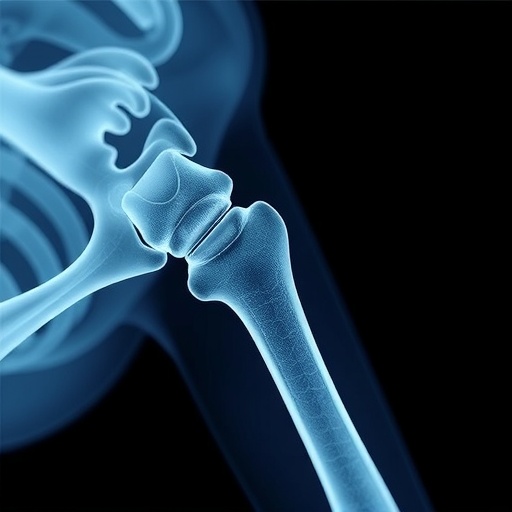
In the ever-evolving landscape of geriatric medicine, fractures of the proximal humerus present a significant clinical challenge. These injuries, often resulting from falls or minor trauma in older adults, can drastically impair mobility and quality of life. A groundbreaking retrospective cohort study published in BMC Geriatrics by Saitsu, Yamana, Sasabuchi, and colleagues offers an unprecedented deep dive into the treatment approaches and prognostic outcomes of proximal humerus fractures in an aging population, leveraging a comprehensive health insurance claims database.
Proximal humerus fractures, accounting for nearly 5% of all fractures, disproportionately affect the elderly due to age-related bone density decline and increased susceptibility to falls. Despite their prevalence, optimal treatment strategies remain a subject of ongoing debate within orthopedic and geriatric circles. The study harnesses large-scale claims data to transcend the limitations of single-center trials, capturing real-world treatment patterns and outcomes across diverse healthcare settings.
The research team meticulously analyzed thousands of cases, focusing on patients aged 65 and older who sustained a proximal humerus fracture. The retrospective nature of the cohort enabled the aggregation of data over multiple years, shedding light on longitudinal trends in both conservative and surgical interventions. By evaluating treatment modalities such as immobilization, open reduction and internal fixation (ORIF), and hemiarthroplasty, the study quantifies not only the incidence of these approaches but also their associations with patient recovery trajectories.
Compellingly, the findings reveal nuanced insights into the prognostic significance of selected treatment modalities. While surgical procedures often aim to expedite functional restoration, the study underscores the potential for increased complications, particularly in frail elderly patients with comorbidities. Conversely, conservative management, although less invasive, correlates with prolonged immobilization periods, which may amplify risks of secondary complications like pneumonia or thromboembolism.
A striking aspect of this research is its comprehensive approach to outcome assessment beyond mere fracture healing. The authors incorporated measures of mortality, rehospitalization rates, and the necessity for subsequent surgical interventions. Such a holistic appraisal facilitates a more informed clinical decision-making process, allowing practitioners to weigh immediate surgical benefits against long-term risks in an individualized, patient-centered manner.
The utilization of health insurance claims data brings novel strengths and challenges. On one hand, the vast dataset enhances statistical power and generalizability, capturing heterogeneous patient populations that often elude randomized controlled trials. On the other hand, reliance on administrative codes mandates cautious interpretation due to potential inaccuracies or variability in coding practices across institutions. Nonetheless, the authors diligently validate their methodology and mitigate confounders through rigorous statistical adjustments.
Intriguingly, the study also illuminates temporal trends in treatment preferences and prognoses, reflecting evolving clinical guidelines and technological advancements. Over the recent decade, a gradual shift toward minimally invasive techniques accompanied by enhanced perioperative care protocols emerges, potentially influencing observed outcome patterns. This dynamism emphasizes the importance of continual surveillance and data-driven policy updates in geriatric orthopedic care.
Importantly, the research highlights disparities in treatment decisions influenced by patient demographics, comorbidity burden, and healthcare resource availability. For example, older patients with significant cardiovascular or pulmonary disease were less likely to receive aggressive surgical management, instead favoring conservative treatments despite the attendant trade-offs. These findings underscore the complexity of balancing standardized protocols with tailored approaches sensitive to individual health status and social determinants.
From a biomechanical standpoint, the proximal humerus is a highly mobile joint segment, relying on intricate muscular coordination and bone integrity. Fractures disrupt this delicate balance, often compromising shoulder range of motion and upper limb functionality. The study’s detailed analysis of rehabilitation trajectories reveals that early mobilization, when feasible, is paramount to minimizing long-term disability. Consequently, the timing and intensity of physical therapy emerge as critical adjuncts to both surgical and conservative treatment strategies.
Moreover, the investigation sheds light on post-treatment complications, a frequent concern in geriatric fracture management. The incidences of infection, nonunion, implant failure, and functional decline are meticulously catalogued, drawing attention to modifiable risk factors. Strategies including optimizing nutritional status, enhancing perioperative protocols, and vigilance in comorbidity management may serve to mitigate some of these adverse outcomes.
The psychological impact of proximal humerus fractures on elderly patients is another dimension echoed in this study. Extended immobilization and functional loss often precipitate depression, social isolation, and diminished independence. Recognizing these facets, the authors advocate for integrating psychosocial support within multifaceted care models to foster holistic recovery.
In terms of healthcare economics, the study quantifies the significant fiscal burden posed by proximal humerus fractures in older adults. Hospitalization costs, rehabilitation expenses, and indirect costs related to caregiving and lost productivity coalesce into a substantial economic challenge. These data reinforce the imperative for cost-effective treatment models that optimize outcomes without disproportionate resource utilization.
Looking forward, the authors propose directions for future research grounded in their findings. Prospective trials designed to evaluate novel surgical techniques, biologics enhancing bone healing, and personalized rehabilitation regimens could refine care protocols. Additionally, integration of patient-reported outcomes and quality-of-life metrics will enrich understanding of treatment impact beyond clinical parameters.
This landmark study by Saitsu et al. signifies a major stride toward evidence-based geriatric orthopedics. By harnessing the power of real-world data, it equips clinicians, policymakers, and researchers with actionable insights to improve the management of proximal humerus fractures. As the global population ages, such data-driven frameworks will be critical to sustaining functional independence and quality of life among older adults.
In summary, proximal humerus fractures represent a multifaceted clinical problem in geriatric medicine, encompassing biomechanical, physiological, psychosocial, and economic dimensions. The comprehensive retrospective cohort study utilizing a health insurance claims database delineates current treatment landscapes, prognostic indicators, and opportunities for optimization. By balancing surgical risks and benefits with patient-specific characteristics, the research propels a paradigm shift towards personalized, holistic care.
This work highlights the imperative of interdisciplinary collaboration, combining orthopedic expertise, geriatric assessment, rehabilitation science, and health policy. Advancements born from such integrative efforts hold promise to transform the prognosis of older adults recovering from proximal humerus fractures, ultimately supporting longer, healthier lives in an aging society.
Subject of Research: Treatment and prognosis of proximal humerus fractures in older adults.
Article Title: Treatment and prognosis of proximal humerus fracture in older adults: a retrospective cohort study using health insurance claims database.
Article References:
Saitsu, A., Yamana, H., Sasabuchi, Y. et al. Treatment and prognosis of proximal humerus fracture in older adults: a retrospective cohort study using health insurance claims database. BMC Geriatr (2026). https://doi.org/10.1186/s12877-026-07269-1
Image Credits: AI Generated


