

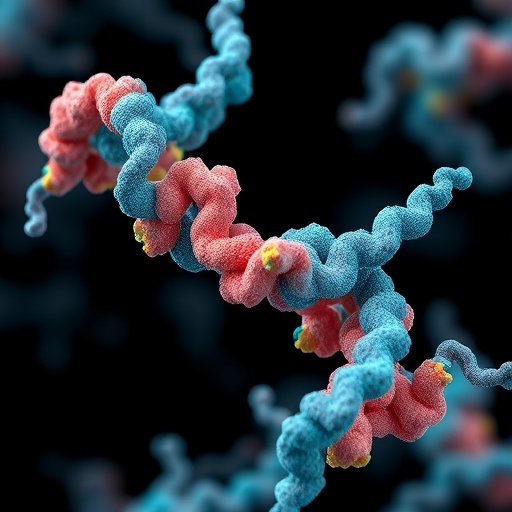
In a groundbreaking discovery, researchers at Penn State have revealed that the farnesoid X receptor (FXR), a crucial protein involved in regulating fat, glucose, and cholesterol metabolism, can form an unexpected partnership—not with a different protein as previously believed, but with itself. This self-association results in a unique dimer structure that challenges conventional understanding of receptor interactions and opens new avenues for therapeutic strategies aimed at metabolic diseases and liver cancer.
Traditionally, FXR operates by pairing with the retinoid X receptor alpha (RXR), creating a heterodimer that binds to specific DNA sequences to regulate the expression of genes involved in synthesizing bile acids, thereby maintaining lipid and glucose homeostasis. This heterodimeric complex acts as a receptor for various ligands, molecules that trigger the receptor’s gene-regulating activity. However, targeting this complex for therapeutic interventions has proved challenging due to RXR’s involvement in numerous other cellular functions, raising concerns about potential side effects from indiscriminate disruption.
The Penn State team, led by Denise Okafor, took a closer look at the structural dynamics of FXR by isolating the receptor and exposing it to synthetic DNA segments containing FXR’s typical binding sequences. Confirming previous hints that FXR could also homodimerize (form a dimer with itself), they advanced further by investigating whether this FXR-FXR complex retained the capacity to recruit cellular machinery necessary for gene activation. Their experiments demonstrated that the homodimeric complex was indeed capable of initiating gene expression, signifying functional relevance beyond mere structural novelty.
To elucidate the architecture of this unusual dimer, the researchers employed small-angle X-ray scattering (SAXS), a sophisticated imaging technique that offers insights into the three-dimensional shapes of biomolecules in solution without requiring crystallization. This approach revealed that the FXR homodimer adopts a markedly distinct conformation compared to the canonical FXR-RXR heterodimer. Notably, the ligand-binding domains within the FXR homodimer are spatially separated, in contrast to the closely interacting ligand domains observed in FXR-RXR complexes. This separation suggests alternative mechanisms of ligand recognition and gene activation.
The discovery of this extended FXR-FXR conformation implies that the homodimer may regulate a unique subset of genes different from those influenced by the FXR-RXR heterodimer. Such differential gene regulation hints at undiscovered cellular pathways and physiological processes modulated by this newly characterized receptor form. It is hypothesized that these divergent gene expression profiles could implicate the homodimer in previously unappreciated metabolic or regulatory roles within liver cells and beyond.
FXR’s involvement in metabolic diseases and certain cancers has long been recognized, but these findings underscore a heretofore hidden layer of complexity in its function. “We might be uncovering aspects of FXR biology that have been veiled by our focus on its partnership with RXR,” stated Okafor. She emphasized that understanding how the homodimeric complex influences gene networks could provide critical insights into liver disease mechanisms and potential diabetic pathologies.
Moreover, the researchers pointed out the therapeutic implications of these findings. Since RXR participates in many cellular pathways, directly targeting FXR-RXR complexes risks off-target effects detrimental to normal cell functions. The FXR homodimer, with its distinct structural and functional properties, might be exploited to design more selective drugs that modulate receptor activity with fewer unwanted consequences. This approach could revolutionize treatment regimens for liver disorders, metabolic syndromes, and possibly certain cancers.
The research also underscored the versatility and adaptability of nuclear receptor proteins, of which FXR is a member. Typically, these receptors form various dimer configurations that dictate their functional specificity. The identification of an unconventional FXR homodimeric assembly adds a new dimension to receptor biology and emphasizes the need to explore alternate dimerization states in understanding gene regulation.
This study not only broadens the scientific community’s comprehension of receptor structure-function relationships but also poses pressing new questions. Determining the precise gene targets of the FXR homodimer and unraveling its impact on cellular metabolism are critical next steps. Additionally, exploring the ligand affinities and signaling pathways associated with the homodimer will enhance the landscape of nuclear receptor research and therapeutic targeting.
The team also highlighted the instrumental role of advanced biophysical techniques like SAXS in capturing the elusive structures of dynamic protein complexes. Such technologies enable researchers to investigate transient and flexible conformations that traditional crystallography may miss, providing a more comprehensive view of molecular interactions governing cellular regulation.
Funding for this transformative research was provided by prominent institutions including the U.S. National Institutes of Health, the National Science Foundation, and Penn State’s own Huck Institutes of the Life Sciences. The collaborative effort represents a vital contribution to the ongoing mission of deciphering molecular mechanisms underpinning health and disease.
As the understanding of FXR’s structural and functional diversity expands, it heralds a new era in metabolic disease research. Targeting distinct receptor configurations such as the FXR homodimer could pave the way for precision medicine approaches that effectively combat liver-related disorders and metabolic syndromes with improved safety profiles. The discovery serves as a testament to the power of innovative scientific inquiry and structural biology in revealing nature’s molecular intricacies.
Subject of Research: Cells
Article Title: DNA induces non-canonical dimerization of the farnesoid X receptor
News Publication Date: 23-Feb-2026
Web References: http://dx.doi.org/10.1093/nar/gkag087
References: Nucleic Acids Research
Image Credits: Jaydyn Isiminger / Penn State
Keywords: Farnesoid X receptor, FXR homodimer, nuclear receptors, liver metabolism, gene expression regulation, structural biology, small-angle X-ray scattering, metabolic diseases, liver cancer, protein dimerization, ligand-binding domains, therapeutic targeting


