

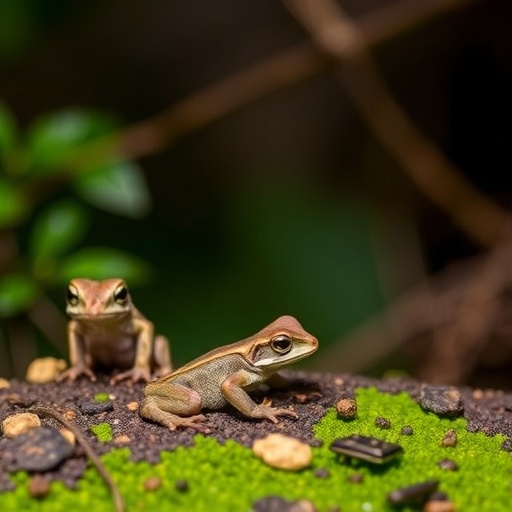
In a groundbreaking study published in Commun Earth Environ in 2025, researchers Yang, Dong, and Jenkins et al. have emphasized the urgent need to prioritize conservation efforts within global Biodiversity Hotspots. This work addresses a critical intersection between biodiversity conservation and the ever-expanding agricultural pressures that threaten small-ranged vertebrate species worldwide. Such species, which often inhabit limited geographical areas, face heightened risks due to habitat loss and environmental degradation driven by agricultural expansion. The implications of these findings resonate across ecological, economic, and social arenas.
The research captures global biodiversity hotspots, which are regions containing a significant number of species that are endemic or confined to that area. These hotspots are rich in unique biodiversity but are also heavily threatened by human activities, particularly agriculture. With expansion in farming practices, large swathes of natural habitats have been converted for crop and grazing land, endangering native species that have evolved within these ecosystems. The study by Yang and colleagues aims to delineate effective conservation strategies that address both the ecological significance and the practical challenges of agricultural expansion.
The methodology employed by the researchers is sophisticated, integrating geospatial analysis with species distribution data. By mapping the ranges of small-ranged vertebrates and overlaying this information with agricultural land use patterns, the team visually illustrates zones where conservation efforts are most urgently needed. This spatial analysis equips policymakers and conservationists with the tools they require to make informed decisions about land use that balance agricultural demands with ecological preservation.
Further compounding the issue is the fact that many small-ranged vertebrates contribute essential ecological functions. Their roles vary from pollination to seed dispersion and are crucial for maintaining the health of ecosystems. The decline in these species due to agricultural pressure could trigger cascading effects that alter entire habitats. The research highlights, therefore, the intrinsic values of these animals, conveying that their protection is not merely an ethical obligation but also a necessity for ecological balance.
Importantly, the study articulates a framework for prioritizing conservation efforts. By identifying not only the species at risk but also the key habitats and landscapes that require protection, the authors lay out a roadmap. This structured approach enables conservationists to allocate resources effectively and to devise intervention strategies that are evidence-based, ensuring the greatest impact for the smallest financial outlay.
Moreover, Yang et al. delve into the socio-economic factors that complicate conservation efforts. Agricultural activities are often a means of livelihood for many communities. Thus, their findings advocate not only for biodiversity conservation but also for developing sustainable agricultural practices that can coexist with conservation efforts. The intersection of ecology and economy indicates a need for dialogue and collaborative solutions that merge farming with preservation.
In discussing potential solutions, the researchers also highlight the importance of community engagement. Educating local populations about the significance of preserving endemic species, and how doing so can bolster ecosystem services, is paramount. Comprehensive engagement strategies could enable communities to become active participants in conservation, providing a sense of ownership and responsibility towards local biodiversity.
Existing conservation frameworks, however, often overlook the specific needs of small-ranged species, leading to oversight in protective measures. This study advocates for an increase in targeted actions within conservation policies that mirror the specific tendencies and vulnerabilities of these species. It raises awareness of the nuanced complexities that impact species at risk and underscores the need for tailored strategies.
The urgency of these findings is backed by comprehensive datasets that span both spatial and temporal scales. The researchers examine how agricultural expansion patterns have evolved over decades, using historical land-use data to project future trends. Their predictive models suggest that if current trajectories continue unchecked, small-ranged vertebrates could face steep declines, prompting an immediate need for intervention.
This research extends its reach beyond academia; fostering discussions among policymakers, agronomists, and conservationists can facilitate new avenues for preserving biodiversity in agricultural landscapes. New policies that reflect a commitment to sustainable practice can help mitigate the agricultural impacts on these sensitive species.
In conclusion, the study by Yang et al. not only highlights the impending threats faced by small-ranged vertebrates but also offers substantive pathways to combat those threats through strategic conservation priorities within Biodiversity Hotspots. Recognizing the dual pressures of habitat loss and agricultural demand is critical in crafting future approaches that aim to protect biodiversity effectively. Implementing the recommendations from this study could serve as a turning point in global conservation efforts, ensuring that these vulnerable species, and the rich tapestry of ecosystems they support, are preserved for generations to come.
The findings articulate a clear call to action, urging stakeholders across sectors—from policymakers to local communities—to collaborate vigorously, integrating agricultural sustainability with robust conservation efforts. This synergy has the potential not only to save endangered species but to enrich our understanding of biodiversity’s role in resilient ecosystems amid changing global landscapes and pressures.
As the push to secure a sustainable future intensifies, Yang et al.’s work exemplifies the intersection of scientific research, policy advocacy, and community development in striving toward a world where biodiversity can thrive alongside human development. Together, we stand on the brink of creating strategies that protect our planet’s unique biological heritage while ensuring food security and economic viability for communities reliant on agricultural practices.
Subject of Research: Conservation priorities for small-ranged vertebrates in global Biodiversity Hotspots amid agricultural pressures.
Article Title: Identifying conservation priorities in global Biodiversity Hotspots to protect small-ranged vertebrates from agricultural pressure.
Article References: Yang, C., Dong, J., Jenkins, C.N. et al. Identifying conservation priorities in global Biodiversity Hotspots to protect small-ranged vertebrates from agricultural pressure. Commun Earth Environ (2025). https://doi.org/10.1038/s43247-025-03099-y
Image Credits: AI Generated
DOI: 10.1038/s43247-025-03099-y
Keywords: biodiversity, conservation, agricultural pressure, small-ranged vertebrates, Biodiversity Hotspots, sustainable agriculture


