

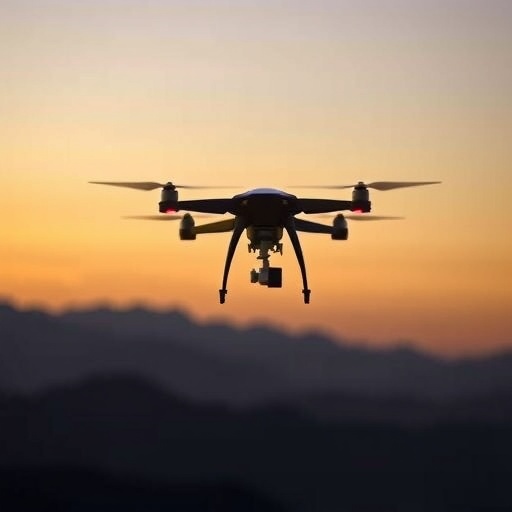
In the rapidly advancing world of technology, the utilization of Unmanned Aerial Vehicles (UAVs) or drones has soared to new heights. These remarkable creations have begun to play pivotal roles in numerous sectors, including agriculture, logistics, surveillance, and even environmental monitoring. With their multi-faceted applicability, the integration of smart technologies such as neural networks poses significant advancements in how these UAVs operate, especially when functioning in formations. Recent research has focused on predicting trajectory deviations within UAV formations using innovative neural network techniques, a groundbreaking approach that promises to enhance the efficiency and reliability of drone operations.
The study led by researchers Dai Ruan, Liu S., and Chen H. explores the intricacies of trajectory prediction within UAV formations through a joint neural network framework. This effort underscores an increasing global interest in enhancing UAV autonomy, particularly in collaborative flying, where fleets of drones must navigate the skies cohesively. Such systems rely heavily on precise navigation and coordinated planning to avoid unexpected deviations in their flight paths. Addressing this critical need through advanced predictive modeling is key to ensuring safe and effective UAV operations.
One of the significant challenges in operating multiple drones at once is the dynamic nature of aerial environments. With changing atmospheric conditions, varying wind speeds, and potential obstacles, deviations from the intended flight path can result in collisions or loss of signal. Researchers in this field have long recognized that while traditional control systems rely solely on predefined paths and reactions to environmental cues, incorporating machine learning models can dramatically enhance a UAV’s adaptability. The innovative model proposed in this research predicts when and how trajectory deviations may occur, allowing for real-time adjustments to ensure safety and mission success.
Utilizing joint neural networks, the research team developed a sophisticated algorithm capable of processing vast amounts of aerial data to understand and predict deviation patterns. By training the model on extensive datasets, which included variables such as speed, altitude, and geographical information, the algorithm learns the subtleties of drone navigation. This neural network approach not only allows for enhanced accuracy in predicting trajectory deviations but also offers insights into optimization, enabling formations to adjust their flight paths in anticipation of environmental changes, thus maintaining stability.
Furthermore, the integration of this advanced technology goes beyond just immediate trajectory correction. By employing a proactive rather than reactive approach, UAV formations can increase their overall efficiency, which is particularly vital for commercial applications where time and resources are often limited. Whether it’s delivering packages across urban landscapes or surveying vast agricultural fields, having drones that can effectively communicate and adjust their strategies collaboratively elevates their operational capabilities.
In addition to improving operational efficiency, another important aspect highlighted in this research is the enhancement of drone safety. With increased use in crowded urban landscapes or in proximity to critical infrastructures, ensuring that UAVs can predict and react to unforeseen deviations can significantly reduce the risk of accidents. The collaborative nature of this model allows it to share information within a fleet, enabling each drone to anticipate potential hazards based on the behaviors of its neighbors. This level of coordinated flight represents a crucial advancement in drone technology.
Moreover, this study not only showcases the potential for trajectory management in UAVs but also opens avenues for applying similar models to other autonomous systems. The core principles of joint neural networks and trajectory prediction could ideally be extended to ground vehicles, maritime navigation, and robotics, where dynamic environments present similar challenges. Such versatility in using machine learning underscores the broader implications of this research beyond UAV applications.
The pursuit of high-performance UAVs through intelligent technologies marks just the beginning of a new era in drone technology. As researchers continue to explore the capacities of neural network implementations, the industry’s potential for growth appears limitless. The standardization of such systems across various UAV models can lead to seamless operation across the globe, fostering international cooperation in aerial logistics, environmental monitoring, and beyond.
However, the journey to fully autonomous UAV formations equipped with predictive trajectory capabilities is not without its complexities, including regulatory hurdles and ethical considerations regarding aviation safety. As with any novel technology, public acceptance and stringent regulations must align with the implementation of such systems. Ensuring that these UAVs operate within established safety guidelines is critical to building trust among communities that may be affected by their presence.
In conclusion, the research conducted by Ruan, Liu, and Chen introduces a transformative venture into UAV technology, heralding an era where neural networks empower drones to predict and adapt in real-time. By enhancing the safety and efficiency of UAV formations, this groundbreaking work sets the stage for a future where the skies are navigated by intelligent machines capable of autonomous wisdom, paving the way for smarter cities and efficient logistics.
To summarize, diving deeper into the realm of neural networks for UAV trajectory prediction not only exemplifies how cutting-edge artificial intelligence reshapes traditional industries, but it also emphasizes the social responsibilities the tech industry bears in ensuring these developments are implemented with foresight and care. As drone technology continues to evolve, the path carved out by this research may soon become a fundamental pillar in the architecture of aerial autonomy.
It remains to be seen how these advancements will evolve, but one fact is clear: the implications of trajectory deviation prediction in UAV formations extend beyond mere technical enhancement; they encompass a transformative shift towards smarter, safer, and more efficient drone operations in the skies of tomorrow.
Subject of Research: UAV formation trajectory deviation prediction using joint neural networks.
Article Title: Trajectory deviation prediction of UAV formation by joint neural networks.
Article References:
Dai Ruan, J., Liu, S., Chen, H. et al. Trajectory deviation prediction of UAV formation by joint neural networks.
AS (2025). https://doi.org/10.1007/s42401-025-00382-w
Image Credits: AI Generated
DOI:
Keywords: UAV technology, trajectory prediction, neural networks, flight safety, autonomous systems, collaborative drones, machine learning, aerial navigation.


