

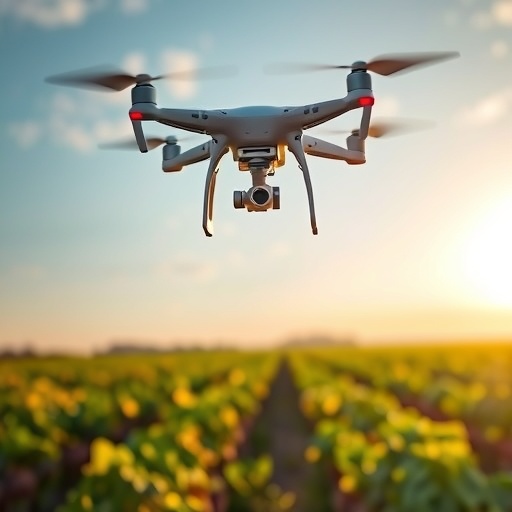
A devastating fungal disease known as Cercospora leaf spot threatens sugar beet crops globally, capable of annihilating up to half of a harvest if left uncontrolled. In a groundbreaking development poised to revolutionize agricultural disease management, researchers have unveiled a sophisticated hybrid forecasting system. This cutting-edge approach merges high-resolution drone imagery, comprehensive weather analytics, and precise molecular detection through qPCR-based airborne spore monitoring into an integrated platform, enhancing growers’ ability to anticipate and mitigate outbreaks with remarkable accuracy.
At the forefront of this innovative research is Facundo R. Ispizua Yamati from the Institute of Sugar Beet Research (IfZ) in Göttingen, Germany. Over the course of extensive field trials conducted between 2020 and 2022, Ispizua Yamati’s team meticulously dissected the complex life cycle of Cercospora beticola, the causative agent of Cercospora leaf spot. Their analysis unveiled a four-phase epidemic progression: incubation, fructification, dissemination, and ultimately, yield impact. This biological framework underpins the development of predictive models that transcend superficial symptom recognition, delving into the pathogen’s intricate pathogenic processes.
The significance of this research lies in its fusion of mechanistic disease modeling with advanced machine learning paradigms, a synergy rarely achieved at such a granular biological scale. High-throughput remote sensing provided by unmanned aerial vehicles generates dynamic crop health maps, while environmental sensors capture temperature fluctuations, humidity levels, and wind patterns critical for spore dispersal. Concurrently, molecular assays quantify airborne spore concentrations, offering real-time insights into pathogen presence and intensity. This multidimensional dataset enriches hybrid models tailored to each phenological phase of the pathogen, markedly reducing predictive error by up to 39%.
“Our approach signifies a pivotal shift from correlative analytics to biology-grounded interpretations,” noted Ispizua Yamati. “Machine learning models trained not just on leaf spot imagery but contextualized within the pathogen’s developmental stages enable forecasts that are not only accurate but mechanistically insightful.” This paradigm allows for targeted fungicide applications precisely aligned with pathogen biology, potentially slashing unnecessary chemical use and curbing environmental repercussions.
The research highlights the intricate relationship between microclimatic conditions and disease dynamics. Variability in wind speed and direction, coupled with optimal moisture and temperature conditions, orchestrate spore production and dispersal events. Intriguingly, spore dissemination thrives under light, variable winds within specific microclimates, underscoring the complexity of environmental drivers in epidemics. Moreover, the study found that earlier disease onset and heightened final severity correlate with significant reductions in both yield and sucrose content, imposing considerable economic costs on producers.
Integrating atmospheric data streams with on-the-ground pathology and remote sensing challenges previous modeling attempts that often relied on isolated variables or static datasets. The researchers’ hybrid engine dynamically incorporates variable interactions over time, adapting to environmental fluctuations and thus equipping growers with precise, phase-specific risk assessments. This comprehensive understanding of Cercospora leaf spot epidemiology marks a transformative step towards “precision crop medicine,” analogous to advances in human health diagnostics and treatment.
For agronomists and plant pathologists, the implications extend beyond sugar beet cultivation. The demonstrated efficacy of combining mechanistic and machine learning models through multi-modal data inputs sets a precedent for managing other phytopathogenic threats. As climate change intensifies environmental variability, such integrative forecasting systems offer resilience by accommodating the nuanced responses of pathogens to shifting conditions.
The methodological advancements presented also facilitate early warning systems that leverage airborne spore quantification to preemptively identify epidemics. Traditional scouting and visual diagnosis are labor-intensive and reactive; in contrast, this system provides proactive surveillance. Coupled with drone-based vegetation indices sensitive to subtle physiological stresses, the approach delivers a multi-layered defense mechanism, empowering stakeholders to optimize intervention timing and dosage.
Furthermore, by quantifying the tangible impact of disease severity on root fresh weight—estimated at a loss of 0.0123 kilograms per severity point per plant—the study provides actionable metrics linking epidemiological data directly to economic outcomes. This linkage enables cost-benefit analyses of fungicide regimes informed by precise biological risk profiles, facilitating sustainable crop protection strategies that balance productivity and environmental stewardship.
The publication of these findings in the esteemed journal Phytopathology, available open access, signals a call to the broader scientific community for embracing interdisciplinary approaches. It propels forward the notion that combining biology, technology, and data science is essential in addressing pressing agricultural challenges. As this hybrid model gains traction, it is anticipated to catalyze advances in modular disease forecasting frameworks adaptable across diverse crop-pathogen systems.
In conclusion, the fusion of drone-enabled remote sensing, environmental monitoring, and molecular diagnostics into a coherent, biology-informed machine learning framework constitutes a landmark leap in plant disease epidemiology. The novel insights into pathogen life cycle phases and their environmental dependencies equip growers with powerful tools for precision disease management. By unveiling the hidden rhythms of Cercospora leaf spot outbreaks, this research not only advances scientific understanding but also offers tangible solutions to secure future sugar beet yields against a formidable fungal adversary.
Subject of Research: Hybrid disease forecasting of Cercospora leaf spot in sugar beet using integrated mechanistic and machine learning models combining remote sensing, weather data, and qPCR spore monitoring.
Article Title: Hybrid Modeling of Cercospora Leaf Spot Epidemiology: Integrating Mechanistic and Machine Learning Approaches Using Remote-Sensing and Environmental Data
News Publication Date: 18-Mar-2026
Web References: 10.1094/PHYTO-03-25-0113-R
Keywords: Agriculture, Agricultural engineering, Agricultural biotechnology, Farming, Pest control, Remote sensing, Plant diseases, Plant pathogens, Plant pathology, Crops, Crop yields, Crop production, Crop science


