

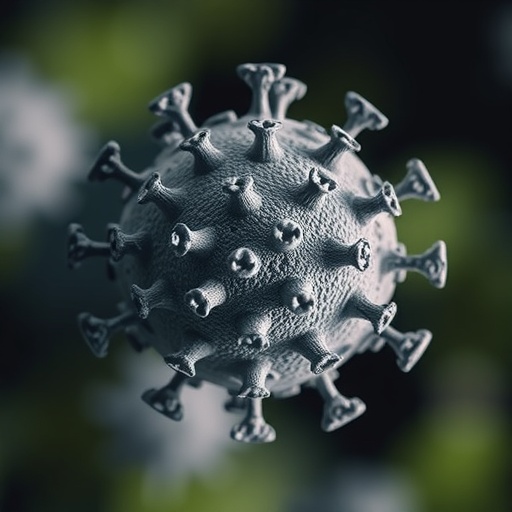
In the aftermath of the global COVID-19 pandemic, researchers have made a groundbreaking discovery regarding population immunity and its impact on the emergence of new zoonotic coronaviruses. A recent study published in Nature Communications reveals that post-pandemic shifts in immune responses among human populations have significantly decreased the likelihood of novel zoonotic coronavirus strains crossing into humans. This revelation offers a new lens through which to understand and potentially manage future viral threats emanating from animal reservoirs.
The study, led by Imrie, Bissett, Raveendran, and their colleagues, delves into the intricate dynamics of host immunity following widespread exposure to SARS-CoV-2 and other related coronaviruses. With the pandemic serving as a large-scale natural experiment, the authors leveraged epidemiological data, immunological assays, and advanced computational modeling to unravel how population-wide immune landscapes have evolved. These evolving landscapes appear to create a formidable barrier against the establishment and spread of newly introduced zoonotic coronaviruses.
At the center of the investigation lies the concept of cross-reactive immunity, wherein immune responses triggered by one viral agent confer partial protection against related viruses. The study elucidates how immune memory, stimulated by both infection and vaccination campaigns over recent years, has sculpted host defenses to be more broadly reactive. This wide-ranging immunity reduces viral fitness in human hosts, thereby making it more difficult for zoonotic coronaviruses to gain a foothold.
The researchers conducted a comprehensive series of experiments assessing neutralizing antibody responses, T-cell reactivity, and mucosal immunity in diverse cohorts. These cohorts included individuals with previous COVID-19 infection, those who received multiple vaccine doses utilizing varied platforms, and naive populations with minimal coronavirus exposure. The findings consistently showed expanded and heightened cross-reactivity among the formerly exposed groups, whereas naive individuals remained vulnerable to novel strains.
At the molecular level, the study highlights how conserved epitopes shared across coronavirus spike proteins are crucial targets of this cross-protective immunity. These epitopes serve as common immunological anchors, enabling immune cells to recognize and neutralize a spectrum of related viral variants. This immunodominance of conserved regions contrasts with prior assumptions that viral evolution in these domains would enable easy immune evasion.
Moreover, the modeling components of the research integrate theoretical virology and population biology to simulate spillover events from animal reservoirs. By introducing variables that account for immune coverage scenarios reflective of post-pandemic human immunity, the simulations reveal a steep decline in the probability of significant human outbreaks fueled by novel zoonotic coronaviruses. This suggests a real-world protective effect shaped by widespread immunity.
The implications for pandemic preparedness are profound. The study suggests that maintaining and boosting population immunity through targeted vaccination strategies not only mitigates severity of existing coronavirus infections but also indirectly reduces the risk of emergent zoonotic spillovers. Policymakers and global health organizations may therefore seek to incorporate this insight to enhance long-term viral threat governance frameworks.
However, the authors caution that the observed protective effect, while robust, is not absolute. The continuous evolution of coronaviruses in animal hosts, combined with ecological and sociological factors affecting human-animal interfaces, means vigilance remains essential. Surveillance systems focusing on both animal reservoirs and human populations must remain a priority to detect any emergent variants with significant antigenic drift that could overcome existing immunity barriers.
The study also acknowledges the role of waning immunity and the possibility of immune escape through mutation accumulation. Despite the breadth of cross-reactivity, the durability of such immunity and the viral evolutionary landscape are dynamic elements that must be incorporated into ongoing risk assessments. Booster vaccinations and next-generation vaccine designs focusing on conserved epitopes may bolster this evolving defense system.
On a broader scientific front, this research enhances our understanding of viral ecology and host-pathogen interactions in a post-pandemic context. The findings extend beyond coronaviruses, potentially informing strategies for other zoonotic viral families with pandemic potential, such as filoviruses and paramyxoviruses. Integrating immunological data with ecological and evolutionary models emerges as a powerful approach for anticipating and mitigating future spillover risks.
Crucially, these insights underscore the interconnectedness of human and animal health, reinforcing the One Health paradigm. Strategies fostering immunity in humans must be coupled with surveillance and management of animal hosts to create a comprehensive shield against zoonotic disease emergence. Interdisciplinary collaborations are paramount to translating these theoretical advances into practical interventions.
Furthermore, the research exemplifies how pandemic experiences catalyze scientific innovation and knowledge repositioning, transforming reactive public health measures into proactive and predictive frameworks. By harnessing detailed immunological profiles at population scales and integrating them with computational modeling, the scientific community moves closer to preempting rather than merely responding to infectious disease threats.
In conclusion, the study by Imrie and colleagues presents an optimistic narrative that the widened spectrum of population immunity developed through the COVID-19 ordeal serves as an unexpected yet powerful deterrent against the budding threat of new zoonotic coronaviruses. While not a silver bullet, this phenomenon marks a significant stride toward reducing pandemic risk in the coming decades. Continued research, vaccination efforts, and surveillance will be vital to sustaining this protective landscape and safeguarding global health.
This seminal work not only deepens our comprehension of post-pandemic immunity but also charts a hopeful path forward in viral emergence prevention. As humanity adapts to the realities of a viral world, such insights provide the foundational knowledge necessary to build resilient societies capable of withstanding future zoonotic challenges.
Subject of Research: Post-pandemic immunity dynamics and their effect on the emergence of zoonotic coronaviruses.
Article Title: Post-pandemic changes in population immunity have reduced the likelihood of emergence of zoonotic coronaviruses.
Article References:
Imrie, R.M., Bissett, L.A., Raveendran, S. et al. Post-pandemic changes in population immunity have reduced the likelihood of emergence of zoonotic coronaviruses. Nat Commun 17, 2248 (2026). https://doi.org/10.1038/s41467-026-69988-8
Image Credits: AI Generated


