

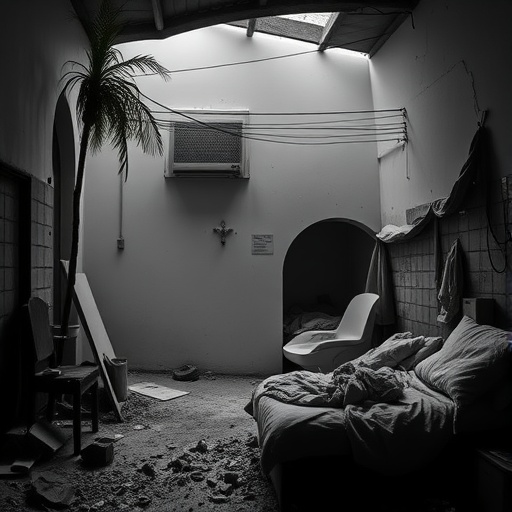
In the aftermath of Hurricane Maria, Puerto Rico has faced a multitude of environmental and public health challenges that extend far beyond the immediate devastation. The storm, one of the most catastrophic natural disasters in recent history, not only caused widespread structural damage but also led to prolonged flooding of countless homes. This exposure to water intrusion, combined with insufficient recovery infrastructure, has created ideal conditions for indoor microbial proliferation. Such microbial growth in living environments is increasingly recognized as a critical driver of respiratory illnesses and immune dysregulation among affected populations. A new prospective cohort study conducted over two years offers compelling evidence that highlights the insidious long-term health consequences rooted in these deteriorated indoor conditions.
This pioneering study, carried out in Puerto Rico, systematically examined the relationship between indoor environmental exposures, particularly dust laden with microbes, and immune activation in residents affected by Hurricane Maria. Through precise and continuous monitoring over an extended period, researchers revealed that the persistent presence of microbial agents in household dust acts as a potent stimulus for immune system perturbations. The data indicate that this microbial exposure does not merely represent a nuisance but serves as a critical environmental risk factor with profound implications for respiratory health, particularly in the context of allergic and inflammatory conditions.
One of the more alarming findings of this investigation is the sustained nature of microbial contamination in homes impacted by the hurricane. Unlike typical scenarios where remediation can effectively mitigate mold and microbial growth shortly after water damage, the persistent environmental conditions in many Puerto Rican homes have allowed microbial colonization to flourish unchecked for years. This prolonged exposure period exacerbates immune system activation, which can lead to chronic inflammation and heightened susceptibility to respiratory diseases, compromising the overall well-being of residents.
Crucially, the research underscores the complexity of the indoor microbiome formed after natural disasters like Hurricane Maria. Household dust, often overlooked in public health assessments, has emerged as a valuable indicator matrix for assessing microbial load, diversity, and pathogenic potential. By conducting an in-depth analysis of dust samples, the investigators were able to identify specific microbial taxa associated with immune activation, providing novel insights into how environmental changes post-disaster translate into biological responses within the human body.
The immune dysregulation observed among affected individuals is characterized by heightened immune cell activity and altered cytokine profiles, which collectively signal a state of chronic immune system engagement. This immune phenotype suggests that the body is in a prolonged defensive mode, potentially leading to tissue damage and impaired physiological function. These findings are pivotal because they connect environmental hazards with tangible biological responses, thus bridging the gap between exposure science and clinical health outcomes.
Furthermore, the study’s design as a prospective cohort allowed for temporal assessment of exposure and health status, ranking it among the first to longitudinally track the evolving indoor environmental risks after a major climate event. This methodology facilitated the detection of delayed and cumulative health effects that might have been missed in cross-sectional or short-term studies. Such an approach is instrumental in elucidating the complex interplay between environment and immune health in disaster recovery scenarios.
Another dimension of this research highlights the socio-economic and infrastructural disparities that complicate recovery efforts in Puerto Rico. Many communities continue to lack adequate resources for home remediation, clean-up, and rebuilding, creating a persistent environmental health hazard. This structural inequality magnifies the burden of illness and perpetuates cycles of vulnerability, emphasizing the need for targeted interventions that combine public health initiatives with socio-economic support.
At the molecular level, the study delved into the pathways of immune activation triggered by microbial components present in indoor dust. Exposure to endotoxins, fungal spores, and microbial metabolites appears to activate pattern recognition receptors on immune cells, such as Toll-like receptors, which then initiate inflammatory cascades. These cascades can alter local respiratory tract immunity, promoting disease susceptibility and exacerbating preexisting conditions such as asthma and chronic obstructive pulmonary disease (COPD).
Given the escalating frequency and intensity of hurricanes linked to climate change, these findings carry broad implications extending beyond Puerto Rico. They alert public health officials and policymakers worldwide to consider the hidden and prolonged health risks posed by indoor microbial contamination after flooding events. Urgent attention to indoor air quality, mold remediation, and environmental hygiene post-disaster is critical to mitigating chronic illnesses that could overwhelm already strained healthcare systems.
Importantly, the research team emphasizes the need for integrated environmental health surveillance coupled with immune biomarker monitoring in the wake of environmental disasters. Such integration can improve early detection of at-risk populations and guide personalized interventions. This translational approach, moving from environmental sampling to immune profiling, represents a novel frontier in understanding how disasters influence health trajectories.
Moreover, the study advocates for capacity building and public awareness campaigns in affected regions. Education about the risks of mold and microbial contamination, alongside guidance on safe cleaning and ventilation practices, could empower communities to mitigate health risks themselves while awaiting external assistance. These community-level strategies are crucial for sustainable disaster recovery and for enhancing resilience against future events.
From a research standpoint, the findings open avenues for exploring therapeutic strategies aimed at modulating immune responses triggered by environmental microbes. Understanding the precise microbial agents and immune pathways involved could lead to novel treatments to prevent or reverse immune dysregulation caused by environmental exposures, ultimately reducing disease burden in disaster-affected populations.
Beyond its specific geographic focus, this study presents a compelling model for evaluating environmental health risks in post-disaster contexts globally. By combining environmental sampling, immune assays, and longitudinal health tracking, this comprehensive framework sets a new standard for interdisciplinary research aimed at understanding and mitigating the hidden health consequences of natural disasters.
In conclusion, the legacy of Hurricane Maria extends deep into Puerto Rican homes through invisible microbial communities thriving in damaged and flooded environments. This research shines a light on the complex health ramifications of these exposures, particularly the sustained immune activation that may predispose populations to chronic respiratory illnesses and systemic inflammation. As climate change continues to intensify weather extremes, the urgent need to address indoor environmental health as a cornerstone of disaster preparedness and response becomes all the more evident.
Subject of Research: The study investigates indoor dust microbial contamination, immune activation, and their health impacts in homes flooded and damaged by Hurricane Maria in Puerto Rico.
Article Title: Indoor dust, immune activation, and household exposure risk after Hurricane Maria: a two-year pilot prospective cohort study in Puerto Rico
Article References:
Rivera-Mariani, F.E., Srour, H., Godoy-Vitorino, F. et al. Indoor dust, immune activation, and household exposure risk after Hurricane Maria: a two-year pilot prospective cohort study in Puerto Rico. J Expo Sci Environ Epidemiol (2025). https://doi.org/10.1038/s41370-025-00835-6
Image Credits: AI Generated
DOI: 14 December 2025


