

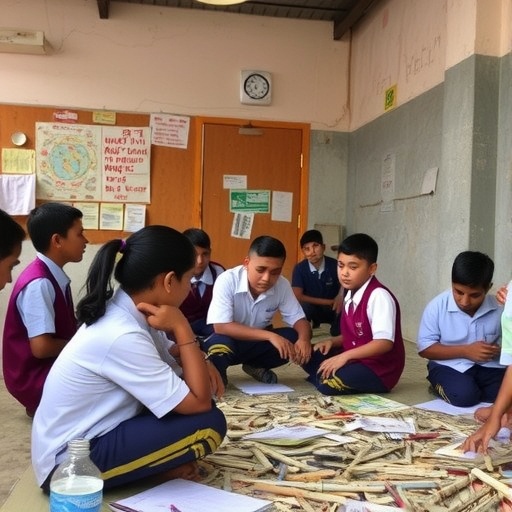
In the aftermath of natural disasters, the resilience of affected communities often hinges not only on the physical reconstruction of infrastructure but also on the psychological recovery of individuals, especially in educational institutions. A groundbreaking study published in BMC Psychology in 2026 by researchers Akıllı, Özdemir, and Kaya offers a compelling exploration of how perception management strategies influence emotional commitment within schools ravaged by earthquakes. By dissecting the complex interplay between community perceptions and emotional bonds, this research sheds new light on educational recovery processes that extend far beyond bricks and mortar.
Earthquakes leave a trail of devastation that is as much mental as it is physical. Post-disaster environments create a landscape marked by uncertainty, fear, and trauma, especially for children and educators whose everyday routines are suddenly disrupted. In this vulnerable context, the researchers argue that how stakeholders perceive the recovery process can drastically affect their emotional engagement with their schools. Emotional commitment, a psychological construct reflecting loyalty, attachment, and a sense of belonging, emerges as a crucial factor in fostering a supportive educational environment that nurtures resilience.
Central to the study is the concept of perception management, a strategic communication process aimed at shaping and controlling individuals’ interpretations of reality. The authors suggest that in post-earthquake scenarios, managing perceptions involves transparent, consistent, and empathetic communication from school leaders, policymakers, and community figures. These efforts serve not only to disseminate critical information but also to address fears, dispel rumors, and cultivate a hopeful outlook on the future of education in disaster-stricken areas.
The researchers conducted extensive qualitative and quantitative assessments in several earthquake-impacted schools, analyzing how different perception management tactics correlated with levels of emotional commitment among students, teachers, and parents. Their methodology included surveys measuring trust, optimism, and perceived safety, alongside interviews that captured personal narratives of trauma and recovery. The findings reveal a robust association between proactive perception management and higher emotional attachment to schools, suggesting that perception-oriented interventions may be key to psychological recovery.
Importantly, the study delves into the nuanced psychological mechanisms underpinning emotional commitment after trauma. Post-earthquake schools are microcosms where feelings of stability and continuity are precarious. When perception management aligns with genuine efforts to restore safety and functionality, it fosters perceived control among students and staff. This perceived control mitigates anxiety and strengthens cognitive-emotional bonds to the school environment, enhancing overall well-being and motivation to engage academically and socially.
The implications for education policy and disaster management are profound. The authors advocate for incorporating perception management training into the preparedness protocols of school administrators and emergency responders. By doing so, they can ensure that communicative acts during crisis recovery not only inform but also emotionally support affected communities. This paradigm shift challenges traditional disaster response models, which have largely prioritized logistical and infrastructural concerns at the expense of psychosocial factors.
Further advancing the discussion, the research highlights the role of cultural context in shaping perception management strategies. In societies with strong familial and community ties, such as those studied, leveraging existing social networks and culturally resonant narratives enhances emotional commitment. This culturally sensitive approach enables recovery initiatives to resonate more deeply, fostering collective healing and a unified vision for renewal, which in turn stabilizes educational engagement.
The study also addresses potential pitfalls in perception management, warning against superficial or manipulative communication that can backfire, breeding cynicism and disengagement. Authenticity and transparency emerge as non-negotiable principles in crafting messages that build trust rather than erode it. This distinction is critical, as schools navigate the dual challenge of conveying realistic assessments of risks while maintaining hope and encouragement.
Moreover, the researchers propose a theoretical framework that integrates perception management into a comprehensive model of post-disaster educational resilience. This model accounts for various psychosocial variables—such as community cohesion, leadership efficacy, and individual trauma responses—offering a multidimensional lens through which to approach recovery. The integration of perception management into this framework is a novel contribution that underscores its pivotal role in sustaining emotional and operational school recovery.
Another compelling dimension explored is the interaction between emotional commitment and academic outcomes during recovery phases. The data suggest that students who retain a strong emotional connection to their school under these strained conditions demonstrate higher academic persistence and social participation. This correlation signals the potential for emotional commitment to serve as a protective factor mitigating the educational disruptions caused by disasters.
From a technological standpoint, the paper discusses innovative methods for enhancing perception management, including digital platforms that facilitate ongoing communication between school authorities and stakeholders. Such technologies can support timely updates, provide psychological support resources, and foster community dialogue, thus maintaining emotional engagement even amid physical displacement or infrastructure challenges.
The authors also emphasize the ethical considerations intrinsic to perception management in crisis environments. Respecting the autonomy of community members, avoiding coercion, and prioritizing mental health are imperative to ethically sound communication strategies. These considerations ensure that perception management remains a tool for empowerment rather than manipulation, reinforcing the human dignity at the core of recovery efforts.
On a practical level, lessons learned from these post-earthquake schools inform recommendations for training programs aimed at school leaders and counselors. The study underscores the necessity of equipping these frontline actors with skills in empathetic communication, trauma-informed care, and adaptive messaging tailored to evolving post-disaster contexts. Such capacity-building is fundamental to sustaining emotional commitment during protracted recovery efforts.
The research calls for further interdisciplinary studies to investigate how perception management principles can be adapted across different types of disasters and cultural settings. Expanding this knowledge base will be instrumental in developing universally applicable best practices that optimize educational resilience worldwide.
Ultimately, this study reframes the narrative of disaster recovery in education by centering perception and emotional dynamics alongside physical reconstruction efforts. It offers a visionary blueprint suggesting that the path to rebuilding better schools begins with rebuilding psychological trust and emotional bonds within their communities. This insight not only advances academic understanding but also provides actionable strategies with the power to transform lives in disaster-impacted regions.
By illuminating the critical connections between how people perceive their environments and how deeply they care about them emotionally, Akıllı, Özdemir, and Kaya’s work sets a new standard for holistic disaster recovery. It challenges educational and psychological stakeholders to embrace a more integrated approach where communication, emotional health, and infrastructure rehabilitation are intertwined threads of the resilience fabric. As climate change and urbanization increase the frequency and intensity of natural disasters globally, such research becomes invaluable in safeguarding the future of education—and by extension, the future of societies at large.
Subject of Research: Perception management and emotional commitment in post-earthquake educational settings
Article Title: Perception management and emotional commitment: lessons from post-earthquake schools
Article References:
Akıllı, C., Özdemir, T.Y. & Kaya, V.D. Perception management and emotional commitment: lessons from post-earthquake schools. BMC Psychol (2026). https://doi.org/10.1186/s40359-026-03968-x
Image Credits: AI Generated


