

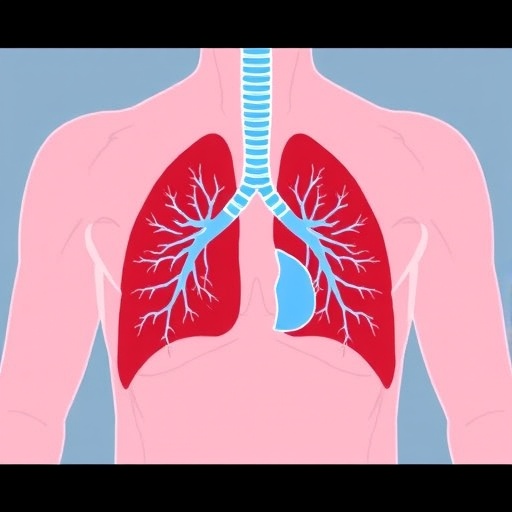
A groundbreaking study published in BMC Cancer sheds new light on postoperative care for lung cancer patients, demonstrating that combining position management with the active cycle of breathing techniques (ACBT) significantly reduces pulmonary complications after surgery. As lung cancer remains one of the leading causes of cancer-related mortality worldwide, optimizing postoperative recovery is critical for improving patient outcomes and survival rates.
Lung cancer patients who undergo thoracoscopic radical surgery face a high risk of postoperative pulmonary complications, ranging from infections to impaired oxygenation. These complications can prolong hospital stays, increase healthcare costs, and diminish patient quality of life. Traditional postoperative care frequently employs routine nursing approaches; however, emerging evidence suggests that targeted respiratory therapies could further alleviate these risks.
The recent clinical trial conducted at a tertiary hospital in Dalian involved a cohort of 213 lung cancer patients. They were randomized into three distinct groups: one receiving only routine nursing care, another receiving routine care plus ACBT, and the final group receiving routine care complemented by both ACBT and position management strategies. The inclusion of position management refers to systematic patient repositioning designed to enhance lung ventilation and secretion clearance.
After excluding six patients lost to follow-up or other criteria, data from 207 individuals were rigorously analyzed. The principal endpoints included the incidence of postoperative pulmonary complications, chest tube duration, length of hospital stay, oxygen saturation (SpO₂) levels, and patient-reported nursing satisfaction. These comprehensive outcomes offer a multifaceted view of the benefits conferred by the combined intervention.
Remarkably, patients subjected to the integrated approach of position management plus ACBT exhibited a significantly reduced rate of postoperative pulmonary complications, plummeting to just 4.3% from 23.2% in the control group. This nearly five-fold decrease underlines the potential of tailored perioperative respiratory therapy to mitigate risks inherent to thoracic surgery.
Oxygen saturation levels, a critical metric reflecting pulmonary function, also showed compelling improvements. Statistical analyses including repeated measures ANOVA confirmed significant group differences in SpO₂ across postoperative days one through five. Patients undergoing the combined intervention maintained higher oxygen saturation, indicative of enhanced ventilation and gas exchange during the vulnerable recovery period.
The study further revealed that the average duration of chest tube drainage—a marker of pleural fluid clearance and lung re-expansion—was shortest in the group receiving both position management and ACBT. This finding indicates that these interventions synergistically expedite lung healing processes, potentially reducing the discomfort and infection risk associated with prolonged chest tube placement.
Hospitalization times were also favorably impacted. Patients in the combined therapy cohort were discharged earlier compared to their counterparts in control and ACBT-only groups. Reduced length of stay translates not only into better patient throughput but also less exposure to hospital-acquired infections and lower financial burdens for healthcare systems.
Patient satisfaction scores were notably higher in the combined intervention group. This enhanced satisfaction likely reflects the multifaceted benefits of better respiratory function, reduced complications, and shortened hospital stays, culminating in an overall more positive recovery experience. It also underscores the importance of patient-centered approaches in modern medical care.
From a mechanistic perspective, the active cycle of breathing techniques involves controlled breathing patterns, including deep breaths, huffing, and coughing, aimed at mobilizing and clearing pulmonary secretions. When complemented by strategic position management that optimizes gravity-dependent lung regions, this facilitates efficient secretion clearance and prevents atelectasis.
The implications of these findings extend beyond immediate postoperative care. Improved respiratory mechanics and reduced complication rates could enhance long-term pulmonary function, potentially improving survival rates and quality of life for lung cancer patients. Moreover, integrating such non-invasive nursing interventions is cost-effective compared to pharmacological or surgical alternatives.
Despite its robust design, the study’s authors caution that broader validation is necessary. Larger, multicenter randomized trials with extended follow-up periods are warranted to confirm the reproducibility and durability of these benefits. Such research could refine clinical guidelines and standardize perioperative care protocols internationally.
This study aligns with a growing recognition in thoracic oncology that multidisciplinary approaches addressing not only the tumor but also postoperative rehabilitation are essential for holistic cancer care. Nurses, physiotherapists, and surgeons collaborating to implement evidence-based respiratory therapies can transform patient recovery trajectories significantly.
In conclusion, the integration of position management with active cycle of breathing techniques emerges as a promising strategy to reduce pulmonary complications, enhance oxygenation, decrease hospital stays, and improve patient satisfaction following lung cancer surgery. This dual approach addresses a critical unmet need in perioperative nursing and presents a practical modality for improving clinical outcomes.
As lung cancer incidence continues to pose a global health challenge, innovations such as these that streamline postoperative recovery and improve patient well-being hold the key to advancing cancer care. Future research will illuminate the best practices for implementing these interventions across diverse healthcare settings.
With the cumulative evidence mounting, clinicians should consider adopting combined position management and ACBT in perioperative protocols. This study paves the way for enhancing the standard of care, ultimately striving for greater survival and quality of life for patients battling lung cancer.
Subject of Research: The impact of position management combined with active cycle of breathing techniques on reducing postoperative pulmonary complications in lung cancer patients.
Article Title: Effect of position management combined with active cycle of breathing techniques on reducing postoperative pulmonary complications in lung cancer patients
Article References:
Ning, G., Sihan, C., Daihong, J. et al. Effect of position management combined with active cycle of breathing techniques on reducing postoperative pulmonary complications in lung cancer patients. BMC Cancer 25, 1780 (2025). https://doi.org/10.1186/s12885-025-15029-4
Image Credits: Scienmag.com
DOI: 10.1186/s12885-025-15029-4


