

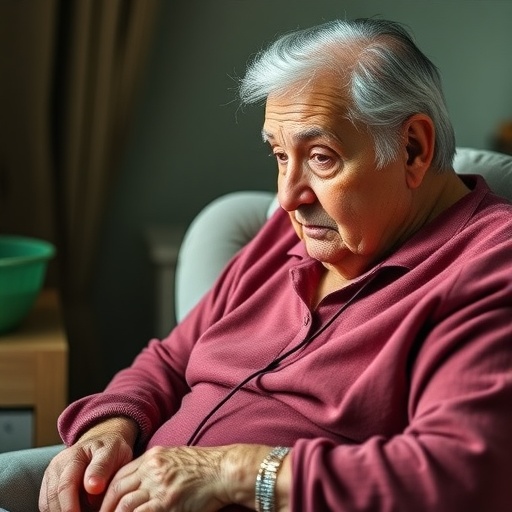
Emerging data from the Dutch-GERAF cohort study has illuminated critical factors underpinning frailty among elderly patients afflicted with atrial fibrillation (AF), an arrhythmia broadly recognized for its prevalence and morbidity in aging populations. The comprehensive research spearheaded by Spruit, Zwart, Jansen, and colleagues delves into the complex interplay between polypharmacy and cardiovascular co-morbidities, revealing them as principal drivers in the progression of frailty within this vulnerable demographic. These findings are poised to reshape clinical approaches, urging a paradigm shift in the management of geriatric AF patients toward more holistic and nuanced strategies.
Atrial fibrillation represents a significant challenge in geriatric medicine due to its association with increased risks of stroke, heart failure, and mortality. As life expectancy rises globally, the proportion of patients grappling with AF concomitant with numerous other chronic conditions—often necessitating multiple simultaneous medications—has surged, complicating clinical management. Polypharmacy, the concurrent use of multiple medications, while often indispensable, has emerged as a double-edged sword potentially exacerbating frailty by driving adverse drug interactions, increased susceptibility to side effects, and diminished physiological reserves.
The Dutch-GERAF cohort, an extensive longitudinal study, meticulously characterized the clinical profiles of elderly AF patients, emphasizing the breadth of cardiovascular co-morbidities including hypertension, coronary artery disease, heart failure, and vascular complications. The investigators employed validated frailty assessment tools to determine the severity and progression of frailty states, ensuring a robust analytical framework to dissect contributory factors. Their results indicated a pronounced correlation between the number and complexity of cardiovascular co-morbid conditions and elevated frailty scores.
Intriguingly, polypharmacy emerged as a significant modifiable risk factor intricately linked with frailty. The study highlights that patients on aggressive pharmacological regimens, often prescribed to mitigate their multiple cardiac conditions, experienced heightened vulnerability manifesting in decreased functional capacity, cognitive decline, and poorer quality of life. This phenomenon underscores the critical need for personalized medication review and de-prescribing protocols aimed at minimizing drug burden without compromising therapeutic efficacy.
Mechanistically, the overlap between cardiovascular pathology and frailty can be traced to systemic inflammation, endothelial dysfunction, and impaired autonomic regulation—all common denominators in aging hearts subject to arrhythmogenic strains. The researchers propose that the cumulative cardiovascular insults potentiate a detrimental cascade leading to muscle wasting, reduced mobility, and increased susceptibility to ischemic events, all hallmarks of the frailty syndrome. Polypharmacy compounds this by potentially disrupting homeostatic mechanisms and precipitating adverse pharmacodynamic effects.
The investigation also sheds light on the cardio-geriatric nexus by elucidating how multimorbidity complicates arrhythmia management. The balance between anticoagulation to prevent strokes and the risk of bleeding becomes precarious in frail patients, necessitating intricate risk stratification models. The authors advocate for integrating frailty assessments into routine clinical evaluations to tailor therapeutic decisions, optimize patient outcomes, and avert iatrogenic complications.
This research challenges existing clinical guidelines which often overlook frailty as a dynamic clinical entity, instead relying heavily on disease-specific metrics. By incorporating frailty parameters, clinicians can adopt a more comprehensive view that encapsulates functional status, cognitive abilities, and resilience to stressors. Consequently, therapeutic regimens may be modified to prioritize quality of life and functional independence, rather than solely focusing on strict disease control.
Preventive measures stemming from these insights point toward multidisciplinary collaboration that includes geriatricians, cardiologists, pharmacists, and rehabilitation specialists. Early intervention strategies aimed at mitigating frailty—such as customized physical therapy, nutritional support, and psychosocial interventions—could significantly enhance treatment responses and reduce hospitalization rates. The study’s data suggest that addressing polypharmacy through regular medication reconciliation and targeted deprescribing might prove pivotal in curbing frailty progression.
Furthermore, the findings invite exploration into novel biomarkers and imaging techniques capable of detecting subclinical frailty and cardiovascular deterioration. Emerging technologies such as wearable cardiac monitors and machine learning algorithms have the potential to refine risk predictions and personalize care pathways. The Dutch-GERAF cohort’s comprehensive dataset offers a fertile ground for future translational research aimed at operationalizing these innovations in routine care.
Implications of this research extend beyond individual patient management; health policy reforms must consider the growing burden of frailty in aging societies coupled with complex cardiovascular disease. Resource allocation should prioritize integrated care models that minimize polypharmacy risks while ensuring robust cardiovascular surveillance. Insurance frameworks and reimbursement paradigms may need adjustment to incentivize frailty screening and comprehensive medication management programs.
At the cellular level, the cross-talk between cardiovascular diseases and frailty may involve mitochondrial dysfunction and metabolic derangements, suggesting therapeutic targets for pharmacological innovation. Agents that ameliorate oxidative stress or enhance cellular bioenergetics could conceivably attenuate both cardiac pathology and frailty manifestations, a tantalizing prospect for future drug development pipelines.
Importantly, patient-centric care plans emerging from this research underscore the necessity of involving patients and caregivers in decision-making, fostering adherence, and understanding treatment trade-offs. Frailty’s multidimensional nature demands a holistic approach, addressing psychosocial determinants such as social isolation and depression, which often exacerbate cardiovascular outcomes and polypharmacy challenges.
In sum, the Dutch-GERAF cohort study’s revelations position polypharmacy and cardiovascular co-morbidities as central elements driving frailty among elderly AF patients. This dual recognition compels a reframing of clinical strategies, from rigid disease-centric models to flexible, integrated care paradigms that honor the complexities of aging physiology. As the global population ages, embracing such insights is imperative to stave off the compounded adversities faced by geriatric patients, thereby extending not only lifespan but healthspan in a meaningful and patient-empowered fashion.
The profound implications of this study herald a new era in geriatric cardiology—one where frailty is no longer a passive backdrop but a vital consideration shaping therapeutic trajectories. Future investigations will undoubtedly build upon these findings to develop and implement tailored interventions, optimizing outcomes for one of the most challenging patient populations encountered in modern medicine. The integration of frailty assessment as a standard of care may ultimately transform the management of atrial fibrillation, underscoring the critical nexus between cardiac health and functional resilience in aging.
Subject of Research: Frailty in geriatric patients with atrial fibrillation, focusing on the roles of polypharmacy and cardiovascular co-morbidity.
Article Title: Polypharmacy and cardiovascular co-morbidity as key contributors to frailty in geriatric patients with AF – insights of the Dutch-GERAF cohort study
Article References: Spruit, J., Zwart, L., Jansen, R. et al. Polypharmacy and cardiovascular co-morbidity as key contributors to frailty in geriatric patients with AF – insights of the Dutch-GERAF cohort study. BMC Geriatr (2026). https://doi.org/10.1186/s12877-026-07189-0
Image Credits: AI Generated


