

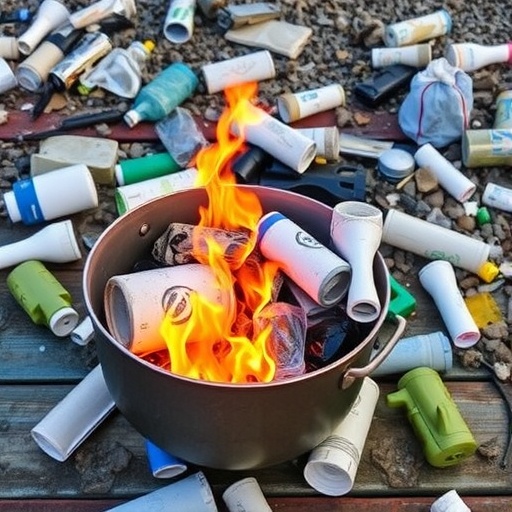
In a groundbreaking study published recently in Nature Communications, researchers Balmukund Bharadwaj, Timothy Gates, Stephanie Rose, and colleagues reveal the alarming prevalence of plastic waste being used as a household fuel across low-income communities in the Global South. This investigation sheds light on a dangerous and underrecognized environmental and public health issue with profound implications for sustainable development efforts worldwide. By combining satellite data with field surveys, the team presents a comprehensive analysis exposing the widespread reliance on plastic waste in cooking and heating activities among vulnerable populations, offering a rare lens into how toxic combustion of such materials silently threatens human and planetary health.
Around the globe, an estimated 2 billion people depend on solid biomass fuels such as wood, charcoal, and dung for daily cooking needs. However, in many impoverished urban and rural areas across South Asia, Sub-Saharan Africa, and parts of Latin America, the scarcity and rising costs of traditional fuels have driven residents toward alternative sources. The study highlights a troubling transition as households increasingly resort to burning discarded plastic waste—including bags, packaging materials, and synthetic containers—due to their readily available nature in waste-saturated neighborhoods. Such shifts have gone largely undetected in aggregate energy statistics, yet carry severe ramifications often overlooked by policymakers.
Employing remote sensing techniques refined by machine learning algorithms, Bharadwaj and colleagues identified concentrated emission hotspots correlated with informal settlements exhibiting intense plastic burning signatures. These emissions were then validated through extensive on-the-ground air quality monitoring, revealing elevated levels of particulate matter, black carbon, and hazardous volatile organic compounds directly linked to the incineration of synthetic polymers. The smoke generated from plastic combustion not only releases potent greenhouse gases exacerbating climate change but also propels toxic pollutants that are known carcinogens and respiratory irritants into living spaces. This intimate exposure poses immense risks to household members, especially children and women, who spend considerable time near cooking sites.
Beyond the health concerns, the study underscores socioeconomic drivers compelling households to adopt such perilous fuel sources. Chronic poverty, lack of infrastructure for waste management, and erratic fuel supplies converge to create energy insecurity. The presence of massive informal waste dumps near residential zones transforms plastic debris into a tempting fuel supply despite its hazardous consequences. The researchers emphasize that interventions must not only address fuel accessibility but also integrate comprehensive waste management strategies to curtail the environmental externalities of plastic pollution. Failure to do so can perpetuate cycles of ill health and ecological degradation disproportionately impacting the most marginalized.
This research challenges traditional frameworks for assessing household energy usage which typically assume biomass or fossil fuels. The clandestine usage of plastic waste as fuel has remained significantly under-reported, resulting in gaps in national inventories of emissions and energy profiles. Through innovative cross-disciplinary methods, this study quantifies plastic fuel use at unprecedented scales, providing crucial data for designing targeted policies. These findings call for urgent inclusion of plastic combustion in global emission inventories to more accurately reflect its contribution to urban air pollution and climate forcing, enabling fairer allocation of resources and mitigation efforts.
The public health implications emerging from this study are stark. Chronic exposure to toxins released by burning plastics can lead to respiratory diseases like asthma, chronic obstructive pulmonary disease, and even lung cancer. The vulnerable subpopulations living in crowded, poorly ventilated homes are at enhanced peril. Furthermore, the cumulative burden of indoor air pollution from plastic fuel exacerbates pre-existing disparities in healthcare outcomes. The researchers urge international health bodies to recognize this invisible epidemic and integrate plastic combustion exposure assessments in airing pollution reduction programs in developing regions.
Notably, the research presents compelling evidence linking plastic-fueled emissions to regional climate impacts. The aerosol particles generated have strong atmospheric forcing potential by absorbing sunlight and disrupting cloud formation processes. Thus, this practice contributes to localized warming and possibly alters monsoon patterns, further affecting agricultural productivity and water availability. Inclusion of these emissions in climate models is critical to refining projections and designing adaptation mechanisms in vulnerable low-income countries.
While the study paints a sobering picture, it also opens pathways for innovative solutions. The authors recommend multipronged approaches including subsidizing clean energy alternatives like liquefied petroleum gas and electric cookstoves to reduce reliance on harmful fuels. Community-led education campaigns highlighting the dangers of plastic burning accompanied by capacity building for sustainable waste recycling could shift behavioral patterns sustainably. Additionally, upgrading municipal waste collection systems to prevent accumulation of plastic debris near residential areas offers a practical mitigation avenue.
The interdisciplinary nature of this investigation sets it apart in the field of energy and environmental science. By integrating satellite remote sensing, atmospheric chemistry, socio-economic surveys, and policy analysis, the team provides a holistic understanding of the plastic fuel phenomenon, bridging research silos that often limit comprehensive policy formulation. This study exemplifies how innovative methodologies can unravel hidden environmental challenges, providing actionable insights for both national governments and international donors working toward the clean energy transition.
Given the urgency of tackling plastic pollution and climate change simultaneously, the revelations contained within this research represent a clarion call. Global funding mechanisms targeting clean cooking and waste management should urgently incorporate findings on plastic fuel use to optimize impact. Enhanced cross-sectoral cooperation, involving public health, environmental protection, and energy ministries, is essential to design coherent strategies that safeguard vulnerable communities and preserve ecological integrity. Policymakers must confront this emerging reality with robust regulatory frameworks that discourage plastic burning, incentivize alternative technologies, and enforce waste disposal norms effectively.
Furthermore, the ethical dimensions highlighted by the study demand attention. The disproportionate exposure of marginalized populations to the adverse consequences of plastic combustion underscores deep social inequities in energy and environmental justice domains. Addressing this requires deliberate empowerment of affected communities through participatory governance, ensuring their voices influence decision-making processes shaping energy access and environmental standards. Only by centering equity can sustainable development goals be genuinely achieved in the Global South.
Future research inspired by this seminal work can explore longitudinal health impacts related to plastic fuel exposure, enabling more nuanced risk assessments. Technological innovation in affordable air pollution monitoring tools tailored for informal settlements will augment data granularity and policy responsiveness. Comparative analyses across different regions might elucidate contextual factors shaping plastic fuel adoption patterns, guiding tailored interventions. Moreover, exploring the potential for circular economy models that valorize plastic waste into fuels or alternative commodities without combustion could revolutionize waste-energy dynamics.
In conclusion, the study by Bharadwaj, Gates, Rose, and their team unearths a hidden crisis at the intersection of poverty, pollution, and plastic waste. By exposing the endemic use of plastic as household fuel in low-income communities of the Global South, they highlight an urgent global health and environmental challenge demanding immediate and coordinated action. This research enriches our understanding of the complex realities shaping energy use in vulnerable populations and offers a vital evidence base for transformative policy and technological solutions. Addressing the perils of plastic combustion will be pivotal in advancing the global agenda of sustainable, clean, and equitable energy access for all.
Subject of Research: Household use of plastic waste as fuel and its environmental and health impacts in low-income communities
Article Title: Prevalence of plastic waste as a household fuel in low-income communities of the Global South
Article References:
Bharadwaj, B., Gates, T., Rose, S. et al. Prevalence of plastic waste as a household fuel in low-income communities of the Global South. Nat Commun 17, 50 (2026). https://doi.org/10.1038/s41467-025-67512-y
Image Credits: AI Generated
DOI: https://doi.org/10.1038/s41467-025-67512-y


