

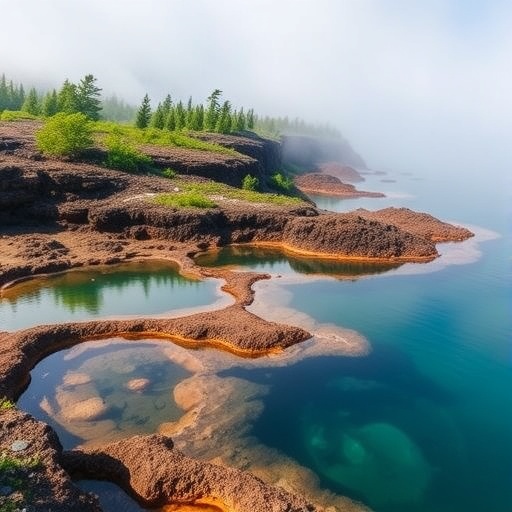
In a groundbreaking study, researchers led by J.M. Maak and his team have uncovered intriguing insights into the physicochemical controls that dictate carbon assimilation processes in ancient ecosystems, specifically focusing on shallow-water hydrothermal systems. These ecosystems, often overlooked, are vital not only for understanding climate change dynamics but also for unraveling the history of carbon cycling on our planet. The findings are poised to shift current paradigms in environmental science, illuminating the pathways through which carbon is assimilated into ecosystem biomass and fundamentally bolstering our appreciation for these unique environments.
Shallow-water hydrothermal systems are fascinating natural laboratories where superheated water from the Earth’s interior emerges and interacts with the surrounding marine environment. These systems are teeming with life and create unique habitats that support diverse biological communities. They are characterized by high temperatures, varying chemical compositions, and unique pressures that facilitate an array of biochemical processes that play a crucial role in carbon cycling. The study adds a significant layer of understanding to how ancient organisms might have utilized these abundant resources in their ecological niches.
The researchers employed a combination of geochemical analysis and ecological modeling to trace the pathways of carbon as it was assimilated and transformed into biomass within these shallow-water systems. By examining sediment samples and the remnants of ancient microbial communities, they were able to reconstruct the historical carbon cycle and identify the key factors that drove assimilation processes. This work transcends mere historical analysis; it provides valuable insights that can be leveraged for contemporary environmental conservation efforts and climate change mitigation strategies.
Among the significant findings was the revelation of how physicochemical factors, such as temperature, pH, and the availability of key nutrients, shaped microbial behavior and carbon assimilation rates. The study highlighted that certain microbial communities adapted specifically to hydrothermal conditions, showcasing remarkable resilience and efficiency in carbon fixation. These adaptations underscore a remarkable evolutionary response to extreme environmental pressures, a theme that resonates with modern challenges posed by climate change and habitat degradation.
As the researchers delved deeper into the complex interactions within these ecosystems, they uncovered the crucial roles played by microbial mats and chemosynthetic organisms. These communities harness energy from chemical reactions rather than sunlight, allowing them to thrive in environments that would otherwise be inhospitable to most forms of life. Such organisms are not just vital to their immediate ecosystems; they offer a glimpse into the potential for life in extraterrestrial environments where similar hydrothermal conditions might exist.
One of the paramount questions addressed in the study was the overall impact of shallow-water hydrothermal systems on global biogeochemical cycles. The researchers concluded that these systems represent significant carbon sinks, contributing more to carbon sequestration than previously understood. This has far-reaching implications for how we model carbon budgets and assess ecosystem services stemming from these unique habitats. Understanding their role in carbon cycling is critical as it informs our efforts in ecological restoration and management in the face of climate challenges.
As climate change continues to accelerate, the research provides critical insights into the resilience of ecosystems under stress. The ability of certain species to adapt and thrive in extreme conditions presents a hopeful narrative about the future of biodiversity. However, it also serves as a stark reminder of the fragility that pervades these unique environments. The researchers advocate for heightened protection and conservation efforts aimed at these hydrothermal systems, emphasizing that they are not merely scientific curiosities but essential components of our planet’s ecological health.
In addition, the study emphasizes the need for interdisciplinary approaches in future research that integrate chemistry, biology, and geology. By fostering collaborations across scientific fields, researchers can more comprehensively understand how climate dynamics influence biological systems. This is crucial for developing effective conservation strategies that are not just reactive but are instead proactive in managing the delicate balance of these ecosystems.
The implications of the study extend beyond academic interest; they call for action from policymakers and conservationists alike. As hydrothermal systems are increasingly threatened by human activity and climate change, it is imperative that protection measures be put in place to ensure that these vital ecosystems can continue to function and adapt. Public awareness campaigns can play a pivotal role in rallying support for conservation initiatives aimed at preserving these ecosystems and their hidden treasures.
In conclusion, the research led by Maak and his team opens a new chapter in our understanding of carbon assimilation in ancient ecosystems linked to shallow-water hydrothermal systems. This work not only enriches our scientific knowledge but also enhances our appreciation for the intricate relationships between life and geological processes. As we grapple with the realities of climate change, studies like this serve as a reminder of the resilience of life and the essential roles that various ecosystems play in the health of our planet.
The adventure of unveiling the complexities of ancient ecosystems is far from over. Future research is anticipated to explore even deeper into the genetic bases of microbial adaptations and their evolutionary history. With advancements in technology, further studies may well uncover how these ecosystems can inform current environmental challenges and contribute to sustainable practices moving forward.
The significance of this research cannot be understated. It sets the stage for a paradigm shift in how we may approach ecosystem modeling and climate strategies in the years to come. As we expand our understanding of these ancient systems, we empower ourselves to forge a more sustainable relationship with the environment, ensuring that the legacy of these ecosystems endures for future generations.
Subject of Research: Physicochemical controls on ancient carbon assimilation into ecosystem biomass in shallow-water hydrothermal systems.
Article Title: Physicochemical controls on ancient carbon assimilation into ecosystem biomass in shallow-water hydrothermal systems.
Article References: Maak, J.M., Elvert, M., Grotheer, H. et al. Physicochemical controls on ancient carbon assimilation into ecosystem biomass in shallow-water hydrothermal systems. Commun Earth Environ (2026). https://doi.org/10.1038/s43247-026-03254-z
Image Credits: AI Generated
DOI: 10.1038/s43247-026-03254-z
Keywords: Carbon assimilation, shallow-water hydrothermal systems, ecosystems, microbial communities, climate change, carbon cycling, environmental conservation.


