

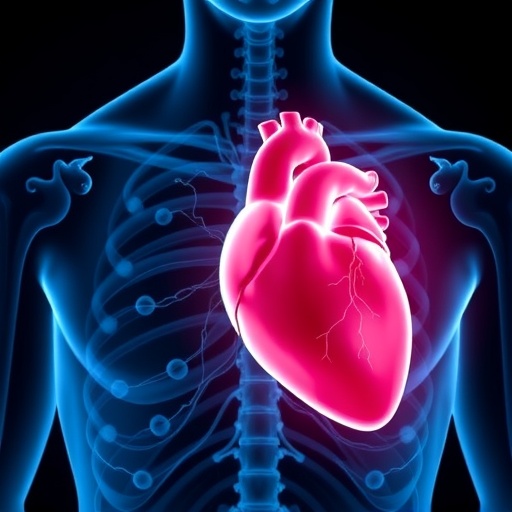
In a groundbreaking advancement for cardiovascular medicine and geriatric care, researchers at Juntendo University have harnessed the power of machine learning to significantly enhance the prediction accuracy of one-year mortality in elderly patients who have undergone heart failure treatment. This pioneering research marks a transformative step forward in the personalized management of heart failure (HF), a complex and life-threatening condition whose prognosis has traditionally been difficult to estimate with precision, especially in aging populations.
Heart failure, a condition marked by the heart’s inability to pump blood effectively, poses substantial challenges for clinicians worldwide. Existing mortality risk models such as AHEAD (which considers factors like atrial fibrillation, hemoglobin levels, and diabetes) and BIOSTAT compact have provided clinically valuable insights but are largely developed from data on European and North American cohorts. These models systematically underestimate risk in older East Asian patients, highlighting a critical gap in the applicability of traditional prognostic tools across diverse demographic groups. Addressing this disparity requires innovation beyond the established biomedical risk factors commonly used in these models.
Led by Professor Tetsuya Takahashi, Assistant Professor Kanji Yamada, and Associate Professor Nobuyuki Kagiyama, the Juntendo University team utilized an eXtreme Gradient Boosting (XGBoost) algorithm, a sophisticated machine learning technique renowned for its ability to process complex interactions among numerous variables and produce highly accurate predictive models. Utilizing data from the extensive J-Proof HF registry, which compiles clinical and functional information from 9,700 elderly heart failure patients discharged after treatment across 96 institutions in Japan, the team integrated a wide spectrum of patient metrics into their model.
The hallmark of this new approach lies in its incorporation of physical function indicators alongside traditional cardiac-specific factors. While prior models emphasized static biomedical variables such as ejection fraction and arrhythmia prevalence, this model underscores the critical prognostic value of functional assessments, including the Barthel Index (BI) and the Short Physical Performance Battery (SPPB). These performance-based tests, which objectively evaluate activities of daily living and physical capabilities, provide reproducible and clinically relevant data that capture the patient’s overall physiological resilience and frailty—key determinants of post-discharge survival.
Two distinct models were created: the Full XGBoost model, which utilized the complete dataset, and a streamlined Top-20 XGBoost model derived from the 20 most influential variables. Remarkably, seven of these top predictors were tied to physical function and other non-cardiac factors, illustrating their outsized role in survival prediction in the elderly HF cohort. The Top-20 model not only matched the predictive accuracy of its full counterpart but also outperformed established prognostic tools like AHEAD and BIOSTAT compact in stratifying patient mortality risk precisely.
This superior stratification has profound clinical implications. Rather than a one-size-fits-all treatment plan, the Top-20 XGBoost model enables healthcare providers to identify which elderly patients are at heightened risk of mortality and who may benefit from tailored interventions, such as intensified monitoring, optimized rehabilitation, or nutritional support. This targeted approach promises to enhance patient outcomes by customizing care pathways and efficiently allocating limited healthcare resources.
Dr. Yamada emphasizes the significance of integrating geriatric and functional assessments into routine heart failure management, noting that physical function at hospital discharge acts as a predictor of mortality on par with traditional cardiovascular risk factors. Unlike immutable characteristics such as age or genetic predisposition, physical function represents a modifiable target. Interventions aimed at improving frailty through rehabilitation can thus potentially alter a patient’s trajectory and improve survival odds.
The development of this innovative prognostic model involved sophisticated computational simulation and rigorous validation within a large, prospective cohort, ensuring robustness and reliability. By tapping into machine learning’s capability to assimilate high-dimensional and multifaceted clinical data, the researchers overcome the limitations of conventional statistical models, thereby enabling personalized risk prediction unachievable with earlier methodologies.
While the Top-20 XGBoost model currently reflects data drawn exclusively from Japanese institutions, its architecture paves the way for future refinements across diverse populations globally. Further testing and calibration in different ethnic and healthcare contexts are essential to confirm its universal applicability and to adapt it where necessary. The research team is actively working on developing a user-friendly clinical tool based on this model, allowing physicians to input patient-specific information and receive accurate mortality risk predictions to guide decision-making in real time.
This work exemplifies the growing trend of incorporating advanced data analytics and machine learning into clinical practice, fostering an era where predictive medicine is both precise and context-sensitive. Its success also highlights the importance of comprehensive assessments that transcend traditional disease-centric models to embrace the multifactorial realities faced by older adults with heart failure.
In conclusion, this study from Juntendo University represents a major leap forward in heart failure prognosis, blending clinical insight with cutting-edge technology to improve survival predictions in elderly patients. By shining a spotlight on physical function and its critical role in outcomes, it challenges existing paradigms and opens new avenues for personalized care and rehabilitation. As machine learning continues to evolve, such integrative models hold tremendous promise to reshape the landscape of cardiovascular health management worldwide.
Subject of Research: People
Article Title: Machine learning prediction of 1-year mortality in older patients with heart failure: A nationwide, multicenter, prospective cohort study
News Publication Date: 3-Feb-2026
Web References: https://doi.org/10.1016/j.lanwpc.2026.101808
References: Yamada K, Kagiyama N, Morisawa T, et al. Machine learning prediction of 1-year mortality in older patients with heart failure: A nationwide, multicenter, prospective cohort study. The Lancet Regional Health – Western Pacific. 2026;67:101808. https://doi.org/10.1016/j.lanwpc.2026.101808
Image Credits: Kanji Yamada from Juntendo University, Japan
Keywords: Heart disease, Cardiology, Geriatrics, Aging populations, Physical rehabilitation, Public health, Health care, Health and medicine, Machine learning


