

The world’s oceans stand at a critical crossroads, burdened by a plethora of escalating threats ranging from rampant illegal fishing activities and the accelerated loss of vital coastal habitats to the pervasive menace of plastic pollution. In response to these mounting challenges, a newly inducted group of pioneering scientists from diverse corners of the globe is stepping forward to bridge the vast knowledge gaps hindering effective oceanic conservation efforts. These researchers bring a fresh wave of innovation and dedicated focus on bolstering the health and resilience of marine ecosystems, while simultaneously safeguarding the livelihoods of communities intricately tied to the sea.
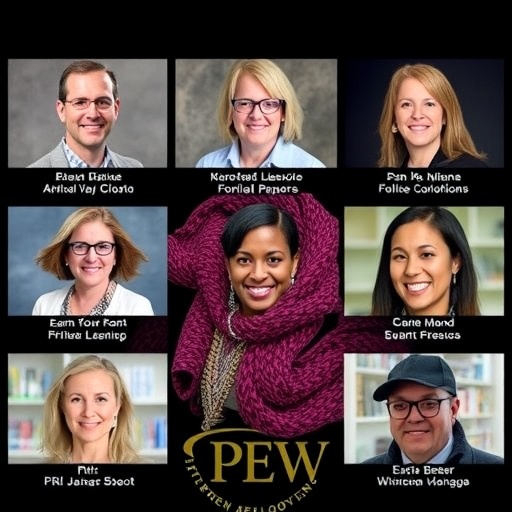
Recently, The Pew Charitable Trusts unveiled its latest cohort of seven marine conservation fellows, selected for their ambitious, conservation-driven research agendas. Hailing from Australia, the United States, Canada, Japan, and Thailand, each fellow has been awarded grants totaling $150,000 distributed over a three-year period to propel their groundbreaking investigations. Collectively, their pursuits span a wide scientific spectrum, including the application of cutting-edge genetic techniques to trace and control illegal fishing, advancing coral reef restoration methodologies in Southeast Asia, utilizing remote sensing and environmental DNA to map robust kelp forests, and developing community-centric conservation incentives with direct socio-economic benefits.
Among the innovative undertakings, one fellow is dedicated to refining plastic pollution research by enhancing open-source tools to identify and classify hard-to-detect nanoplastics, thermoplastics, and chemical leachates that infiltrate marine ecosystems at microscopic scales. Others focus their expertise on dissecting the complexities of multispecies fisheries governance in East Asia, scrutinizing legal frameworks to craft politically feasible and ecologically sustainable agreements for shared stock management. This cohort also explores the daunting repercussions of harmful algal blooms through sophisticated statistical models designed to unravel their temporal and spatial dynamism, with implications for public health in affected coastal regions.
This year’s fellowship program notably includes the inaugural recipient of the Pew-Gerstner Fellowship in Ocean Plastics Research, underscoring a strategic emphasis on marine debris and its far-reaching consequences. Further enriching this interdisciplinary endeavor is the second Pew-Hoover Fellowship in Marine and Biomedical Science recipient, heralding innovative explorations at the nexus of marine biology and medical applications. Together, this assembly embodies a fusion of scientific rigor, technological ingenuity, and an inclusive approach that seeks to harmonize environmental stewardship with technological and community engagement.
Leo Curran, the program’s project director, extolled the fellows’ collective creativity and relentless commitment, emphasizing their work as a testament to the potent impact arising when science, technology, and local communities converge towards common conservation goals. The network of Pew fellows—now comprising over 200 alumni worldwide—serves as a vibrant, collaborative nexus fostering knowledge exchange and catalyzing transformative marine resource management strategies.
Among the cohort, Dr. Suchana Apple Chavanich of Chulalongkorn University undertakes the vital task of enhancing coral reef restoration in Southeast Asia. This region’s coral ecosystems harbor immense biodiversity but face existential threats from warming oceans and human interference. Dr. Chavanich’s approach leverages sexual propagation techniques and cryopreservation of coral gametes, thereby preserving genetic diversity essential for generating resilient coral populations capable of adapting to climatic stresses.
Dr. Andrés Cisneros-Montemayor from Simon Fraser University is pioneering a socially informed framework to dissect the complex social networks influencing ocean economy markets. By closely working with fishing communities in Sonora, Mexico, his research integrates socio-economic data with qualitative field insights to formulate tailor-made conservation incentives that resonate with local stakeholders, intending to harmonize economic vitality with ecological sustainability.
The forefront of ocean plastics research is represented by Dr. Win Cowger of the Moore Institute for Plastic Pollution Research, who is enhancing Open Specy—an open-source platform oriented to plastic pollution classification. By expanding its reference libraries and optimizing machine learning algorithms, Cowger aims to significantly improve the identification accuracy of nano- and microplastic particles, facilitating better monitoring and mitigation strategies across global marine environments.
From the University of Queensland, Dr. Nur Arafeh-Dalmau applies an integrative methodology combining satellite remote sensing, extensive ecological surveys, and cutting-edge environmental DNA sampling to map the distribution and resilience of kelp forests across the Americas. This research deciphers biodiversity trends and assesses ecosystem robustness against marine heatwave disturbances, providing critical insights for adaptive conservation management.
Bridging marine biology and public health, Dr. Matthew Gribble of UCSF employs hidden Markov models—advanced statistical tools that reveal patterns in seemingly stochastic events—to elucidate the occurrence and impacts of toxic algal blooms. His comparative regional studies in southeast Alaska and Andalucia, Spain, emphasize the risks these blooms pose to indigenous populations reliant on marine resources, thus underpinning the necessity for enhanced monitoring frameworks.
At Stanford University, Dr. Shaili Johri innovates seafood traceability by harnessing genomic sequencing techniques that distinguish the fine-scale genetic differences unique to individual marine species. Concentrating on reef sharks in the Western Indian Ocean, Johri’s work has direct applications in combating illicit fishing practices by accurately tracing poaching hotspots and illegal trade routes, thus enhancing enforcement capabilities.
In East Asia, Dr. Namhee Kwon of Kansai University critically analyzes transboundary fisheries agreements, targeting the legal milieu encompassing South Korea, Japan, and China. Her research meticulously evaluates compliance with the United Nations Convention on the Law of the Sea and examines domestic treaty implementations, aiming to devise reforms that bolster both ecological resilience and diplomatic cooperation.
These scientific endeavors reflect a broader paradigm shift toward integrative, multi-disciplinary approaches to marine conservation—where traditional ecological studies are augmented by socio-economic analysis, innovative technological tools, and legal scrutiny. As these midcareer experts translate their research into actionable conservation strategies, they embody hope for reversing ocean degradation trends.
Angela Bednarek, director of scientific advancement at Pew, highlights the fellows’ capacity to transform theoretical science into tangible outcomes. She underscores their proactive engagement with policymakers and community stakeholders, a dynamic that ensures research findings not only enrich academic discourse but also engender concrete environmental policy and stewardship practices capable of securing ocean health for future generations.
The 2026 Pew Fellows cohort exemplifies a generation of scientists equipped not only with advanced technical expertise but also a profound commitment to collaborative conservation. Their work, supported by rigorous funding and fostered by an expansive network of marine specialists, marks a pivotal stride in confronting humanity’s most urgent oceanic crises. With each innovative project, these fellows advance the frontiers of marine science, illuminating pathways toward resilient and sustainable oceans amidst escalating anthropogenic pressures.
Subject of Research:
Advanced marine conservation methods encompassing ocean plastic pollution, coral reef restoration, fisheries governance, marine biodiversity mapping, and harmful algal bloom dynamics.
Article Title:
Pioneering Ocean Scientists Launch New Frontiers in Marine Conservation and Plastic Pollution Research
News Publication Date:
2026
Web References:
https://www.pewtrusts.org/en/projects/marine-fellows-program
Keywords:
Marine conservation, ocean plastics, coral reef restoration, kelp forests, illegal fishing, fisheries governance, harmful algal blooms, environmental DNA, marine biodiversity, ocean policy, marine science fellows


