

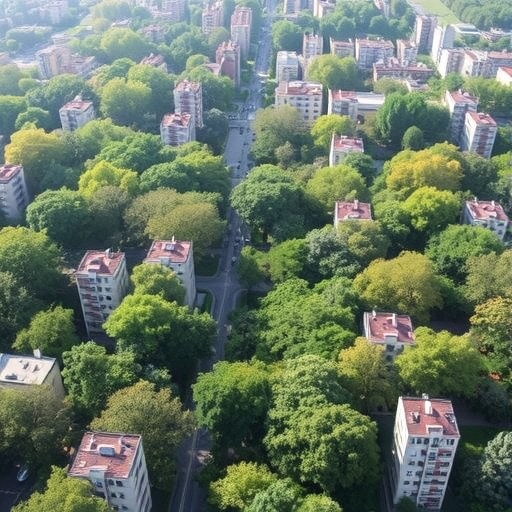
As urban areas continue to burgeon across the globe, the pressing issues of temperature extremes and air pollution have emerged as significant contributors to urban mortality, particularly in European cities. A groundbreaking study led by Anav et al. sheds light on innovative strategies that leverage peri-urban forests to combat these critical public health challenges. This research provides not only vital insights but also actionable recommendations that can significantly enhance the fabric of urban living while fostering environmental resilience.
The study emphasizes the role of peri-urban forests—those green spaces located on the outskirts of cities—as essential buffers against rising temperatures and deteriorating air quality. These forests serve as natural air filters, capable of sequestering carbon dioxide and filtering pollutants, thus improving overall air quality. Furthermore, they contribute to mitigating the urban heat island effect, a phenomenon whereby urban regions experience significantly warmer temperatures than their rural surroundings, largely due to human activities and infrastructure.
Research findings suggest that expanding and integrating peri-urban forests within urban planning can lead to a substantial decrease in health risks associated with heat exposure and air pollution. Increased canopy cover not only lowers temperatures through shade provision but also promotes physical and mental well-being among urban residents. The study advocates for a paradigm shift in urban policy and design, integrating green infrastructure into the cityscape to cultivate environmentally sustainable and human-friendly metropolitan areas.
The methodology employed by the authors involved statistical analyses and simulations to assess the impact of peri-urban forests on urban mortality rates in selected European cities. By analyzing historical climate data alongside public health records, the researchers were able to correlate increases in green spaces with decreases in air pollution levels and heat-related mortality incidences. The results highlight that each hectare of added peri-urban forest can potentially avert numerous premature deaths, thus underscoring the public health imperative for natural landscaping in urban spaces.
The authors also delve into the socio-economic implications of these findings. Effective incorporation of peri-urban forestry not only addresses health concerns but also offers economic benefits, including increased property values and the enhanced aesthetic value of neighborhoods. Furthermore, these green buffers can bolster local economies through eco-tourism and recreational opportunities, ultimately leading to improved quality of life for urban citizens.
In terms of environmental justice, the study addresses the disproportionate impacts that air pollution and heat have on vulnerable populations. Communities with limited access to green spaces are often those bearing the brunt of these environmental challenges. Therefore, implementing strategies to enhance peri-urban forestry can serve as a critical tool in rectifying these inequities, ensuring that all citizens, regardless of socio-economic status, can experience the benefits of cleaner air and cooler environments.
Moreover, the findings are particularly timely given increasing urbanization trends fueled by climate change. As cities expand, the likelihood of extreme weather events and worsening air quality escalates. The importance of reforestation and afforestation initiatives in peri-urban areas becomes increasingly critical as preventive measures against these trends. With climate goals in focus, integrating green infrastructure emerges as not just beneficial, but essential for urban resilience.
Anav et al. propose several action points for city planners and policymakers. Firstly, there is a call to conduct comprehensive audits of existing green spaces to assess conditions and identify areas for enhancement. Secondly, they advocate for community involvement in decision-making processes related to peri-urban forestry developments. Engaging local populations in the creation and maintenance of these green spaces fosters a sense of ownership and responsibility toward environmental stewardship.
Additionally, the study recommends the incorporation of green corridors between peri-urban forests and urban areas, facilitating wildlife movement and enhancing biodiversity. Such linkages can create ecological networks that enhance environmental integrity while simultaneously providing recreational pathways for urban dwellers. The authors emphasize that these biophysical connections can significantly amplify the positive effects of peri-urban forestry.
The research also touches upon the technological implications of monitoring and managing peri-urban forests. Advances in remote sensing and geographic information systems can provide dynamic tools for observing changes in tree cover, pollutant levels, and temperature variations. Utilizing these technologies allows for more informed decision-making and strategic planning in urban forestry initiatives.
A crucial aspect of the study is its focus on the potential for scalability. The principles and findings could be adapted to various cities around Europe and beyond, making the case for a unified approach to urban forestry. This adaptability ensures that different urban contexts can harness the benefits of peri-urban forests tailored to their specific climates, populations, and spatial configurations, setting a precedent for global environmental strategies.
Significantly, the study serves as a call to action for investment in green infrastructure. The health of urban populations and the environment are interlinked, and neglecting these green spaces could exacerbate existing challenges rather than solving them. The need for financial commitment from both public and private sectors is vital to foster this green transformation within urban settings.
In conclusion, Anav et al.’s research highlights a path forward that not only addresses critical public health issues related to climate change but also fosters environmental justice and resilience. By embracing the potential of peri-urban forests, cities can create healthier, more livable environments that stand in stark contrast to the rising threats posed by urbanization. As cities grapple with the dual challenges of growing populations and climate-linked issues, the integration of nature into urban life is no longer optional—it is imperative for sustainable development.
In an era defined by rapid urbanization, the urgent call for action presented in this comprehensive study cannot be overstated. As the implications of climate change continue to unfold, embracing nature with innovative approaches in urban settings will be paramount for ensuring not only the health of urban populations but also the longevity and vitality of our cities themselves.
Subject of Research: The impact of peri-urban forests on urban mortality related to temperature and air pollution in European cities.
Article Title: Leveraging peri-urban forests to reduce temperature and air pollution-related urban mortality in European cities.
Article References:
Anav, A., Gualtieri, M., Sorrentino, B. et al. Leveraging peri-urban forests to reduce temperature and air pollution-related urban mortality in European cities. Commun Earth Environ (2025). https://doi.org/10.1038/s43247-025-03079-2
Image Credits: AI Generated
DOI: 10.1038/s43247-025-03079-2
Keywords: peri-urban forests, urban mortality, air pollution, climate change, urban planning, environmental justice, green infrastructure, public health.


