

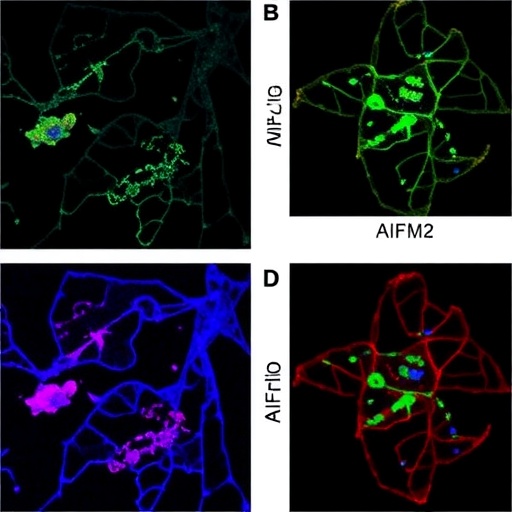
In a groundbreaking discovery poised to reshape our understanding of prostate cancer resistance mechanisms, a recent study reveals the pivotal role of PDHA1 in fortifying cancer cells against ferroptosis, a form of programmed cell death. This insight could pave the way for novel therapeutic strategies targeting stubborn, metastatic prostate cancers that evade conventional treatments by exploiting cellular survival circuits.
The crux of this research lies in the complex interplay between anoikis resistance and ferroptosis—a lethal form of cell death driven by iron-dependent lipid peroxidation. Normally, detached cells undergo anoikis, a process preventing detached epithelial cells from colonizing elsewhere, acting as a natural barrier to metastasis. However, certain prostate cancer cells acquire resistance to anoikis, enabling them to survive in detachment and subsequently metastasize. This study elucidates how PDHA1, an enzyme traditionally associated with metabolic flux in mitochondria, also enhances the resistance of these evading cancer cells to ferroptosis, thus ensuring their survival during dissemination through the body.
PDHA1, or pyruvate dehydrogenase E1 alpha 1 subunit, is a critical enzyme that facilitates the conversion of pyruvate to acetyl-CoA, linking glycolysis to the tricarboxylic acid cycle. Its newfound role transcends metabolic processing, venturing into cellular defense mechanisms. The study painstakingly details how upregulation of PDHA1 instigates a cellular milieu less susceptible to ferroptotic damage, effectively equipping anoikis-resistant prostate cancer cells with a survival advantage that is both robust and biochemically nuanced.
Central to this enhanced ferroptosis resistance is the upregulation of AIFM2 (apoptosis-inducing factor mitochondria associated 2), a mitochondrial protein with antioxidative properties. AIFM2 functions as a ferroptosis suppressor by mitigating lipid peroxidation and preserving cellular integrity against oxidative stress. The investigation demonstrates that PDHA1’s functional influence on metabolic pathways induces AIFM2 expression, forming a biochemical axis that reinforces cellular defenses in malignant prostate tissues.
The implications of this PDHA1-AIFM2 axis offer a molecular explanation for the resilience of prostate cancer cells that manage to thrive despite detachment-induced stress and therapeutic interventions aimed at inducing ferroptosis. This mechanistic insight offers a targetable vulnerability; manipulating PDHA1-mediated pathways or directly inhibiting AIFM2 might restore ferroptosis sensitivity, inducing selective cancer cell death and suppressing metastatic progression.
Delving into the biochemical underpinnings, the study presents a detailed exploration of how PDHA1 impacts reactive oxygen species (ROS) homeostasis and lipid metabolism within cancer cells. By modulating pyruvate flux and mitochondrial function, PDHA1 indirectly regulates iron metabolism and lipid peroxidation dynamics, critical components of the ferroptotic pathway. The refined control of these metabolic and redox states underscores the sophistication of cancer cell survival strategies that evade ferroptosis, positioning PDHA1 as a molecular lynchpin in this process.
Moreover, this study integrates a comprehensive examination of cellular signaling networks, revealing how alterations in mitochondrial metabolic enzymes influence downstream antioxidant responses. The crosstalk between metabolic activity and ferroptosis resistance introduces a paradigm shift, illustrating that mitochondrial metabolic enzymes, traditionally considered metabolic workhorses, also act as regulators of cell death pathways, thus broadening their significance in cancer biology.
The research methodology employed involved rigorous in vitro analyses using anoikis-resistant prostate cancer cell lines, coupled with advanced genetic manipulation techniques to modulate PDHA1 and assess its effects on ferroptosis susceptibility. Subsequent validation in xenograft models affirmed the in vivo relevance of the PDHA1-AIFM2 axis, reinforcing its potential as a therapeutic target. Such preclinical evidence is invaluable for fostering the development of drugs aimed at dismantling this protective axis within tumor cells.
Importantly, the study’s findings highlight the contextual dependency of ferroptosis resistance, especially the tumor microenvironment’s impact on metabolic states. The researchers underscore that in metastatic niches, where nutrient scarcity and oxidative stress are prevalent, cancer cells’ reliance on PDHA1-driven metabolism may be augmented, further consolidating their ability to resist ferroptosis and survive hostile conditions. This adaptive metabolic plasticity underscores the challenges and opportunities in targeting metastatic prostate cancer.
From a therapeutic standpoint, the identification of PDHA1’s dual role in metabolism and ferroptosis resistance offers innovative angles for intervention. Targeting the enzymatic activity of PDHA1 or disrupting AIFM2 expression might sensitize cancer cells to ferroptotic inducers, transforming resistant tumors into vulnerable targets for existing and novel agents. Such strategies promise to elevate the precision and efficacy of prostate cancer treatments, especially for cases prone to metastasis and relapse.
Furthermore, this discovery invites a reexamination of metabolic enzyme functions beyond their canonical roles. It challenges researchers to consider metabolic enzymes as integrators of cell death and survival signals in cancer progression. Understanding these multifunctional roles enriches the conceptual framework of tumor biology and opens the door to metabolic-targeted therapies that could enhance the durability of cancer remission.
Looking ahead, further research is warranted to unravel the broader implications of PDHA1 and AIFM2 in other cancer types where ferroptosis resistance and metastatic capacity intersect. Cross-cancer analyses could reveal whether this metabolic defense mechanism is a universal hallmark of aggressive tumors, thus broadening the scope of therapeutic opportunities and informing personalized medicine approaches.
The findings also illuminate potential biomarkers for predicting prostate cancer progression and therapy response. Elevated PDHA1 and AIFM2 expression levels might serve as indicators of ferroptosis resistance and metastatic potential, guiding clinicians in tailoring treatment strategies that circumvent these defense pathways.
This study exemplifies the intricate dance of metabolic adaptation and cellular defense in cancer biology, spotlighting the sophisticated tactics employed by cancer cells to circumvent death and thrive under duress. The PDHA1-AIFM2 axis embodies a critical survival mechanism that, once understood and harnessed, could revolutionize therapeutic paradigms against anoikis-resistant prostate cancer.
The broader scientific and medical communities will undoubtedly watch closely as these revelations translate into clinical innovations. The manipulation of metabolic enzymes to overcome ferroptosis resistance could herald a new frontier in oncology, where the metabolic vulnerabilities of cancer cells are exploited to restore the effectiveness of ferroptosis-driven therapeutic modalities.
Taken together, these insights not only deepen our grasp of prostate cancer’s resilience but also inject fresh optimism into the fight against metastatic disease. The strategic targeting of PDHA1 and its downstream effectors like AIFM2 could unlock new avenues for durable cancer control, highlighting the ever-evolving nexus of metabolism, cell death, and cancer progression.
Subject of Research:
The molecular mechanisms by which PDHA1 enhances resistance to ferroptosis in anoikis-resistant prostate cancer cells through the upregulation of AIFM2.
Article Title:
PDHA1 enhances resistance to ferroptosis in anoikis-resistant prostate cancer by upregulating AIFM2.
Article References:
Cong, Y., Chen, K., Ju, Y. et al. PDHA1 enhances resistance to ferroptosis in anoikis-resistant prostate cancer by upregulating AIFM2. Cell Death Discov. (2026). https://doi.org/10.1038/s41420-026-02958-7
Image Credits:
AI Generated


