

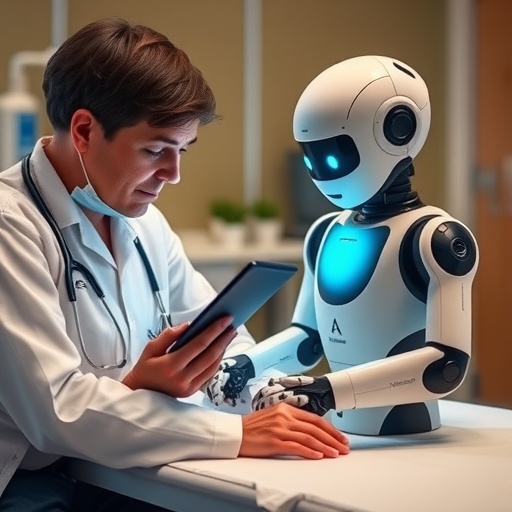
In the rapidly evolving landscape of healthcare technology, nursing robots are emerging as pivotal players that promise to revolutionize patient care. A recent study conducted by a team of researchers led by Wang and colleagues sheds light on an underexplored aspect of this technological evolution: the readiness of patients to embrace nursing robots and how this readiness correlates with their intention to use such innovations. The study employs latent profile analysis, an advanced statistical approach allowing researchers to uncover hidden patterns within patient populations, which can significantly influence technology adoption.
The advent of nursing robots has sparked debates within the medical community over their practicality and effectiveness. However, as healthcare systems grapple with increasing demands and workforce shortages, the integration of robots for assistance in nursing care appears increasingly viable. Nurses are often overwhelmed by routine tasks that can be automated, and robots can alleviate certain burdens, allowing human caregivers to focus on complex patient interactions that demand emotional intelligence and nuanced decision-making.
What makes the study by Wang et al. particularly notable is its focus on the ‘technology readiness’ of patients. This concept, which encompasses the willingness and ability of individuals to engage with new technology, is critical in determining whether innovations like nursing robots will be accepted and utilized in everyday clinical settings. Through comprehensive surveys and sophisticated data analysis, the researchers aimed to understand how different profiles of patients might impact their openness to interacting with robotic assistants in the nursing sphere.
The findings from the latent profile analysis reveal several distinct groups among the patient population, each exhibiting varying degrees of technology readiness. One group is characterized by a high degree of comfort with technology, often comprising younger patients who have been raised in an increasingly digital world. Conversely, older adults and those with less exposure to technology demonstrated apprehensive attitudes towards robotic assistance. Such differences underscore the necessity for tailored interventions when introducing robotic technologies into healthcare settings, acknowledging that a one-size-fits-all approach may not be sufficient.
Moreover, the study explores the emotional aspects of accepting nursing robots. Emotions play a crucial role in healthcare relationships—something that machines can struggle to replicate. Patients who feel a strong connection to their healthcare providers may be less inclined to accept a robotic alternative. This emotional landscape complicates the narrative surrounding robotic integration, emphasizing the need for patient education and gradual acclimatization to technology. By fostering a sense of familiarity and trust, healthcare providers can potentially bridge the gap between patients and nursing robots.
As the healthcare sector continues to innovate, the implications of these findings extend beyond mere statistics. They prompt critical questions about the ethical considerations of robot integration in clinical practice. How do we preserve the human touch in nursing while reaping the benefits of advanced technology? The study suggests that successful integration will depend on developing robots that can complement rather than replace human caregivers. This is where the focus on technology readiness becomes essential; understanding patients’ fears and concerns allows for the design of robots that can be seen as allies rather than substitutes.
Another layer of complexity arises when considering the regulatory landscape. As nursing robots become more commonplace, healthcare administrators and policymakers must navigate a myriad of regulations that govern patient safety and technological efficacy. The findings from Wang et al.’s research provide valuable insight that can inform these discussions, as understanding patient readiness may directly influence regulatory approval processes.
Furthermore, the pandemic has accelerated the rate at which healthcare technology is adopted. In environments where social distancing became the norm, the potential of nursing robots was more visible than ever. Hospitals began to explore robotic assistance to minimize human contact while maintaining care standards. This shift has likely influenced patients’ perceptions of technology readiness, highlighting the importance of patient feedback in the evolution of robotic care solutions.
The longitudinal perspective of the study suggests that as familiarity with technology increases, patients may develop a more favorable view of nursing robots. This gradual acceptance can lead to greater utilization, ultimately impacting patient outcomes and healthcare efficiency. However, continued research is crucial as technological advancements arrive at a pace that outstrips the rate of societal acceptance.
Additionally, organizations looking to implement nursing robots would benefit greatly from actively involving patients in the design and operational phases of robotic integration. Engaging patients directly can provide critical insights into their needs and preferences, ensuring that nursing robots ultimately serve to enhance their experience rather than detract from it. Such participatory approaches are becoming increasingly important as technology becomes an intrinsic part of healthcare delivery.
In conclusion, the emerging research by Wang and colleagues illuminates a vital dimension of healthcare technology adoption: patient readiness. Understanding the varied responses to nursing robots among different patient demographics will not only shape the future of robotic integration but also foster a healthcare environment that respects and prioritizes patient perspectives. As we stand at the cusp of a new era in healthcare, embracing technology while retaining human empathy will be paramount in crafting a future where nursing robots and human caregivers work in harmony.
The potential of nursing robots is vast, yet their success hinges on our ability to understand and adapt to the complexities of human behavior. Future studies will undoubtedly continue to explore these pivotal dynamics, offering a roadmap for how technology can be thoughtfully and effectively woven into the fabric of patient care.
Subject of Research: Technology readiness of patients regarding nursing robots.
Article Title: Technology readiness of patients and its association with intention to use nursing robots: latent profile analysis.
Article References:
Wang, W., Pan, X., Yan, Y. et al. Technology readiness of patients and its association with intention to use nursing robots: latent profile analysis.
BMC Nurs (2025). https://doi.org/10.1186/s12912-025-04226-y
Image Credits: AI Generated
DOI: 10.1186/s12912-025-04226-y
Keywords: nursing robots, technology readiness, patient acceptance, healthcare technology, latent profile analysis.


