

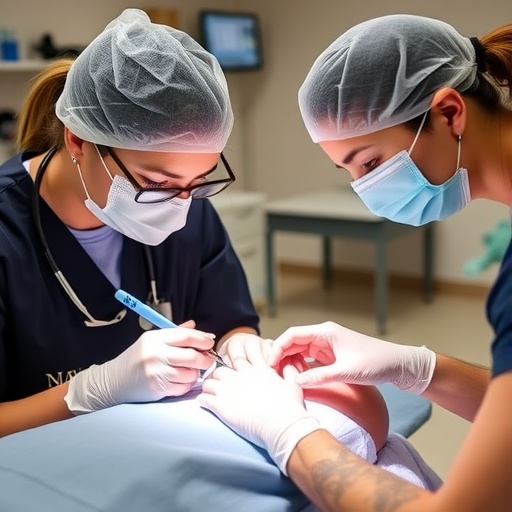
In a groundbreaking retrospective study, researchers have uncovered critical insights into patient-initiated communication following nail procedures. This single-center study, conducted by Scheinkman, Tordjman, Barbato, and their team, dives deep into the correlation between patient experiences and postoperative follow-up interactions with healthcare providers. As the number of nail procedures continues to rise, understanding these communication dynamics is increasingly essential for enhancing patient care.
Nail procedures, ranging from simple nail avulsions to complex surgical interventions, can lead to a spectrum of postoperative outcomes. Patients often find themselves navigating a maze of recovery challenges, and how they communicate with healthcare professionals can significantly impact their recovery journey. The study highlights that patients often take the initiative to reach out to their providers, seeking clarification, reassurance, or assistance. This stands in stark contrast to traditional paradigms where the onus of follow-up often lies with the healthcare system.
The methodology employed by the researchers was meticulous. They examined patient records from a single center, focusing on those who had undergone nail procedures within a specified period. Utilizing a comprehensive dataset, the team analyzed patterns in patient communication, identifying key triggers that prompted patients to engage with healthcare providers. An intriguing aspect of their findings was the identification of specific terminology and concerns that patients expressed, shedding light on the common themes in their follow-up inquiries.
One striking revelation from the study was that a significant number of patients expressed feelings of anxiety and uncertainty post-procedure. These emotional responses were often linked to the clarity of preoperative communication. Patients who felt well-informed about what to expect during recovery were less likely to initiate contact. This finding underlines the importance of effective preoperative consultations, where healthcare providers have the opportunity to establish a transparent communication channel, setting the stage for a more confident patient experience.
The repercussions of this research extend beyond just improving communication strategies. By understanding the factors that drive patients to seek information, healthcare providers can tailor their postoperative care practices. For instance, offering digital communication options or scheduled follow-up calls may mitigate patient anxiety and enhance overall satisfaction with the care received. This approach not only benefits patients but also alleviates the burden on healthcare providers who may find themselves inundated with calls and emails if patient concerns are not adequately addressed upfront.
Digital platforms have emerged as a significant tool in patient-initiated communication. As telemedicine continues to gain traction, the ability for patients to reach out through various digital channels has transformed the landscape of healthcare communication. The study underscores the need for healthcare systems to integrate these tools effectively, ensuring that patients have easy access to their providers without experiencing delays or barriers.
Furthermore, the study’s implications resonate with the growing demand for patient-centered care models. As healthcare increasingly shifts towards this model, understanding how patients interact with medical professionals after procedures is crucial. By fostering an environment where patients feel comfortable initiating communication, healthcare systems can cultivate stronger relationships, leading to better health outcomes.
The findings also spotlight the significance of educating patients on postoperative expectations. By integrating clearer communication strategies into preoperative care, professionals can empower patients to take an active role in their recovery process. This empowers patients not only to ask pertinent questions but also to communicate their experiences more effectively, thereby minimizing potential complications that could arise from misunderstandings or lack of information.
While the study primarily focused on nail procedures, the insights gained could be extrapolated to other areas of healthcare. Understanding patient-initiated communication could influence various surgical procedures, chronic disease management, and overall patient care. As healthcare evolves, adapting these insights across different medical fields may revolutionize how providers engage with patients and manage their care.
Engagement does not merely refer to communication; it encompasses building trust between patients and providers. Establishing trust can significantly enhance how patients interact with the healthcare system. When patients perceive their providers as approachable and responsive, they are more likely to voice concerns or questions, fostering a collaborative environment that is conducive to healing and recovery.
In conclusion, Scheinkman, Tordjman, Barbato, and their team’s study serves as a pivotal reminder of the importance of patient-initiated communication in the realm of healthcare. The research not only highlights the pressing need for improved communication strategies but also sets the stage for further advancements in patient-centered care. As this dialogue continues, the ultimate goal is to enhance the patient experience and ensure better outcomes through meaningful engagement between patients and healthcare providers.
This exploration into patient behavior post-nail procedures opens the door to a broader conversation about the fundamental nature of patient-provider interactions. By continuing to investigate and implement the findings from this study, the healthcare industry can move closer to realizing a cohesive, communicative, and supportive environment for all patients.
Subject of Research: Patient-initiated communication after nail procedures
Article Title: Exploring patient-initiated communication after nail procedures: a single-center retrospective study
Article References:
Scheinkman, R., Tordjman, L., Barbato, K. et al. Exploring patient-initiated communication after nail procedures: a single-center retrospective study.
Arch Dermatol Res 318, 30 (2026). https://doi.org/10.1007/s00403-025-04495-2
Image Credits: AI Generated
DOI: 10.1007/s00403-025-04495-2
Keywords: Patient communication, nail procedures, patient-centered care, postoperative care, healthcare communication.


