

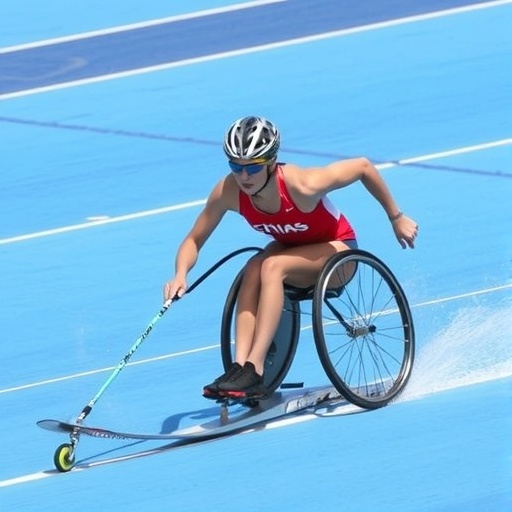
As the anticipation builds toward the Milano Cortina 2026 Winter Paralympic Games, global attention is once again fixated on Paralympic athletes and their extraordinary displays of sport and resilience. However, beyond the breathtaking competitions lies a critically important arena that often escapes the direct gaze of audiences worldwide: the media’s portrayal of Paralympic sport. A new study spearheaded by researchers Athanasios Pappous and Pablo Iniesta from the University of Bologna delves deeply into this matter, examining the perspectives of elite Italian Paralympic athletes concerning their representation in the media. Published in the reputable international journal Frontiers in Sports and Active Living, this research sheds light on how these athletes perceive the narratives that surround them and reveals nuanced challenges and opportunities that come with media coverage in Paralympic sport.
Media representation plays an influential role in shaping public perception of any athletic endeavor, particularly for the Paralympic movement, which strives not only to showcase sporting excellence but also to challenge societal norms about disability and inclusion. The study at hand moves beyond superficial analysis and collects direct, candid testimonies from 17 high-performance Italian Paralympic athletes, ranging across various disciplines. The qualitative design offers an intimate examination of personal experiences and beliefs, providing a textured understanding of the intersection between sport, media narratives, and disability identity.
These athletes articulated a striking observation: they prefer media attention to focus solely on their sporting prowess rather than their disabilities or personal life stories. This central tenet, encapsulated in the phrase, “It should just be about sport!”, challenges the prevalent media tendency to frame Paralympic narratives through a lens of inspiration or overcoming adversity. While such framing might be well-intentioned, it often risks reducing athletes to their disabilities rather than recognizing them as skilled professionals competing at the highest levels. The research reveals how this approach may inadvertently perpetuate stereotypes and detract from the authentic recognition of athletic achievement.
Technology and media platforms have transformed the way sport is consumed and narrated, but for Paralympic athletes, this transformation has not entirely translated into fair or empowering coverage. The investigation found that mainstream media tends to oscillate between two storytelling extremes: portraying athletes as heroic figures triumphing over personal tragedy or as subjects of pity. Both narratives sideline the critical aspect of competitive sport, the technical intricacies, and tactical mastery that define high-performance Paralympic competition. The athletes expressed a need for more balanced and nuanced reportage that highlights their sporting excellence while respecting their complex identities.
The study’s methodology meticulously involved semi-structured interviews, a technique allowing flexibility to uncover detailed insights while maintaining comparability across participants. This methodology uncovered several recurrent themes, such as concerns over superficial or sensationalist media portrayals, frustration with repetitive storylines focusing excessively on disability, and a desire for broader and more consistent coverage of Paralympic sport beyond the temporal spikes coinciding with major sporting events.
Italian Paralympic athletes emphasized that the limited media visibility during non-Paralympic seasons contributes to a lack of sustained public engagement and awareness. This episodic nature of coverage means that the public interaction with Paralympic sport is often fleeting and framed within moments of extraordinary achievement or tragedy. These sporadic media bursts fail to build a continuous narrative that recognizes the day-to-day rigor, strategic preparation, and evolving sports science underpinning Paralympic competition. Athletes urged for year-round media involvement to foster an informed and engaged community of supporters.
From a technical standpoint, the study underscores the implications for disability sport marketing and communication strategies. It argues that media professionals need advanced training and sensitivity to adequately cover Paralympic sport in ways that prioritize athletic narratives over mere disability spectacle. Employing knowledgeable commentators who understand the classification systems, sport-specific rules, and training demands could enhance the quality and accuracy of broadcasts, enriching viewer experience and fostering genuine appreciation for the athletes’ skills.
Beyond technical considerations, Pappous and Iniesta’s research highlights an ethical dimension to media representation. By focusing predominantly on athletes’ disabilities and personal hardships, media outlets risk reinforcing ableist perspectives that subtly imply these athletes’ value lies in their courage rather than competitive merit. Embracing a social model of disability—which contextualizes impairments within societal barriers and attitudes—would encourage media to orient stories around sporting performance, innovation in adaptive technology, and systemic challenges in Paralympic sport infrastructure instead.
The study also provides a critical lens on the language used in Paralympic media coverage. Interviewees raised concerns about patronizing terms, excessive use of the term “inspirational,” and a lack of agency afforded to them in crafting their own narratives. This linguistic framing is more than a semantic issue; it shapes public consciousness and can influence policy support for Paralympic sport funding and development. Athletes expressed strong preference for coverage that neither sensationalizes nor diminishes their accomplishments.
Importantly, the research contextualizes Italian Paralympic media portrayal within broader international dynamics. Italy, with a rich sporting culture and robust Paralympic tradition, still faces similar challenges in media portrayal as many other nations. The findings offer universality by reflecting shared concerns about visibility, narrative control, and the quest for authentic representation that transcends national boundaries. By sharing Italian athletes’ voices, the study contributes to a global dialogue on equitable and respectful media engagement strategies.
In anticipating the Milano Cortina 2026 Games, this research serves as a timely and incisive call to action for media practitioners, sport administrators, sponsors, and the Paralympic community. Effective media representation is not merely a public relations exercise; it is fundamental to advancing the Paralympic movement’s mission of inclusion, equality, and sport for all. By centering athlete perspectives and addressing technical, ethical, and narrative challenges, the media can help dismantle outdated stereotypes and illuminate the extraordinary realm of Paralympic sport with integrity and depth.
Finally, the study by Pappous and Iniesta exemplifies the value of interdisciplinary research combining social sciences, sport studies, and media analysis. Their work not only expands academic understanding of Paralympic sport media but also charts practical pathways for improving communication practices that honor the athletes’ dignity, expertise, and achievements. As media consumption continues to evolve, embracing evidence-based approaches will be essential for fostering a more inclusive and insightful sporting culture worldwide.
In conclusion, as the world gears up for the Paralympic spotlight in 2026, it becomes increasingly critical to reconsider how stories of Paralympic athletes are told. Moving beyond reductive tropes towards a genuine celebration of sporting excellence promises not just to enrich the audience experience but to uphold the fundamental values of the Paralympic movement itself. This research from the University of Bologna represents a seminal contribution by voicing the athletes’ call: Let it be about sport.
Subject of Research:
The investigation into Italian Paralympic athletes’ perceptions of their media representation and how Paralympic sport is portrayed to the public.
Article Title:
“It should just be about sport!”: exploring Italian athletes’ perspectives in paralympic media coverage
News Publication Date:
Not specified in the provided content.
Web References:
Not specified in the provided content.
References:
Published in Frontiers in Sports and Active Living by Athanasios Pappous and Pablo Iniesta, University of Bologna.
Image Credits:
EurekAlert! multimedia service.
Keywords:
Paralympic sport, media representation, disability sport, athlete perspectives, media coverage, narrative framing, sports communication, Milano Cortina 2026, Italian Paralympic athletes, social model of disability, adaptive sports technology, sports ethics.


