

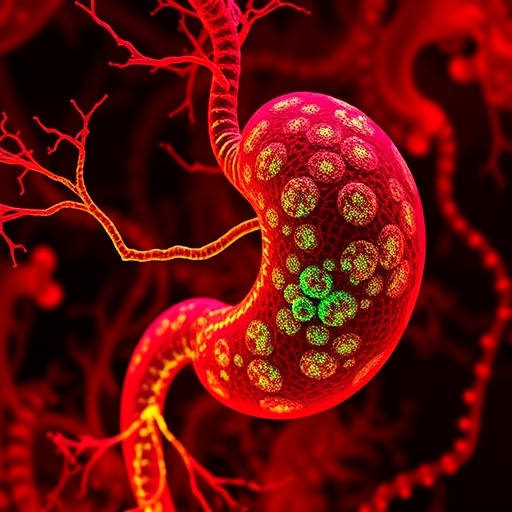
In recent years, the intricate relationship between tumor cells and their surrounding microenvironment has become a focal point in cancer research. This is particularly evident in pancreatic cancer, where the fibroinflammatory microenvironment plays a pivotal role in disease progression and treatment response. As researchers delve deeper into the complex cellular interactions that comprise this environment, several key factors have emerged, positioning the field at the threshold of significant breakthroughs that could translate into real-world therapeutic strategies.
Pancreatic cancer is often regarded as one of the deadliest forms of cancer, primarily due to its desmoplastic reaction and immune evasion properties. The tumor is not simply a mass of cancerous cells but rather a complex ecosystem where non-malignant stromal components dominate the tissue architecture. These stromal elements, including fibroblasts, immune cells, and extracellular matrix components, create a unique fibrotic landscape that heavily influences the tumor’s behavior and the patient’s prognosis. Understanding this environment is crucial for developing effective treatments that can circumvent the inherent resistance displayed by pancreatic cancer.
Recent technological advancements in imaging and molecular profiling have facilitated an unprecedented understanding of the cellular dialogue occurring within the pancreatic tumor microenvironment. Techniques such as single-cell RNA sequencing and spatial transcriptomics have revealed an intricate tapestry of cell interactions and signaling pathways. This detailed mapping allows researchers to pinpoint specific cellular players and their roles in driving tumorigenesis and establishing a supportive niche for cancer growth. By leveraging these technologies, scientists can now interrogate the heterogeneity of both the tumor and its microenvironment, leading to insights that were previously unimaginable.
Therapeutic approaches for pancreatic cancer have traditionally been limited, with standard chemotherapeutics often failing to produce meaningful long-term responses. However, recent studies have highlighted distinct therapeutic vulnerabilities inherent to the pancreatic tumor microenvironment. Noteworthy among these is the role of oncogenic KRAS signaling, which is a hallmark of pancreatic cancer. Understanding how KRAS manipulates stromal contributions offers critical insights into potential therapeutic targets. By disrupting this signaling axis and the ensuing pathological interactions within the tumor stroma, researchers are opening new avenues for intervention.
The notion that the tumor microenvironment could be a target for therapy has gained traction across various cancer types. Emerging pan-cancer analyses suggest that certain characteristics of tumor microenvironments are conserved across different anatomic sites. These findings emphasize the possibility of using knowledge gained from pancreatic cancer studies to inform therapeutic strategies for other malignancies. The realization that cellular interactions and architectural features may have universal implications underscores the potential for cross-disciplinary insights in cancer research.
One notable aspect of the pancreatic tumor microenvironment is its unique immune landscape. The immunosuppressive nature of this environment has long been a barrier to effective therapies, particularly immune checkpoint inhibitors that have shown promise in other cancers. A detailed understanding of the immune cell composition and their interactions within the stroma could yield strategies to reinvigorate anti-tumor immune responses. By targeting the immunosuppressive mechanisms employed by stromal cells, researchers may improve the efficacy of existing treatments and enhance patient outcomes.
Beyond immune evasion, the metabolic demands of pancreatic tumors significantly shape the tumor microenvironment. Cancer cells often exploit metabolic pathways to thrive under nutrient-scarce conditions, further complicating the treatment landscape. Investigating the metabolic crosstalk between tumor and stromal cells may unveil novel therapeutic targets that disrupt this metabolic synergy. By recognizing how pancreatic cancer cells manipulate their microenvironment to meet their energy needs, researchers can devise strategies to starve the tumor while preserving normal tissues.
As the field progresses, there is a growing recognition of the importance of understanding the dynamic nature of the tumor microenvironment. The interactions between tumor cells and stromal components are not static; they evolve in response to various stimuli, including therapeutic interventions. This adaptability necessitates a flexible approach in drug development, where the timing and sequence of treatments are optimized to exploit vulnerabilities in the stromal architecture. By incorporating temporal dynamics into treatment strategies, researchers aim to outsmart the tumor and its supportive microenvironment.
Continued research into the pancreatic tumor microenvironment promises to illuminate the underlying mechanisms that dictate tumor behavior. Integrating multi-omics approaches will provide a comprehensive understanding of how genetic, epigenetic, and environmental factors converge to shape the tumor landscape. This holistic perspective is crucial for identifying biomarkers that predict patient responses to specific therapies and inform personalized treatment regimens.
Moreover, there’s an imperative need for innovative strategies that transform our understanding of the microenvironment into actionable therapies. Researchers are poised to develop novel compounds and treatment modalities that specifically target stromal components, potentially reshaping the therapeutic landscape for pancreatic cancer. This focus on stroma-centric approaches represents a paradigm shift, moving away from solely targeting the tumor cells themselves.
Education and collaboration across disciplines will play crucial roles in translating these discoveries into the clinic. As researchers unveil the complexities of heterocellular crosstalk, sharing knowledge and techniques across fields will accelerate discovery and application. By fostering a collaborative ecosystem, the oncology community can ensure that the insights gained from these studies are quickly translated into clinical practice for the benefit of patients suffering from pancreatic cancer.
In conclusion, the exciting advancements in understanding the pancreatic tumor microenvironment are paving the way for transformative changes in how we approach diagnosis and treatment. By embracing the complexity of this ecosystem, we can develop more effective therapies that leverage the intricate relationships within tumors. As our understanding deepens, we move closer to not only improving outcomes for pancreatic cancer patients but also potentially reshaping the broader landscape of cancer treatment. The journey is challenging but filled with hope as we seek to unlock the mysteries of this enigmatic disease.
Subject of Research: Pancreatic cancer and its tumor microenvironment.
Article Title: Heterocellular crosstalk and architecture of the pancreatic tumour microenvironment.
Article References:
Arnold, F., Del Vecchio, A., Hussain, Z. et al. Heterocellular crosstalk and architecture of the pancreatic tumour microenvironment. Nat Rev Cancer (2026). https://doi.org/10.1038/s41568-025-00905-9
Image Credits: AI Generated
DOI: 10.1038/s41568-025-00905-9
Keywords: pancreatic cancer, tumor microenvironment, fibroinflammatory, stromal interactions, oncogenic KRAS, immune evasion, therapeutic vulnerabilities.


