

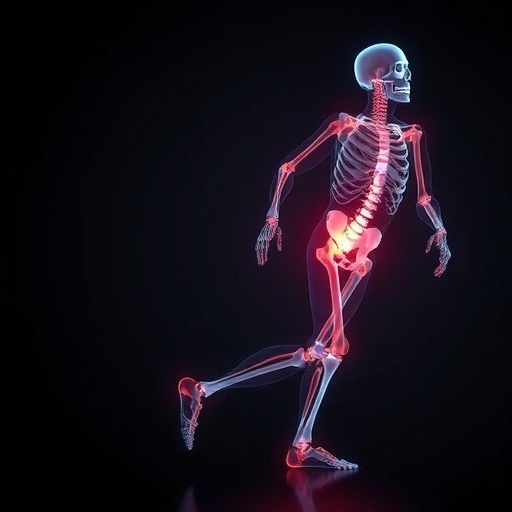
In the vast and complex landscape of geriatric health, falls represent a formidable challenge, often heralding decline, loss of independence, and even mortality among older adults. Each year, millions of elderly individuals experience falls, prompting a relentless drive within the medical community to decipher effective prevention strategies. While balance training, environmental modifications, and medication reviews have long been the cornerstones of fall prevention, emerging research is illuminating a critical yet underappreciated factor: osteoporosis. A groundbreaking retrospective cohort study now reveals that osteoporosis — a debilitating bone disorder characterized by decreased bone mass and impaired bone microarchitecture — plays a pivotal role in the susceptibility to falls and consequent fractures, positioning it as a missed link in fall prevention.
Osteoporosis has traditionally been viewed through the prism of fracture risk alone, often overshadowed by more immediate preventive concerns in geriatric medicine. However, the recent study meticulously analyzed extensive clinical data sets from older populations, uncovering compelling correlations between diminished bone density and increased incidence of falls. The researchers postulate that skeletal fragility not only predisposes patients to catastrophic fractures upon falling but also subtly contributes to the very occurrence of falls. This profound insight challenges the status quo, inviting a paradigm shift in how fall prevention is conceptualized and operationalized.
At the core of this research lies the intricate relationship between structural bone integrity and neuromuscular stability. Established scientific understanding posits that bones provide rigid frameworks essential for postural control. Degraded bone quality, as seen in osteoporosis, may impair proprioceptive feedback mechanisms distributed through bone collagen or cortical surfaces, thus subtly undermining balance and coordination. The study’s nuanced statistical analyses demonstrate that elderly individuals with severe osteoporosis exhibited a significantly higher propensity to experience recurrent falls compared to their counterparts with normal bone health, even when controlling for conventional risk determinants such as muscle weakness or polypharmacy.
The methodological rigor of this retrospective cohort study reinforces confidence in its findings. By leveraging longitudinal patient data and comprehensive bone density measurements via dual-energy X-ray absorptiometry (DEXA), the investigators constructed robust regression models to isolate the influence of osteoporosis. They excluded confounding variables such as neurological disorders and acute illness, enabling a focused evaluation of the musculoskeletal underpinnings of fall risk. The study also accounted for pharmacological treatments like bisphosphonates, examining whether existing osteoporosis therapies mitigated fall frequency, revealing nuanced patterns warranting further inquiry.
The clinical implications of these revelations command immediate attention. Present fall prevention programs, while effective to varying degrees, often omit systematic screening for osteoporosis, leading to missed opportunities for early intervention. The newly emerging evidence advocates for integrative assessment protocols wherein bone health evaluation accompanies traditional fall risk assessments. By identifying individuals with poor skeletal status earlier, multidisciplinary teams could implement targeted therapies–combining pharmacological bone strengthening agents, tailored exercise to enhance both bone density and neuromuscular coordination, and environmental modifications–amplifying overall efficacy in preventing falls and fractures.
Furthermore, the study sparks compelling questions regarding the biological mechanisms linking osteoporosis to fall propensity. Beyond mechanical fragility, osteoporosis-induced alterations in bone-secreted factors — osteokines — may impact muscle function and central nervous system pathways governing balance. Ongoing translational research is delving into how the osteo-neuromuscular axis modulates fall risk, exploring potential biomarkers that could facilitate predictive diagnostics or novel therapeutic targets. Understanding this axis may unlock revolutionary approaches to fortifying the elderly against debilitating falls.
This research also highlights disparities in fall and osteoporosis management across diverse populations. Age, gender, and ethnic differences profoundly influence bone health and fall risk profiles, yet are frequently underrepresented in clinical trials. The retrospective cohort’s demographic analyses underscore the critical need for inclusive studies and culturally sensitive healthcare interventions. Public health campaigns must be reoriented to increase awareness of bone health’s integral role in fall prevention, promoting preventive screening in underserved communities to bridge health equity gaps.
Importantly, the study’s findings have ramifications beyond the immediate elderly population. Osteoporosis originates often in mid-life and can be attenuated with early lifestyle modifications, nutritional interventions, and exercise regimens. Recognizing osteoporosis as a modifiable fall risk factor expands preventive strategies to younger cohorts at risk of future fragility fractures and fall-related morbidity. This life-course approach underscores the urgency for integrating bone health education and screening into routine healthcare protocols well before advanced age.
Technological advances also stand to benefit from this enhanced understanding. Wearable sensors capable of assessing balance and gait abnormalities may be complemented by novel tools for real-time monitoring of bone health parameters or biological markers indicative of deteriorating skeletal strength. Combined with artificial intelligence-driven predictive analytics, such integrated platforms could revolutionize personalized fall prevention strategies, enabling preemptive interventions precisely tailored to individual risk profiles.
As the global population ages at an unprecedented pace, the societal burden of falls and their devastating consequences demands innovative, multidimensional prevention strategies. This pivotal retrospective cohort study sheds light on a critical yet overlooked contributor—osteoporosis—adding a vital dimension to the complex mosaic of fall risk factors. By bridging the gap between skeletal health and fall prevention, healthcare providers can enhance patient outcomes, reduce healthcare costs, and improve quality of life for millions of aging individuals worldwide.
Future research directions will likely explore randomized controlled trials to validate osteoporosis-targeted interventions in multifactorial fall prevention programs. Investigations into the molecular pathways mediating bone-muscle-brain interactions hold promise to yield groundbreaking therapeutics. Additionally, public health policies embedding comprehensive bone health assessments into geriatric care guidelines could catalyze widespread adoption of these insights into clinical practice.
In essence, the study calls for a holistic reexamination of fall prevention paradigms, where osteoporosis is no longer a silent backdrop but a central actor in the fight against falls in older adults. As the scientific community heeds this call, a future emerges where fractures and falls are not inevitable byproducts of aging but preventable conditions addressed through comprehensive, evidence-based strategies underscoring the inseparable links between bones, balance, and well-being.
The integration of these findings into clinical practice guidelines will be crucial for translating this knowledge into tangible benefits for patients. Multidisciplinary collaboration among geriatricians, endocrinologists, physiotherapists, and public health professionals will be essential to develop and implement innovative protocols emphasizing early osteoporosis detection within fall prevention frameworks. Together, these efforts herald a new era in geriatric care—one where the silent bones speak loudly about fall risk, enabling timely, targeted interventions that transform the aging experience.
Subject of Research: The relationship between osteoporosis and fall risk in older adults, with implications for fall prevention.
Article Title: Osteoporosis: a missed link in fall prevention – a retrospective cohort study.
Article References:
Fries, N., Constantinou, A., Wretborn, T. et al. Osteoporosis: a missed link in fall prevention – a retrospective cohort study. BMC Geriatr (2026). https://doi.org/10.1186/s12877-026-07119-0
Image Credits: AI Generated


