

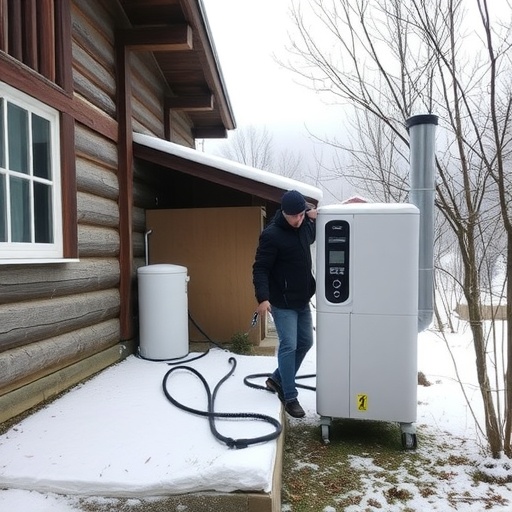
In the more frigid corners of China, particularly in its severe cold regions, the pursuit of sustainable heating solutions has become increasingly critical. As the winter months approach, the demand for efficient heating technologies intensifies, revealing a pressing challenge for rural communities. Traditional heating methods, often reliant on coal or other non-renewable resources, not only contribute to environmental degradation but also exacerbate energy accessibility issues. In response, researchers have conducted significant studies to identify and promote clean heating technologies that effectively serve these communities while minimizing ecological footprints.
The recent work by Yang, Wu, and Ma delves into the intricate analysis of clean heating technology paths using an entropy weight-based Technique for Order of Preference by Similarity to Ideal Solution (TOPSIS) method. This innovative approach presents a powerful tool for decision-making, particularly in ranking multiple alternatives in complex scenarios. The researchers implemented this methodology to evaluate various heating strategies appropriate for rural settings, aiming to provide stakeholders with actionable insights that prioritize sustainability and efficiency.
The entropy weight method, a cornerstone of this research, offers a unique perspective in assessing the importance of various criteria associated with heating technologies. By quantifying the uncertainty or entropy of each criterion, the researchers are able to assign weights that reflect their significance in the decision-making process. This nuanced approach allows for a more tailored ranking of technologies, moving beyond simplistic evaluations to embrace the complexity of rural heating needs.
One of the standout aspects of this study is its emphasis on the unique challenges faced by rural communities during the harsh winters. The analysis recognizes that heating technologies must not only be clean and efficient but also suitable for the demographic and economic contexts of the target areas. This means considering factors such as investment costs, maintenance requirements, and the availability of resources, all of which play crucial roles in determining the feasibility and acceptance of various heating solutions.
The researchers conducted an extensive literature review, identifying a range of heating technologies currently in use or under consideration in China’s rural regions. From biomass boilers and solar-assisted heating systems to heat pumps and electric heating solutions, each technology’s potential benefits and drawbacks were meticulously examined. This thorough examination enabled the team to construct a comprehensive matrix of criteria against which all technologies would be evaluated.
Employing the TOPSIS technique, the team was able to calculate optimal heating solutions by comparing the performance of each technology relative to an ideal solution. This method not only ranks alternatives but also provides a visual representation of the technology landscape, depicting how each option stacks up against the others. Such clarity in analysis is invaluable for decision-makers, allowing them to easily identify the most promising technologies for implementation.
Importantly, the study underscores the role of stakeholder engagement in the adoption of clean heating technologies. For rural communities, the transition to new heating methods must be accompanied by education and support to ensure acceptance and proper utilization. The researchers stress that without local buy-in, even the best technologies may fail to achieve their intended impact. Thus, the study advocates for a collaborative approach that includes local input and feedback throughout the decision-making process.
Furthermore, the implications of this research extend beyond the immediate context of rural heating. By providing a structured methodology for evaluating clean technology options, the findings can inform broader policy discussions around renewable energy and sustainability initiatives. Policymakers can leverage the study’s insights to develop more effective frameworks that encourage the adoption of clean technologies across various sectors, ultimately contributing to a more sustainable future.
Another noteworthy consideration of the research is its applicability to other regions facing similar climatic challenges. While this study focuses on China’s severe cold regions, the entropic methodology and the TOPSIS analysis can be adapted to evaluate heating technologies in diverse geographic and socioeconomic contexts. This adaptability positions the research as a significant contribution to global conversations about sustainable energy solutions.
Looking towards future research avenues, the authors suggest that additional studies exploring the long-term impacts of adopting different heating technologies would be beneficial. Understanding how these technologies perform over time in terms of efficiency, economic viability, and user satisfaction can help refine decision-making processes in rural energy planning. Such longitudinal research could provide invaluable data that enhances the credibility of clean heating solutions and promotes their wider adoption.
As we move into a future that increasingly recognizes the importance of sustainability, the insights gleaned from this research hold promise not only for rural stakeholders in China but for communities worldwide. The urgent need for clean heating technologies underscores a broader commitment to addressing climate change and improving the quality of life for all.
In conclusion, the study by Yang, Wu, and Ma offers a comprehensive and innovative approach to evaluating clean heating technologies using entropy weight-based TOPSIS analysis. By embracing the complexity of rural heating needs and emphasizing stakeholder involvement, the research paves the way for more sustainable energy practices that can be adapted to various contexts. As climate concerns continue to rise, the importance of such research cannot be overstated, pointing toward a future where clean, efficient heating is within reach for all.
Subject of Research: Clean heating technology paths for rural areas in severe cold regions of China.
Article Title: Entropy weight-based TOPSIS analysis of clean heating technology paths in winter in rural areas of the severe cold regions of China.
Article References:
Yang, J., Wu, H., Ma, Y. et al. Entropy weight-based TOPSIS analysis of clean heating technology paths in winter in rural areas of the severe cold regions of China.
Discov Sustain (2025). https://doi.org/10.1007/s43621-025-01933-z
Image Credits: AI Generated
DOI:
Keywords: clean heating, rural areas, entropy weight, TOPSIS, sustainability, energy technology, decision-making.


