

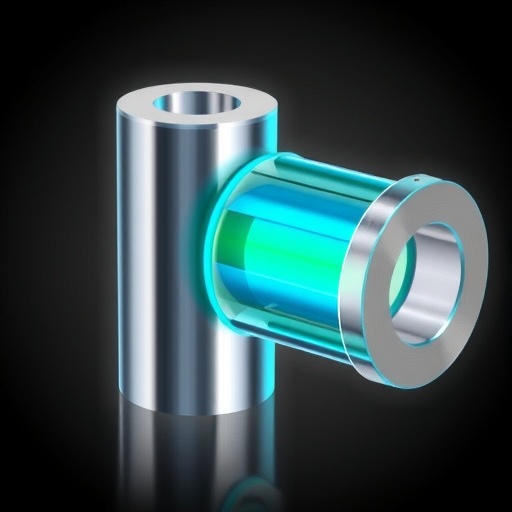
In the realm of modern technology, the synergy between sensing capabilities and structural integrity has gained unprecedented attention. A groundbreaking study undertaken by researchers Bai, Lou, and Zhang et al. demonstrates a game-changing advancement in distributed acoustic sensing (DAS) through the optimization of thin-walled cylinders. This innovative research, soon to be published in Scientific Reports, heralds a new chapter in engineering and materials science by significantly enhancing the sensitivity of DAS systems, which are pivotal in geophysical monitoring and infrastructure surveillance.
DAS technology has emerged as a critical tool in various applications, including oil and gas exploration, transportation infrastructure monitoring, and even seismic activity detection. The method employs fiber optic cables to measure minute changes in light as it travels through the fibers, enabling the detection of sound and vibration along the entire length of the fiber. However, the sensitivity to capture these subtle acoustic signals has often been constrained by the physical properties of the sensing medium—hence, the significance of this recent study.
The key challenge in achieving optimal sensitivity in DAS lies in the interaction between the fiber optic cable and its surrounding environment, particularly when housed within rigid structures like thin-walled cylinders. Traditionally, the performance of DAS systems is hampered by excessive noise and reduced signal-to-noise ratios, which complicates the accurate interpretation of data. By introducing structural optimizations in the design of thin-walled cylinders, the research team has developed a novel approach that aims to mitigate these challenges significantly.
At the core of this study is a thorough examination of the geometrical dimensions and material properties of the thin-walled cylinders. The researchers explored various configurations to determine the optimal structure that best resonates with the frequency of vibrations that DAS systems typically detect. The meticulous experimentation and simulation led to the identification of a cylinder model that demonstrated remarkably improved sensitivity, achieving a level previously deemed unattainable in conventional designs.
Additionally, the team applied advanced computational techniques to facilitate their findings. By utilizing finite element analysis, the researchers were able to predict how different structural designs would respond to acoustic events. This simulation was crucial in understanding the intricate interplay between the physical characteristics of the cylinder and the propagation of sound waves. The results indicated that the optimized cylinder design could significantly reduce mechanical damping, a common obstacle in traditional systems.
Moreover, a pivotal aspect of this innovation is the choice of materials used in constructing the thin-walled cylinders. By experimenting with a range of fiber materials with differing tensile strengths and elastic properties, the research team was able to narrow down the ideal composition that would enhance the acoustic transmission capabilities without sacrificing durability. This aspect not only promises to elevate the performance of DAS systems but also extends the lifespan of the sensors in demanding environments.
In practical applications, the implications of heightened sensitivity are extensive. For instance, in the realm of earthquake monitoring, the refined DAS systems could detect tremors earlier and with greater accuracy, thereby providing critical time-sensitive data that could save lives and reduce property damage. Similarly, in the oil and gas sector, enhanced sensitivity can lead to more efficient reservoir monitoring, optimizing resource extraction while minimizing environmental impacts.
The team’s findings are poised to spark interest across a variety of industries. From ensuring the safety of vast transportation networks to enhancing resource exploration methodologies, the optimized DAS systems developed through this research can lead to safer societies and improved efficiency across numerous fields. Furthermore, given the rise of smart cities and the Internet of Things (IoT), integrating such advanced sensing technologies could enable real-time monitoring systems that provide invaluable data for urban infrastructure management.
As industries increasingly seek ways to harness big data for predictive analytics, the advancements in DAS technology may well serve as a linchpin. By refining how we capture and interpret acoustic data, the research by Bai et al. marks a pivotal development in creating more intelligent systems capable of responding proactively to environmental stimuli.
Looking to the future, this research opens avenues for further exploration into other geometrical optimizations and material advances, potentially laying the groundwork for next-generation DAS technologies. Future studies may investigate various environmental conditions and their effects on the performance of the optimized cylinders, broadening the understanding of how these systems can be tailored for specific settings.
This research not only demonstrates the power of combining theoretical knowledge with practical engineering but also illustrates the importance of interdisciplinary collaboration. The intersection of acoustics, materials science, and computational modeling has birthed solutions that push the boundaries of what is achievably possible in sensor technology.
In conclusion, the work of Bai, Lou, and Zhang et al. leads us into an era where acoustic sensing is more precise and reliable than ever. By capitalizing on structural optimizations of thin-walled cylinders, they have enhanced DAS sensitivity in a way that promises to revolutionize monitoring practices, contributing to safer and more efficient operations in various industries. The potential impacts of this research resonate far beyond the scope of academia, heralding significant advancements in technology that could reshape our interaction with the physical world.
Subject of Research: Optimization of thin-walled cylinders to enhance Distributed Acoustic Sensing sensitivity.
Article Title: Enhancing DAS sensitivity through structural optimization of thin-walled cylinders.
Article References:
Bai, J., Lou, Q., Zhang, C. et al. Enhancing DAS sensitivity through structural optimization of thin-walled cylinders.
Sci Rep (2025). https://doi.org/10.1038/s41598-025-29788-4
Image Credits: AI Generated
DOI: 10.1038/s41598-025-29788-4
Keywords: Distributed Acoustic Sensing, thin-walled cylinders, structural optimization, sensitivity enhancement, fiber optic sensors, materials science, earthquake monitoring, oil and gas exploration, smart cities, IoT.


