

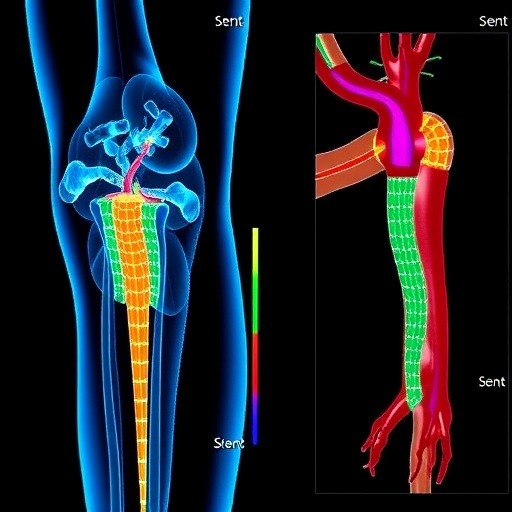
A groundbreaking study has emerged in the field of biomedical engineering, focusing on the optimization of stent design specifically for the femoropopliteal artery. The research, conducted by a team of experts including Kamenskiy, MacTaggart, and Desyatova, promises to revolutionize the approach towards treating peripheral artery disease (PAD). This chronic condition can significantly impact patient mobility and quality of life, making the advancements in stent technology crucial for those affected.
Stents, which are small tube-like structures inserted into arteries to keep them open, play a pivotal role in cardiovascular interventions. Traditionally, stent designs have relied heavily on empirical methods, leaving room for optimization based on computational modeling and simulation. The study sheds light on the urgent need for an advanced computational framework that can enhance the design accuracy of stents tailored to the unique geometries and mechanical demands of the femoropopliteal artery.
The femoropopliteal artery is particularly complex due to the anatomical challenges it poses. Located in the leg, this artery is subject to various conditions that demand a highly specialized approach to stent design. Factors such as the artery’s curvature, movement during physical activity, and surrounding soft tissue dynamics must all be considered to ensure optimal stent performance. The study highlights these complexities, asserting that existing stent designs often fall short in accommodating the dynamic loading conditions imposed on the femoropopliteal artery.
Through advanced computational optimization techniques, the researchers aim to address these challenges. The team employed a variety of modeling approaches that simulate the mechanical behavior of stents under physiological conditions. This level of analysis allows for the identification of critical variables that influence stent efficacy, including material selection, strut thickness, and stent geometry. By meticulously adjusting these parameters, the researchers were able to forecast how different designs would perform when exposed to real-life stressors.
In their findings, the research team emphasized the advantages of employing computational techniques over traditional design methodologies. Unlike conventional approaches that rely on trial and error, computational optimization allows for a more rigorous analysis of potential stent designs. This method not only speeds up the design process but also enhances the reliability of the results. The predictive modeling developed in this study showcases significant improvements in stent durability and performance metrics, thereby paving the way for enhanced patient outcomes.
The computational model developed during the research was validated through comparison with clinical data, further solidifying its relevance. By bridging the gap between theoretical simulation and actual clinical practice, the study presents a compelling case for the adoption of computational methods in stent design. This validation ensures that the models can be relied upon to produce designs that are not only innovative but also clinically viable.
The implications of this research extend beyond the realm of stent design. As the world grapples with the increase in cardiovascular diseases, the methodologies developed in this study could serve as a template for optimizing various medical devices. The technology utilized in this research has the potential to be adapted for other conditions and treatments, illustrating the versatility and far-reaching benefits of computational optimization in medical engineering.
Moreover, this breakthrough aligns with the growing trend of personalization in medicine, where treatments are tailored to meet the individual needs of patients. By enabling a more detailed understanding of how specific stent designs will interact with the anatomy of different patients, healthcare providers can select the most suitable solutions for their patients, potentially reducing the incidence of complications and improving overall outcomes.
Importantly, this research underscores the necessity for interdisciplinary collaboration in advancing medical technologies. The intersection of engineering, computer science, and biomedical sciences proved critical in the successful development of this enhanced stenting solution. As the field of biomedical engineering continues to evolve, fostering collaborations among experts from various domains will be vital to push the boundaries of what is achievable.
As with any innovation, the route from the lab to clinical application is fraught with challenges. However, the proactive steps taken by the research team signal a meaningful stride towards translating computational optimizations into real-world technologies. If successful, this work could lead to new standards in stent manufacturing, contributing significantly to the fight against PAD and similar cardiovascular diseases.
In light of these advancements, it is essential for the medical community to remain informed about ongoing research and its implications. By continually updating best practices based on the latest evidence, healthcare providers can ensure that their patients benefit from the most effective and tested interventions available. The study from Kamenskiy and colleagues not only contributes to this body of knowledge but also sets a precedent for future research efforts focused on computational optimization.
As the field continues to embrace technological advancements in biomedical engineering, the future of stent design looks promising. The integration of computational insights with clinical protocols will likely lead to enhanced patient care, with stents that are not only more effective but also tailored to meet the individual needs of those suffering from arterial diseases. This research represents a significant leap forward, highlighting how innovative thinking can yield practical solutions for complex medical challenges.
In conclusion, the research conducted by Kamenskiy, MacTaggart, and Desyatova represents a significant advancement in the field of stent optimization. By leveraging computational strategies to enhance the design of stents for the femoropopliteal artery, their work paves the way for more effective, personalized treatments for patients with peripheral artery disease. As this research gains traction, the hope is that it will inspire further innovations, broadening the horizon for future medical devices and therapies.
Subject of Research: Optimization of stent design for the femoropopliteal artery.
Article Title: Computational Optimization of a Stent for the Femoropopliteal Artery.
Article References: Kamenskiy, A., MacTaggart, J. & Desyatova, A. Computational Optimization of a Stent for the Femoropopliteal Artery. Ann Biomed Eng (2026). https://doi.org/10.1007/s10439-025-03968-9
Image Credits: AI Generated
DOI: https://doi.org/10.1007/s10439-025-03968-9
Keywords: Stent design, femoropopliteal artery, computational optimization, biomedical engineering, peripheral artery disease.


