

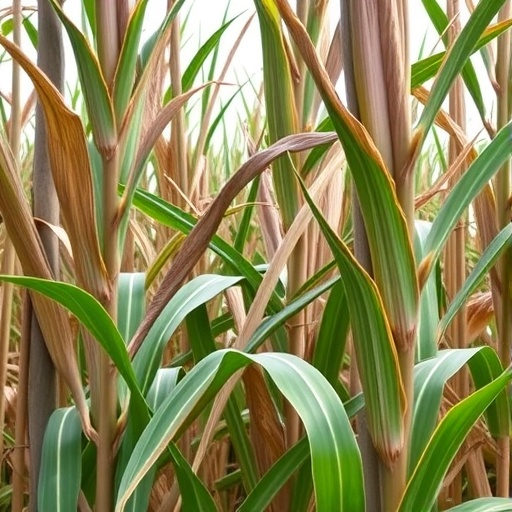
In recent years, the pursuit of sustainable agricultural practices has intensified, attracting researchers to explore innovative ways to utilize agricultural waste. One particularly intriguing area of research focuses on the application of maize stalks in cultivating the medicinal mushroom Ganoderma lingzhi, commonly known as Reishi. This mushroom has gained prominence due to its wide array of health benefits, including immune system enhancement and anti-cancer properties. The recent study by Li, Wang, and Liu sheds light on optimizing substrates for cultivating Ganoderma lingzhi, specifically using maize stalks, a byproduct that typically contributes to agricultural waste.
The use of maize stalks as a substrate for mushroom cultivation represents a dual opportunity—reducing agricultural waste while enhancing the growth yield of Ganoderma lingzhi. In the study, the researchers meticulously analyzed the nutrient composition of maize stalks, which is primarily composed of cellulose, hemicellulose, and lignin. This composition is crucial as it affects the decomposition rate and nutrient availability, which ultimately influences fungal growth. By optimizing these substrates, the researchers aim to create an environmentally friendly culture medium that not only bolsters mushroom growth but also promotes recycling of agricultural materials.
To achieve this goal, the researchers employed a series of experiments to evaluate various ratios of maize stalks and other nutrients in the substrate. This meticulous approach involved the analysis of not only the growth rate of Ganoderma lingzhi but also its biological efficiency, which is a critical parameter in commercial mushroom cultivation. By adjusting the nutrient ratios, they discovered optimal formulations that maximized both the yield and quality of the mushrooms. The meticulous attention to substrate composition illustrates the intricate relationship between material science and biological growth processes.
The study further delves into the degradation mechanisms employed by Ganoderma lingzhi during the colonization of maize stalk substrates. Understanding these mechanisms provides valuable insights into how fungi interface with their substrates, breaking down complex materials into simpler components that can be assimilated for growth. The researchers documented how the enzymatic activities of Ganoderma lingzhi facilitate the decomposition of lignin and cellulose present in maize stalks, revealing the aggressive nature of this mushroom in utilizing various organic materials. This enzymatic breakdown also highlights the potential of using Ganoderma lingzhi in bioremediation efforts to clean up agricultural waste.
As the study progresses, it suggests that the efficiency of Ganoderma lingzhi in utilizing maize stalk substrates could pave the way for wider applications of similar waste materials in fungi cultivation across the globe. This revolutionary approach not only addresses the issues of agricultural waste but also enhances the cultivation methods of mushrooms known for their medicinal properties. The potential to scale these findings globally makes this research immensely valuable, particularly in regions where agriculture is a primary economic activity and waste disposal remains a challenging concern.
One significant finding of the study is the correlation between substrate composition and mushroom quality. The researchers discovered that certain nutrient ratios significantly improved the bioactive compounds produced in Ganoderma lingzhi. These compounds, including triterpenoids and polysaccharides, are often attributed to the mushroom’s beneficial health effects. By optimizing the substrate formulation, the study not only demonstrated enhanced growth yields but also increased the medicinal quality of the mushrooms harvested, thereby offering a dual benefit—economic and health-related.
The implications of optimizing maize stalk use extend beyond environmental benefits. In places like China, where Ganoderma lingzhi is highly sought after for its health properties, leveraging agricultural waste for mushroom cultivation could prove economically lucrative. The research highlights the potential for farmers to generate additional income while simultaneously managing agricultural waste efficiently. This dual economic incentive creates a compelling case for implementing the findings on a larger scale in agricultural communities.
Furthermore, this pioneering research paves the way for further inquiries into other agricultural byproducts that could be utilized for mushroom cultivation. The success in utilizing maize stalks opens the door for similar protocols to be applied to other waste materials like wheat straw, rice husk, and even coffee grounds. As researchers continue to uncover the capabilities of fungi in transforming waste into valuable resources, the implications for sustainability and circular economy principles grow exponentially.
With climate change and environmental degradation emerging as significant challenges facing the globe, studies like this one play a crucial role in promoting sustainable practices within the agricultural sector. The ability to transform agricultural waste into valuable resources not only contributes to waste reduction but also aids in fostering a more sustainable future. Through the lens of this research, one can comprehend how innovative thinking and scientific inquiry can lead to practical solutions for some of the world’s pressing environmental issues.
The demand for quality and safe food sources continues to rise amid increasing population density and changing dietary preferences. By integrating traditional agricultural practices with modern scientific research, we can enhance food security while promoting environmental stewardship. The example set forth by Li, Wang, and Liu illustrates the convergence of ecological principles and resource-efficient practices in modern agriculture.
In conclusion, the study of utilizing maize stalks for cultivating Ganoderma lingzhi presents a promising direction for addressing agricultural waste while enhancing the health benefits of one of nature’s most revered mushrooms. The innovative approaches discussed not only emphasize the importance of substrate optimization but highlight the vast potential of fungi in converting waste into valuable products. As the world grapples with sustainability challenges, this research contributes significantly to our understanding of how agricultural practices can evolve to meet current and future needs.
The implications of this work reach far and wide, with potential applications in commercial mushroom production, waste management strategies, and health-related industries. As researchers delve deeper into the fascinating world of fungi and their interactions with agricultural waste, the foundational work established by Li, Wang, and Liu serves as a beacon for future innovations in both agriculture and sustainable resource management.
Subject of Research: Utilizing maize stalk as a substrate for cultivating Ganoderma lingzhi (Reishi mushroom)
Article Title: Enhancing Resource Efficiency: Utilizing Maize Stalk in Ganoderma lingzhi Substrates: Formula Optimization and Degradation Mechanism
Article References:
Li, J., Wang, S., Liu, Y. et al. Enhancing Resource Efficiency: Utilizing Maize Stalk in Ganoderma lingzhi Substrates: Formula Optimization and Degradation Mechanism.
Waste Biomass Valor (2026). https://doi.org/10.1007/s12649-026-03478-2
Image Credits: AI Generated
DOI: https://doi.org/10.1007/s12649-026-03478-2
Keywords: Ganoderma lingzhi, maize stalk, mushroom cultivation, agricultural waste, sustainability, enzyme activity, nutrient optimization, medicinal mushroom, bioremediation, circular economy.


