

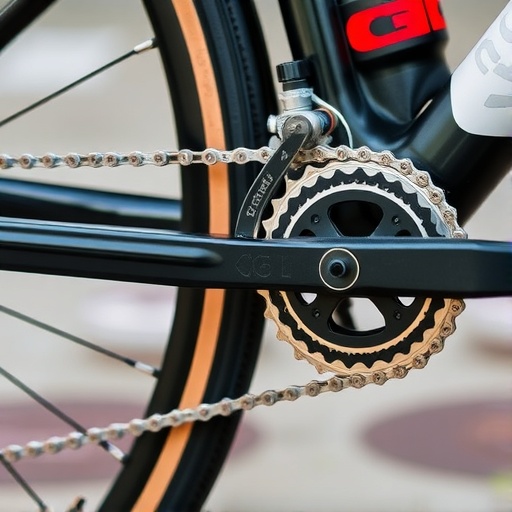
In the fascinating world of sports engineering, a significant breakthrough has emerged that promises to enhance the performance and longevity of bicycle roller chains. The new study conducted by researchers T. Dowd, P. Cavanaugh, and JA Mansson, titled “Lubricant performance in bicycle roller chains,” published in the esteemed journal Sports Engineering, sheds light on the critical role that lubricant technology plays in maintaining the efficiency and performance of one of the most essential components of a bicycle. As cycling continues to grow in popularity worldwide, the need for advanced technology to support both competitive and recreational cyclists has never been more pressing.
Bicycle roller chains are more than just a basic mechanism for transferring power from the pedals to the rear wheel; they are intricate systems that require precise maintenance and care for optimal functionality. The findings presented in this study focus on the various types of lubricants tested on roller chains, including traditional oil-based lubricants, newer synthetic alternatives, and even bio-lubricants derived from renewable sources. Each of these lubricants exhibits unique characteristics that impact performance metrics such as friction reduction, wear resistance, and overall efficiency.
One of the key aspects examined in this research is the viscosity of different lubricants. The viscosity plays a crucial role in how effectively the lubricant can penetrate the intricate spaces within the roller chain. High-viscosity oils tend to display better adhesion properties, allowing them to stay in place longer, while lower viscosity options might facilitate faster movement but risk getting washed away more easily under challenging conditions. The researchers employed a systematic approach utilizing both real-world testing and laboratory simulations to quantify the differences in performance based on viscosity.
Moreover, the research team delved into the environmental implications of lubricant choice. In an age where sustainability is increasingly important, the study explored eco-friendly bio-lubricants, highlighting their performance in comparison to conventional lubricants. Initial findings suggest that while these bio-lubricants may not yet match the high-performance metrics of synthetic options, they offer a promising alternative for environmentally conscious cyclists. As cycling cultures evolve, the demand for greener solutions is expected to rise, pushing manufacturers to innovate further in this area.
Another critical factor considered was the impact of external conditions on lubricant performance. The study meticulously examined how temperature fluctuations, humidity, and different riding environments—ranging from urban settings to off-road trails—could affect the efficiency of various lubricants. For instance, certain lubricants that perform exceptionally well in dry environments may struggle in wet or muddy conditions, leading to decreased efficiency and potential component failure. Through a series of rigorous tests, the authors provide invaluable insights into selecting the appropriate lubricant based on intended usage.
The implications of this research extend beyond just improving personal performance; they could have profound effects on the cycling industry as a whole. As manufacturers consider these findings, there is potential for a paradigm shift in lubricant formulation and testing standards for bicycle components. The results may encourage the development of specialized lubricants tailored for distinct cycling disciplines, such as mountain biking, road racing, or commuting, thus enhancing the user experience across the board.
The researchers also explored compatibility issues between lubricants and the materials utilized in roller chains. Understanding how lubricants interact with various metals and alloys is crucial for ensuring that no adverse chemical reactions compromise the chain’s integrity. This consideration is vital for manufacturers as they aim to create products that maximize life span and minimize wear and tear, ultimately saving consumers money in repair and replacement costs.
The performance evaluation criteria used in this study were comprehensive, featuring not only traditional wear tests but also innovative methods to simulate real-world riding conditions more accurately. The adoption of advanced measurement techniques allowed for a nuanced understanding of how different lubricants behaved under stress, effectively translating laboratory findings into practical cycling applications.
As this study will undoubtedly spark discussions among cycling enthusiasts, manufacturers, and sports engineers, it serves as a reminder of the continuous need for research and innovation in the cycling world. The evolution of bike technology highlights how even the most overlooked aspects, such as lubricants, can have dramatic effects on performance and usability. The findings advocate for a more scientifically informed approach to bicycle maintenance, empowering cyclists with the knowledge to make informed choices about lubricant selections.
In summary, the comprehensive analysis provided by Dowd, Cavanaugh, and Mansson lays a robust foundation for further research in the field of bicycle lubricants. With more cyclists aiming to optimize their performance and experience, ongoing studies like these will be essential. The researchers’ work not only sets the stage for future innovations but also emphasizes the importance of sustainability, compatibility, and real-world performance in the evolution of bicycle technology.
As bike riding continues to cement its place as a preferred mode of transportation and recreation around the globe, knowledge about lubricant technology will prove invaluable for both avid cyclists and casual riders alike. It’s an exciting time for the cycling community as they stand to benefit from emerging technologies, advancing their pursuit of performance and enjoyment in the sport.
Subject of Research: Lubricant performance in bicycle roller chains
Article Title: Lubricant performance in bicycle roller chains
Article References:
Dowd, T., Cavanaugh, P. & Mansson, JA. Lubricant performance in bicycle roller chains.
Sports Eng 29, 6 (2026). https://doi.org/10.1007/s12283-025-00529-0
Image Credits: AI Generated
DOI:
Keywords: Bicycle maintenance, lubricant technology, roller chains, sustainability, cycling performance, materials compatibility, eco-friendly lubricants.


