

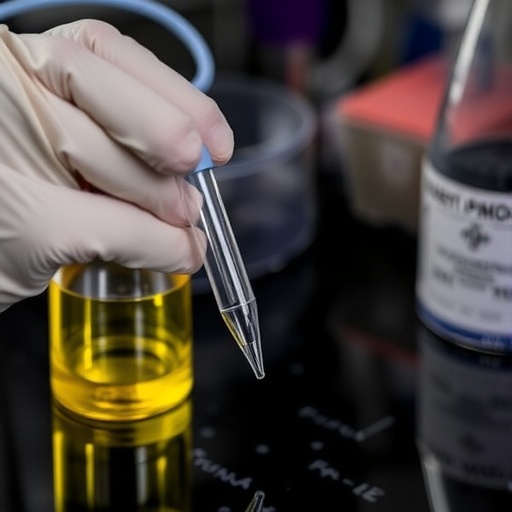
In recent years, the global scientific community has increasingly spotlighted the pervasive issue of microplastic contamination in aquatic environments. Microplastics—particles smaller than 5 millimeters—pose significant threats to ecosystems, public health, and water treatment infrastructure. Detecting microplastics in wastewater has become a priority, yet the complexity of wastewater composition challenges accurate analysis. Researchers Mahmoud Yacoub and Bin Han have made a breakthrough in this domain by optimizing the pretreatment process of wastewater using Fenton’s reagent to effectively remove organic matter, thereby enhancing the detection and quantification of microplastics. Their study, published in the reputable journal Microplastics and Nanoplastics (2025), outlines a refined methodology that promises to revolutionize how scientists approach microplastic analysis in contaminated waters.
Traditional wastewater treatment processes are generally designed to neutralize or break down conventional pollutants, bacteria, and various suspended solids. Unfortunately, these processes often fail at adequately preparing water samples for microplastic analysis because organic matter in the water can mask or interfere with particle detection methods. Organic compounds such as proteins, lipids, polysaccharides, and humic substances form complex matrices that entrap or adhere to microplastic particles. This impedes both visual and instrumental analysis techniques, resulting in underestimations of microplastic abundance. To address this, researchers frequently turn to chemical oxidation methods for sample pretreatment, aiming to degrade and clear the organic load without damaging the microplastic particles themselves.
Fenton’s reagent, a solution of hydrogen peroxide and ferrous iron catalysts, emerges as an effective oxidative agent capable of decomposing a wide range of organic substances through hydroxyl radicals (•OH) generation. These radicals are highly reactive and non-selectively break down organic molecules, rendering water samples more transparent and less viscous, thereby simplifying subsequent microplastic extraction. Yacoub and Han’s research focuses on systematically optimizing the concentration parameters, reaction times, pH levels, and temperature conditions for Fenton’s reagent treatment specifically tailored to wastewater samples. This optimization is crucial because overly aggressive oxidation risks degrading certain types of microplastics, notably those made of oxidizable polymers, while insufficient treatment fails to remove interfering organics.
The study’s methodology involved controlled experimentation with municipal wastewater collected from multiple treatment plants, representative of real-world complexity. The researchers gradually adjusted the molar ratio of hydrogen peroxide to ferrous iron, alongside reaction duration and pH, to determine the optimal point at which maximal organic matter removal occurred without compromising plastic integrity. Analytical techniques such as Fourier-transform infrared spectroscopy (FTIR), scanning electron microscopy (SEM), and micro-Raman spectroscopy were used post-treatment to verify the physical and chemical state of recovered microplastics. Chemical oxygen demand (COD) and total organic carbon (TOC) analyses quantified the extent of organic reduction following Fenton treatment.
Yacoub and Han’s results demonstrated that at an optimal pH of around 3, with a hydrogen peroxide to ferrous ion molar ratio finely tuned to 10:1, and reaction times limited to 30 minutes at controlled temperature, up to 85% of organic matter could be removed efficiently. Notably, under these conditions, the integrity of common microplastic polymers, such as polyethylene, polypropylene, and polystyrene, remained intact. The optimization protocol also minimized secondary contamination risks and was shown to be reproducible across different wastewater samples, making it broadly applicable. These findings mark a significant advance over previous, less systematic approaches that sometimes degraded plastics or insufficiently treated samples.
The implications for microplastic research are profound. Enhanced removal of interfering organics enables more reliable particle isolation and quantification, fostering better understanding of pollution load and pathways. Moreover, the study underscores the importance of standardized pretreatment protocols for data comparability across studies worldwide. As microplastic pollution transcends geographic and regulatory boundaries, unified analytical approaches are critical for coherent risk assessments and policy development. Yacoub and Han’s optimized Fenton’s treatment could form the backbone of future international guidelines on microplastic wastewater analysis.
Furthermore, the study also highlights considerations related to environmental and operational sustainability. While Fenton’s reagent has been recognized for its effectiveness, the generation of acid and iron sludge requires proper disposal and management strategies to prevent secondary environmental impacts. The authors discuss potential treatments for post-Fenton waste to mitigate inadvertent harm, advocating integration with existing treatment workflows. They also mention possibilities of scaling the protocol for large-volume industrial wastewater analysis, hinting at continuous flow reactor adaptations that could automate and streamline microplastic monitoring efforts.
Intriguingly, this research opens avenues to refine detection limits in analytical technologies when coupled with Fenton-optimized pretreatment. With clearer samples, microscopy automation, and spectroscopic identification algorithms can achieve higher sensitivity and lower false positives. This increased resolution is critical for detecting the smallest nanoplastic particles, the dimension category of growing environmental concern but notoriously difficult to detect. Integrating chemical pretreatment with advanced detection tools could drive future breakthroughs in understanding nanoplastic occurrence, transport, and ecological effects.
Beyond technical aspects, Yacoub and Han emphasize the global public health relevance of their work. Wastewater serves as an interface between urban populations and natural environments. Inadequate microplastic detection inhibits awareness of human exposure routes through water reuse, biosolids application in agriculture, and downstream drinking water sources. Enhanced analytical precision thus contributes not just to environmental monitoring but also to designing appropriate mitigation actions to safeguard communities. This convergence of science and societal impact elevates the significance of their method optimization.
Ultimately, this pioneering study by Yacoub and Han sets a new benchmark in the microplastic research domain, combining chemical engineering, environmental science, and analytical chemistry disciplines. It represents the kind of multidisciplinary innovation necessary to tackle complex pollution challenges. As nations worldwide commit to reducing plastic pollution and ensuring water quality, improved detection methods are essential tools in measuring progress and effectiveness. With the potential to enhance global microplastic monitoring networks, this optimized Fenton’s reagent pretreatment promises to be a game changer in environmental science.
While further studies will undoubtedly refine and expand on this work, including assessments on a wider range of wastewater compositions and varied polymer types, the comprehensive nature of this optimization represents a foundational step. It invites future researchers to adopt similar rigorous approaches in pretreatment method development and standardization. Through such collaborative scientific efforts, the intricate problem of microplastic contamination may finally be managed more effectively, preserving aquatic health and human wellbeing for generations to come.
In conclusion, the research by Mahmoud Yacoub and Bin Han fundamentally strengthens the analytical capacity for microplastic detection by optimizing Fenton’s reagent treatment protocols aimed at efficient removal of organic matter in wastewater. This advancement not only improves detection accuracy but also aligns with emerging environmental safety and public health priorities. As microplastic pollution continues to escalate globally, innovations like these are integral to forming the scientific bedrock for policy and remediation strategies. The intersection of chemical oxidation and microplastic science pioneered in this study offers hope that the invisible menace lurking in wastewater will no longer evade scrutiny, enabling a cleaner and safer future.
Subject of Research: Optimization of Fenton’s reagent pretreatment for removing organic matter in wastewater to enhance microplastic detection.
Article Title: Enhancing wastewater pretreatment for microplastic detection: optimization of Fenton’s reagent for organic matter removal.
Article References:
Yacoub, M., Han, B. Enhancing wastewater pretreatment for microplastic detection: optimization of Fenton’s reagent for organic matter removal. Micropl.&Nanopl. (2025). https://doi.org/10.1186/s43591-025-00158-1
Image Credits: AI Generated


