

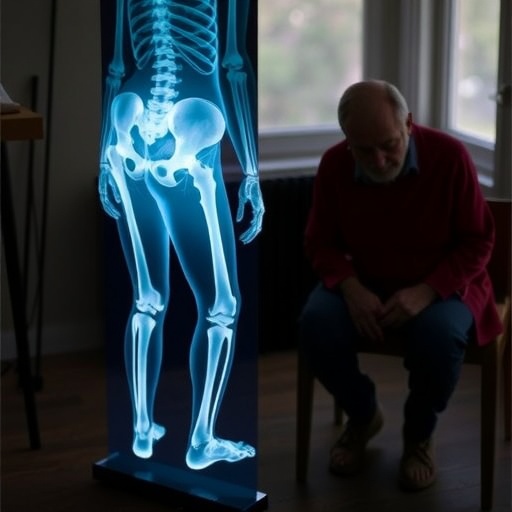
In an era where aging populations are rapidly expanding globally, understanding the nuanced experiences of frailty among older adults has become a critical focus for healthcare professionals and researchers alike. A pioneering study led by Li, Qian, and Sun, published in BMC Geriatrics in 2026, sheds new light on how elderly individuals with hip fractures perceive their own frailty. This qualitative investigation delves beyond clinical assessments to reveal the psychological, social, and physical dimensions underpinning self-perceived frailty, offering invaluable insights with potential to transform geriatric care strategies.
Hip fractures represent one of the most debilitating injuries for the elderly, often resulting in prolonged immobility, diminished independence, and increased mortality rates. Traditionally, medical evaluations of frailty have predominantly relied on objective scales and biomarkers. These methods, while critical for standardized diagnosis, tend to overlook subjective experiences that might influence recovery trajectories and quality of life. The study by Li and colleagues bridges this gap by closely examining how older patients articulate and internalize their frailty after sustaining hip fractures, thus emphasizing patient-centric perspectives.
To uncover the intricacies of self-perceived frailty, the researchers employed in-depth, semi-structured interviews with a cohort of elderly individuals recovering from hip fractures. Qualitative thematic analysis was then utilized to identify recurring patterns and themes within participants’ narratives. This methodological choice enabled the team to capture a rich tapestry of lived experiences, encompassing not only physical limitations but also emotional struggles and shifts in identity that commonly accompany such injuries.
One of the salient findings emerging from the study is the profound psychological impact that hip fractures impose on older adults. Many participants expressed feelings of vulnerability, fear of future falls, and anxiety regarding their ability to regain previous levels of function. This psychological burden often exacerbated perceptions of frailty, creating a self-reinforcing cycle that hindered motivation and rehabilitation efforts. Such findings underscore the necessity for holistic interventions that integrate mental health support alongside physical therapy.
Moreover, social dimensions played a pivotal role in shaping self-perceived frailty. Several interviewees highlighted how the fracture and its aftermath strained their social networks, leading to feelings of isolation and loneliness. Loss of social interaction contributed to a diminished sense of self-efficacy and increased dependence on caregivers. These sociological aspects are critical, given that social support systems have long been correlated with improved health outcomes in elderly populations.
Physiologically, participants described frustration with their diminished physical capabilities — reduced balance, muscle weakness, and persistent pain being commonly cited. These impairments often translated to decreased participation in daily activities, which in turn deepened their perception of being frail. Importantly, the study reveals that patients’ own assessments of frailty sometimes diverged from clinical evaluations, reflecting a complex interplay between subjective experience and objective health status.
The interplay between identity and frailty also emerged as a compelling theme. Many older adults grappled with the loss of autonomy and a redefined sense of self after experiencing the fracture. Some noted feelings of diminished societal value, as their physical decline interfered with roles they once fulfilled. This existential dimension highlights the importance of addressing identity reconstruction within rehabilitation programs to foster resilience and positive aging.
From a broader healthcare perspective, these findings have critical implications for improving clinical practice. Recognizing the multifactorial nature of frailty as perceived by patients could lead to more personalized care models. For instance, incorporating routine assessments of mental health and social connectivity into post-hip fracture care protocols might mitigate adverse outcomes and accelerate recovery.
Additionally, this research highlights the potential for developing patient education initiatives specifically tailored to empower older adults in managing their frailty. Educating patients about strategies to prevent further decline, maintain physical activity, and engage socially could enhance their self-efficacy, thereby influencing positive behavioral changes. Such interventions could be delivered through multidisciplinary teams integrating geriatricians, physiotherapists, psychologists, and social workers.
Another noteworthy implication pertains to healthcare policy. The qualitative insights offered by this study advocate for resource allocation that transcends traditional biomedical approaches to frailty. Policymakers should consider funding community-based programs aimed at fostering social support and psychological well-being, in addition to physical rehabilitation facilities. This holistic approach could not only improve individual outcomes but also reduce long-term healthcare costs associated with repeated hospitalizations and institutionalization.
Furthermore, technological innovations may find supportive roles in addressing the challenges highlighted by this study. Telemedicine platforms and wearable monitoring devices could facilitate continuous psychological and physical health assessment, enabling timely interventions. Virtual support groups might mitigate feelings of isolation by connecting elderly individuals with peers experiencing similar challenges, thus enhancing community resilience.
The importance of culturally sensitive care also emerges from the study’s findings. Self-perceptions of frailty are inevitably influenced by cultural attitudes toward aging, independence, and vulnerability. Tailoring communication and intervention strategies to align with patients’ cultural contexts can improve engagement and adherence to care plans, ultimately optimizing outcomes.
The dynamic and iterative nature of frailty, as experienced subjectively, calls for longitudinal research efforts. Tracking how self-perceptions evolve over time and how they correlate with functional recovery or decline could inform adaptive care models. Such knowledge could foster proactive rather than reactive management of frailty in aged populations.
In summary, Li, Qian, and Sun’s work signifies a paradigm shift from purely clinical definitions of frailty toward a more nuanced understanding grounded in patient experience. By centering the voices of older adults recovering from hip fractures, the study illuminates the complex biopsychosocial fabric that constitutes frailty. This enriched perspective holds promise for revolutionizing geriatric healthcare by promoting interventions that not only heal bones but also mend spirits and restore dignity.
The intersection of physical, psychological, and social factors that define self-perceived frailty presented in this research underscores the urgent need for integrated care approaches. Translating these insights into practice can potentially enhance older adults’ quality of life and autonomy, redefining successful aging in the face of adversity. As global demographics continue to shift, such patient-centered knowledge becomes indispensable for crafting compassionate and effective healthcare systems worldwide.
Advancing this line of inquiry remains a crucial task for the scientific community. Future research may explore intervention efficacy informed by self-perceived frailty insights, unravel the neural correlates of frailty perception, or expand analysis to diverse populations. The groundwork laid by Li and colleagues paves the way for a richer, more humane understanding of aging, frailty, and recovery.
Ultimately, this study is a clarion call to view frailty not merely through the lens of clinical deficits but as a lived human experience shaped by mind, body, and society. Embracing this holistic vision promises to unlock new possibilities for healing and hope among older adults navigating the challenges of hip fracture and frailty.
Subject of Research: Self-perceived frailty in older adults with hip fracture
Article Title: Self-perceived frailty in older adults with hip fracture: a qualitative study
Article References:
Li, Y., Qian, H. & Sun, X. Self-perceived frailty in older adults with hip fracture: a qualitative study. BMC Geriatr (2026). https://doi.org/10.1186/s12877-026-07362-5
Image Credits: AI Generated


