

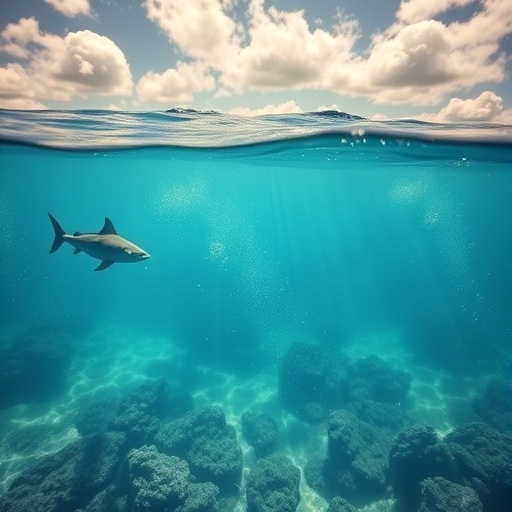
Climate change and ocean acidification are not just pressing concerns for ecosystems and human health; they also pose a significant threat to our underwater cultural heritage. In the face of rising temperatures and increasing CO2 levels, the long-term survival of artifacts and archaeological sites submerged beneath the waves is coming into question. Researchers, including Germinario, Munari, and Moro, have highlighted the urgency of this issue, connecting environmental science with cultural preservation in a groundbreaking study slated for publication in Commun Earth Environ in 2026.
The study underscores that underwater cultural heritage, which includes shipwrecks, sunken cities, and ancient artifacts, is increasingly vulnerable to environmental degradation. Ocean acidification, a direct consequence of climate change, occurs when excess carbon dioxide (CO2) is absorbed by seawater, leading to decreased pH levels. This phenomenon threatens the calcium carbonate structures foundational to numerous marine organisms and the stability of submerged cultural sites. Coral reefs, for instance, are not merely natural wonders; they are also repositories of our collective historical memory, often housing artifacts from lost civilizations.
Through their research, Germinario and colleagues focused on the implications of acidification on the geological and archaeological materials that form the bedrock of underwater sites. They found that while some materials might withstand change, others, particularly those rich in calcium carbonate, can suffer severe degradation. This raises questions about the preservation of sites that have survived for centuries—their integrity now threatened by an uncontrolled climate crisis. The study emphasizes that the risk isn’t limited to physical destruction; it involves the loss of historical context and cultural identity as well.
Furthermore, the research highlights that certain geographic regions, particularly those subject to higher temperatures and increased CO2 absorption, are more acutely at risk. These areas often coincide with regions that have great historical significance. For example, the Mediterranean Sea, known for its rich archaeological heritage, is warming faster than many other oceanic regions. As the temperature rises, the marine ecosystems that coexist with historical artifacts begin to change, further complicating preservation efforts. If immediate action is not taken to mitigate these effects, we could see a significant loss of underwater archaeological resources.
Another alarming aspect of the study is the potential for increased biofouling. As ocean temperatures rise, the rate of biofouling—where unwanted organic material accumulates on submerged surfaces—accelerates. This not only threatens the structural integrity of underwater heritage but also complicates archaeological work. The accumulation of biological matter can obscure or even bury artifacts, making them inaccessible for further study. The impact of these changes could take our understanding of human history underwater and distort it, leading to gaps in our historical timeline.
The imperative for action is clear. Germinario and his team argue that the time for proactive measures is now. Mitigation strategies must be multifaceted and involve collaboration among scientists, historians, and policymakers. Developing scientific models that predict future conditions could enhance our efforts to protect underwater sites. Conservationists are tasked with exploring methods to shield sites from the impacts of climate change while fostering public awareness to support ongoing preservation efforts. Education plays an essential role in this; the more the public understands what’s at risk, the more likely they are to support initiatives to curb climate change.
Policy measures at the national and international levels also need to reflect the dire implications highlighted in the study. Creating protected marine areas, engaging in sustainable fishing practices, and enforcing regulations to limit carbon emissions are all steps that could mitigate the impacts of climate change and acidification. By adopting a proactive approach, we may ensure that future generations have the opportunity to explore and learn from our underwater heritage rather than only hearing stories about it.
One cannot overlook the need for innovative preservation techniques. Advances in technology could allow for novel methods of protecting submerged artifacts. For example, the use of 3D printing can replicate artifacts to minimize handling of original objects. Meanwhile, techniques such as anaerobic corrosion mitigation could help preserve metals that are particularly vulnerable in acidic water contexts. By harnessing technological innovations, we could safeguard our underwater heritage even as environmental conditions continue to shift.
In addition, collaboration among various stakeholders—including universities, museums, and government agencies—is crucial. By pooling resources and sharing knowledge, these entities can work together to develop best practices for monitoring the impacts of climate change on underwater cultural sites. Joint research projects can yield valuable data that inform preservation efforts, while public exhibitions can foster interest and investment in conservation initiatives. Emphasizing the human stories behind these underwater treasures serves to reinforce their value to wider society.
Emerging from this collaborative spirit, citizen science represents another forward-thinking avenue for protecting underwater heritage. Engaging the public in monitoring conditions at historical sites can not only amplify conservation efforts but also instill a sense of responsibility and ownership. Local communities can play an integral role in tracking ecological changes and reporting impacts, thus strengthening the network around preservation endeavors.
The implications of Germinario and colleagues’ findings stretch beyond preservation; they invite a re-examination of our commitment to history. The underwater realm offers a unique lens through which to view and understand our collective past. As climate change intensifies, so too does the urgency for a global dialogue on cultural heritage preservation in the face of environmental crises. The study serves as a vital reminder that we cannot separate our cultural identity from ecological health; they are inextricably linked.
In conclusion, the research conducted by Germinario, Munari, and Moro signals an urgent call to action. The erosion of our underwater cultural heritage due to climate change and ocean acidification represents a loss that transcends just historical timelines; it signifies a fracture in our connection to past civilizations. Continued study and proactive measures are necessary to mitigate these threats, allowing us to protect what lies beneath the waves for future generations. Only through unified efforts can we safeguard our underwater heritage—an invaluable aspect of our shared human story—as we navigate an uncertain future.
Subject of Research: Underwater cultural heritage at risk due to climate change and ocean acidification.
Article Title: Climate change and ocean acidification pose a risk to underwater cultural heritage.
Article References:
Germinario, L., Munari, M., Moro, I. et al. Climate change and ocean acidification pose a risk to underwater cultural heritage.
Commun Earth Environ (2026). https://doi.org/10.1038/s43247-026-03184-w
Image Credits: AI Generated
DOI:
Keywords: Climate Change, Ocean Acidification, Underwater Heritage, Preservation, Archaeology, Marine Ecosystems, Cultural Heritage.


