

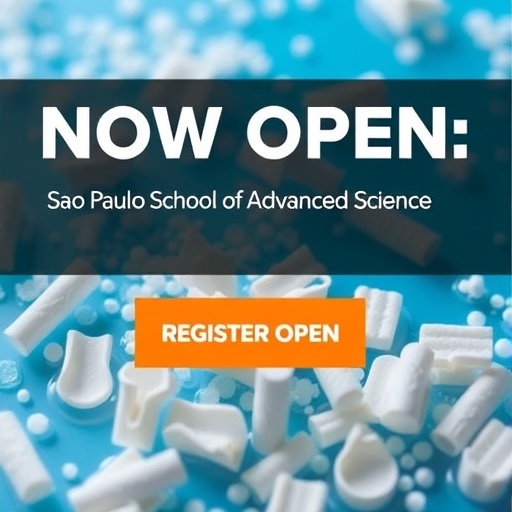
The São Paulo School of Advanced Science in Microplastics (SPSAS) is set to convene from September 1 to 11, 2026, at the Institute of Chemistry of the State University of Campinas (IQ-UNICAMP) in Brazil. This pioneering program is designed as an intensive, interdisciplinary course that offers an unprecedented deep dive into the scientific and regulatory complexities posed by microplastics, one of the most pressing environmental threats of our times. By blending theoretical frameworks with practical insights, the SPSAS aims to equip an international cohort of graduate students, postdoctoral researchers, and early-career scientists with the expertise to address plastic pollution in its multi-faceted manifestations.
Microplastics represent an intricate environmental challenge due to their heterogeneous composition. Fundamentally, they consist of polymer fragments laden with a wide array of chemicals originating not only from their original formulation but from environmental weathering and the pollutants they encounter while traversing varied media such as air, water, and soil. This chemical and physical complexity governs their extraordinary transport mechanisms and interaction pathways across ecosystems, generating a multifactorial problem that demands sophisticated investigation. The SPSAS program recognizes this complexity and has structured its curriculum to dissect the microplastic issue through a series of analytical frameworks that span the micro- to nanoscopic scale and encompass the interactions at the polymer surface, within the surrounding environmental matrices, and through the lens of regulatory science.
The scope of SPSAS explicitly integrates the polymer science underpinning microplastics, including their chemical additives and the dynamic aging processes these particles undergo. The course delves into surface chemistry and physicochemical transformations occurring “on the microplastic,” exploring phenomena such as biofilm formation, sorption-desorption dynamics, and catalytic surface reactions. Beyond the particle surface, “around the microplastic,” the curriculum examines how these plastic particles interact with biological systems, environmental compartments, and transport vectors that contribute to their mobility and bioavailability. Critically, the School also prioritizes the regulatory frameworks necessary to translate evidence-based research into policy actions. This approach is particularly timely in view of the imminent Global Plastic Pollution Treaty, which promises to redefine international governance on plastic waste with ramifications for public health, ecological sustainability, trade, and the burgeoning bioeconomy.
The SPSAS will benefit from the contributions of globally recognized experts, whose keynote lectures and collaborative workshops will foster an intellectually rigorous environment. The roster includes leading authorities such as Scott Coffin from the California Office of Environmental Health Hazard Assessment (OEHHA), who offers insights into toxicological assessments; Theodore B. Henry from Heriot-Watt University, a specialist in environmental geosciences; and Natalia P. Ivleva of the Technical University of Munich, noted for her prowess in Raman spectroscopy and scanning electron microscopy applications relevant to environmental plastics research. Scholars like Cristina Nerin of the University of Zaragoza, Martin Wagner of NTNU, Amy L. Lusher of NIVA, and Peter Kershaw from the United Nations’ GESAMP advisory group will also contribute their extensive expertise, ensuring that participants gain a panoramic and nuanced understanding of both the science and policy dimensions of microplastics.
The registration for SPSAS 2026 opens for a select group of 100 students, with a deliberate balance between domestic and international participants, gender equity, and ethnic diversity. This inclusivity is enforced through affirmative action policies mandating that at least half of the seats are reserved for women and a quarter for ethnic minorities. Applicants are required to demonstrate their academic competence and alignment with the course’s thematic focus through submissions including CVs, project abstracts, motivation letters, and recommendation letters. The selection process emphasizes merit and strives to achieve diversity in gender, ethnicity, and geographic representation—which are crucial for fostering cross-cultural scientific collaboration.
Financial support through the São Paulo Research Foundation (FAPESP) underscores the School’s commitment to accessibility. FAPESP will cover travel, accommodation, food, and insurance costs for selected foreign participants, along with providing a daily allowance to offset living expenses during the course. Local logistics are facilitated by organizers who will provide accommodation recommendations, enabling participants to optimize their planning. This investment highlights FAPESP’s recognition of the need to cultivate a global cadre of scientists equipped to not only understand but also influence the trajectory of plastic pollution governance.
The imperative for such advanced scientific training is amplified by the complex life cycle and hazards presented by microplastics. These particles are not inert; their polymer matrix hosts a cocktail of chemical additives such as plasticizers, flame retardants, stabilizers, and pigments, some of which are suspected or confirmed endocrine disruptors or toxins. Environmental weathering further modifies these chemicals, through processes such as UV-induced degradation or oxidative reactions, potentially generating secondary pollutants. The resultant particles’ interactions with biota are multifaceted, involving physical ingestion, chemical transfer, and even trophic magnification, all of which threaten biodiversity, ecosystem services, and human health.
Moreover, microplastics act as vectors for environmental contaminants by adsorbing persistent organic pollutants, heavy metals, and pathogenic microorganisms, creating composite hazards. The School’s interdisciplinary approach ensures these eco-toxicological dynamics are rigorously examined, acknowledging the gaps in mechanistic understanding that currently hinder risk assessment frameworks. The SPSAS is thus positioning itself at the forefront of environmental chemistry, toxicology, ecology, and policy, aiming to nurture scientists capable of advancing integrated solutions.
The regulatory component of SPSAS is especially critical in light of ongoing international negotiations to establish the Global Plastic Pollution Treaty. Scientists trained through this program will be pivotal in providing the scientific foundation necessary for informed policy formulation, legal frameworks, and enforcement mechanisms. They will also contribute to the development of standards and monitoring protocols that hold practical relevance for governments, industries, and civil societies. The strategic alignment with the treaty process emphasizes the School’s role as an incubator of leadership in environmental governance.
These comprehensive educational objectives are complemented by the School’s intensive format that balances lectures, hands-on laboratory practices, and active discussions. Through workshops, students will engage with cutting-edge analytical technologies used in microplastics research, including advanced spectroscopy, microscopy, and chemical fingerprinting methods. This hands-on training is coupled with policy simulation exercises designed to translate scientific data into actionable recommendations, fostering an ability to communicate effectively with decision-makers and the public.
The São Paulo School of Advanced Science in Microplastics thus emerges as a landmark initiative bridging scientific inquiry and societal needs. By fostering a new generation of experts equipped with multidisciplinary knowledge and a global perspective, SPSAS is addressing the microplastic crisis head-on. Given the accelerating environmental impact of plastic pollution worldwide, the insights and leadership cultivated in this program have the potential to influence global research agendas, inform transformative policies, and ultimately safeguard planetary health.
Interested applicants and scientific journalists can find detailed information and application procedures on the official event website. Prospective participants should consider this opportunity a call to become front-line actors in unraveling and mitigating one of the 21st century’s most complex environmental challenges.
Subject of Research: Microplastics and Plastic Pollution
Article Title: Registration Open for São Paulo School of Advanced Science in Microplastics – A Global Initiative to Combat Plastic Pollution
News Publication Date: Not explicitly stated, presumed 2026
Web References:
https://microplasticschool.iqm.unicamp.br/
http://espca.fapesp.br/home
Image Credits: IQ-UNICAMP
Keywords: Microplastics, Plastic Pollution, Environmental Chemistry, Environmental Policy, Plastic Additives, Toxicology, Analytical Chemistry, Environmental Governance, Global Plastic Pollution Treaty, São Paulo School of Advanced Science, FAPESP


