

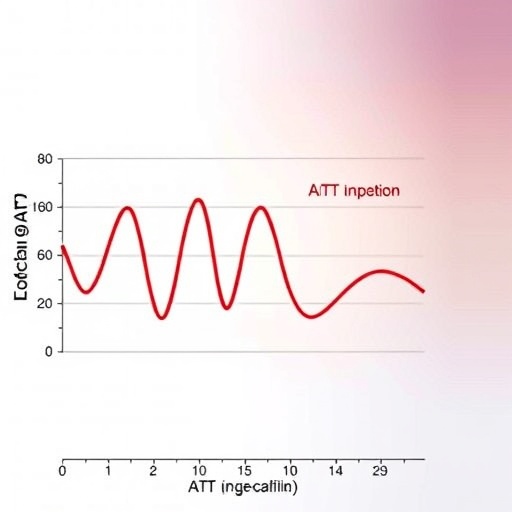
In an intriguing new perspective published on February 24, 2026, in the journal Aging-US, researchers led by Akihiko Taguchi propose a bold, unifying framework to explain the fundamental biological mechanisms underpinning aging across species. Their hypothesis identifies a programmed or evolutionarily selected decline in glycolytic ATP production as the key driver limiting lifespan. This novel concept bridges cellular metabolism with lifespan variation, offering fresh insights into why aging manifests universally—including diminished cell division and impaired DNA and mitochondrial repair capabilities.
At the core of this framework is the critical role glycolysis plays in rapid ATP generation necessary for essential cellular processes. Glycolysis serves as the primary source of quick energy fueling cell proliferation, DNA synthesis, and mitochondrial maintenance. Taguchi and colleagues argue that an age-dependent decrease in glycolytic ATP supply progressively weakens these vital repair and regeneration mechanisms, fundamentally shaping the phenotypes of aging observed throughout the animal kingdom.
This theory diverges significantly from classical aging hypotheses that focus predominantly on oxidative damage accumulation or telomere shortening. Instead, it posits that the metabolic shift away from glycolysis towards oxidative phosphorylation, while more energy-efficient, compromises the quick ATP availability required for immediate cellular repair. The consequent decline in repair capability leads to the accumulation of molecular and organellar damage that typifies aging tissues.
The researchers substantiate their argument with comparative biology evidence, contrasting short-lived rodents with long-lived species like the naked mole rat. Notably, naked mole rats sustain high glycolytic flux even in low-oxygen microenvironments, enabling continuous ATP production and exceptional longevity. Such observations suggest that species have evolved distinct metabolic strategies to balance energy efficiency and repair capacity optimally over their lifespans.
Furthermore, the perspective elucidates molecular pathways linking glycolytic ATP production to cellular quality control processes such as mitophagy, telomere dynamics, and proteostasis. Sustaining high glycolytic flux supports these pathways, ensuring maintenance of genomic integrity and proteome stability, thereby delaying age-associated functional decline. Conversely, an enforced metabolic transition to oxidative phosphorylation reduces glycolytic contributions, undermining these protective networks and hastening aging.
The authors also consider the evolutionary rationale, proposing that natural selection favored species with an optimal rate of glycolytic ATP decline. Species exhibiting either too rapid or too slow a reduction in glycolytic capacity would likely suffer fitness disadvantages, underscoring aging as an evolved, regulated process rather than mere wear-and-tear. This contention reframes aging as a metabolically programmed trajectory sculpted by energy allocation priorities across generations.
To rigorously test this provocative hypothesis, Taguchi’s team delineates several experimental avenues. These include genetic and pharmacologic interventions to modulate glycolytic enzyme activity in vivo and in vitro. For instance, gene transfer approaches targeting key glycolytic enzymes or application of drugs like terazosin, known to stimulate glycolysis, could ascertain if enhancing glycolytic ATP production rejuvenates repair systems and extends cellular and organismal longevity.
Additionally, longitudinal studies measuring glycolytic ATP output across age cohorts in diverse species with varying lifespans will be critical to delineate the “optimal rate” of glycolytic decline. Complementary comparative analyses could identify metabolic signatures linked to longevity, enabling predictive models of aging based on metabolic profiling. These efforts aim to connect molecular metabolism with evolutionary biology and lifespan determination.
A particularly novel aspect under investigation is metabolic coupling via gap junctions between hematopoietic stem cells and endothelial cells, a potential mechanism for distributing glycolytic ATP to critical regenerative niches. Deciphering such intercellular energy-sharing networks could uncover new targets for therapeutic intervention to mitigate age-related degeneration across tissue systems.
Despite the compelling coherence of the model, the authors emphasize its current status as a hypothesis requiring empirical validation. They caution that translation into human therapies—whether stem cell-based, metabolic activators, or gene therapies—demands meticulous preclinical evaluation of safety, efficacy, and long-term outcomes. Moreover, the evolutionary basis warrants deeper mechanistic and comparative research to substantiate the concept of a selected, programmed glycolytic decline.
This paradigm-shifting perspective invites a fundamental reconsideration of aging biology, highlighting the pivotal influence of glycolytic metabolism in lifespan regulation. It postulates that rather than oxidative damage alone, an orchestrated modulation of glycolytic ATP generation orchestrates the balance between energy efficiency, rapid repair capacity, and longevity. If borne out, such insights could revolutionize strategies aimed at extending healthspan and counteracting age-related diseases.
By uniting metabolic biochemistry, evolutionary theory, and aging physiology, this work sets the stage for a new era in aging research. It challenges researchers to explore glycolytic flux not just as a metabolic parameter, but as a central determinant of biological aging trajectories shaped by natural selection. Unlocking the molecular levers of glycolytic control could soon provide revolutionary avenues to delay aging and promote regenerative health in humans.
As this hypothesis undergoes further experimental scrutiny, it promises to inspire transformative innovations in anti-aging science, catalyzing developments from bench to bedside. Future studies dissecting glycolytic regulation within specific stem cell populations and tissue microenvironments will be critical to delineate mechanistic underpinnings and therapeutic potential. The tantalizing prospect of metabolically reprogramming aging processes may herald a new frontier in gerontology and regenerative medicine.
The research spearheaded by Taguchi and collaborators opens fresh intellectual vistas linking metabolic flux with lifespan modulation, presenting a refined, integrative narrative of aging biology. As the field embraces this interplay between energy metabolism and aging phenotypes, novel biomarkers and interventions targeting glycolytic pathways are poised to emerge. Ultimately, this framework could redefine our approach to prolonging longevity and enhancing resilience against age-associated decline.
Subject of Research:
Not applicable
Article Title:
A decline in glycolytic ATP production is the fundamental mechanism limiting lifespan; species with an optimal rate of decline over time survived
News Publication Date:
24-Feb-2026
Web References:
https://doi.org/10.18632/aging.206356
https://www.aging-us.com/issue/v18i1/
Image Credits:
Copyright: © 2026 Taguchi et al. This is an open access article distributed under the terms of the Creative Commons Attribution License (CC BY 4.0).
Keywords:
hypothesis, aging, glycolytic ATP production, lifespan, Heterocephalus glaber


