

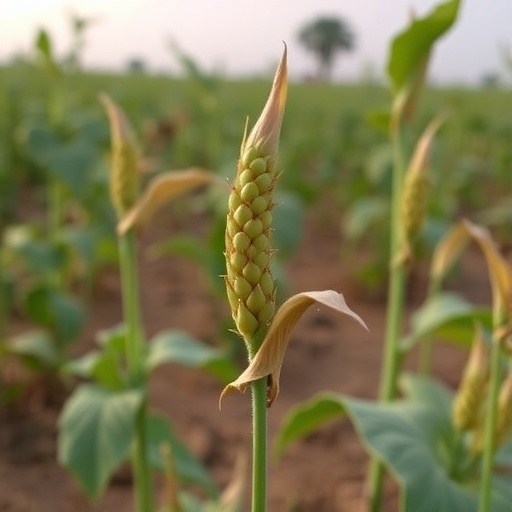
In a significant advancement in agricultural virology, researchers have identified Cowpea mild mottle virus (CMMV), scientifically categorized under the genus Carlavirus, as a prominent factor contributing to the severe manifestations of veinal necrosis and bud blight disease in soybean (Glycine max L.) within the Indian subcontinent. This groundbreaking finding sheds light on the complex interactions between viral pathogens and their host plants, emphasizing the urgent need for effective management strategies to mitigate the impact of viral infections on soybean crops, which are crucial for both global food security and the agricultural economy in India.
CMMV has been the subject of increasing scrutiny due to its potential to induce economic losses in leguminous crops, particularly in tropical and subtropical regions where soybean cultivation is prevalent. As a virus that affects the physiology and morphology of infected plants, CMMV manifests distinct symptoms, including severe leaf discolouration, distortion, and ultimately, reduced yield. The disease’s pathogenesis, driven by viral replication and spread, has garnered attention as agricultural scientists seek to understand the molecular mechanisms underlying host-pathogen interactions.
The research team, comprised of esteemed scientists Sandra N., Tripathi A., and Bhagwatkar D.N., embarked on their investigation with the aim of isolating and characterizing the viral agents responsible for the outbreak. As part of their methodology, they employed molecular techniques, including reverse transcription-polymerase chain reaction (RT-PCR), enabling them to detect viral RNA in soybean plants exhibiting symptoms of veinal necrosis and bud blight. This rigorous approach allowed for the confirmation of CMMV as a critical player in the observed disease symptoms.
Furthermore, the study emphasized the role of environmental factors in the prevalence and severity of CMMV infections. Researchers observed that fluctuations in temperature and humidity could significantly influence the virus’s transmission rates and the subsequent infection levels within soybean fields. Such insights highlight the intricate relationship between climatic variables and viral disease epidemiology, underscoring the necessity for farmers to adopt adaptive agricultural practices in response to changing environmental conditions.
CMMV’s role in the broader context of soybean health cannot be overstated. Soybeans serve as a vital protein source for both human consumption and livestock feed, and they play a significant role in nitrogen fixation, contributing to soil health. The emergence of viral diseases such as those caused by CMMV presents a dual challenge: they threaten the stability of food supplies and also jeopardize the sustainability practices that are crucial for modern agriculture. Thus, prompt action is essential from both agricultural policymakers and researchers to devise effective control measures.
The implications of CMMV’s discovery extend beyond immediate agricultural concerns. The findings compel researchers to delve deeper into the genetic profiling of CMMV strains and their variations across different geographic regions. Understanding these variations can inform breeding programs aimed at developing resistant soybean cultivars, ultimately fostering resilience against viral threats. Genetic diversity among host plants could serve as a natural barrier, aiding in the management of potential outbreaks.
Moreover, the characterization of Cowpea mild mottle virus provides a paradigm for future studies on viral diseases impacting other crops. As global agriculture becomes increasingly susceptible to both emerging and re-emerging infectious diseases, the methodologies that have been employed in this research may serve as templates for similar investigations across diverse plant species. The ability to rapidly identify viral pathogens could prove crucial in preemptively addressing threats to crops before they escalate into widespread epidemics.
In light of these findings, it is also imperative for agricultural extension services to be equipped with the latest research insights to inform farmers about identification, preventive measures, and treatment options for viral diseases affecting soybeans. Awareness campaigns could significantly enhance farmers’ ability to recognize early symptoms, enabling timely interventions that may mitigate yield losses. Solving such complex issues requires collaborative efforts between researchers, government bodies, and the farming community to ensure strategic alignment in combating viral infections.
As researchers reflect on the broader implications of their findings, it becomes evident that further studies into CMMV’s life cycle and host interactions are critical. This knowledge could unveil new pathways for intervention and management, focusing on disrupting the virus’s propagation within soybean crops. Such approaches might include exploring biological controls, such as beneficial microorganisms, to outcompete CMMV or enhance the plant’s immune response against infection.
On a global scale, the identification of CMMV in Indian soybean crops reinforces the continued need for surveillance and monitoring of viral diseases in agriculture. Other nations facing similar environmental and agricultural challenges could stand to learn from the Indian experience, fostering a collaborative network aimed at tackling shared agricultural threats. Growing international cooperation could provide a wealth of knowledge and resources dedicated to elevating agricultural resilience against virulent pathogens.
In conclusion, the research surrounding Cowpea mild mottle virus marks a vital step in understanding and combating viral diseases affecting soybean. The combination of molecular techniques, awareness campaigns, and international collaboration offers a comprehensive approach to addressing the complexities of viral infections in agriculture. As researchers continue to explore the nuances of this virus, the agricultural community may find new strategies to enhance crop resilience and ensure food security in the face of persistent viral challenges.
Through these efforts, it is hoped that agricultural stakeholders can foster a proactive stance towards disease management, ensuring that the essential role of soybeans in global food systems is protected against emerging threats. The fight against viral pathogens like CMMV is a crucial element in the ongoing quest for sustainable agricultural practices that safeguard future food supplies, making it imperative to stay informed and engaged in this evolving field of study.
Subject of Research:
Cowpea mild mottle virus (CMMV) in soybean
Article Title:
Cowpea mild mottle virus (Carlavirus vignae) identified as one of the agents associated with veinal necrosis and bud blight disease in soybean (Glycine max L.) in India.
Article References:
Sandra, N., Tripathi, A., Bhagwatkar, D.N. et al. Cowpea mild mottle virus (Carlavirus vignae) identified as one of the agents associated with veinal necrosis and bud blight disease in soybean (Glycine max L.) in India. 3 Biotech 16, 43 (2026). https://doi.org/10.1007/s13205-025-04640-8
Image Credits:
AI Generated
DOI:
https://doi.org/10.1007/s13205-025-04640-8
Keywords:
Cowpea mild mottle virus, soybean, viral diseases, agricultural sustainability, disease management.


